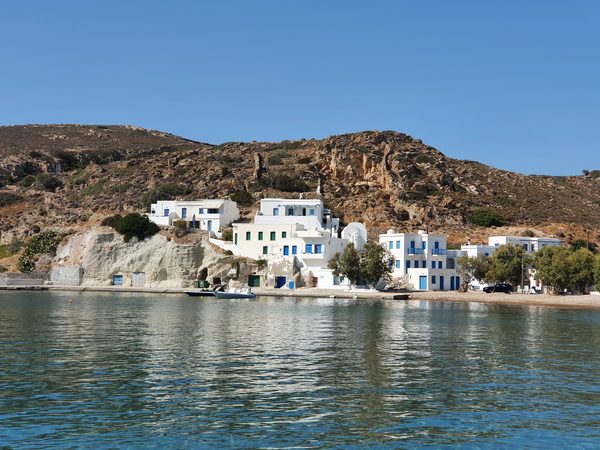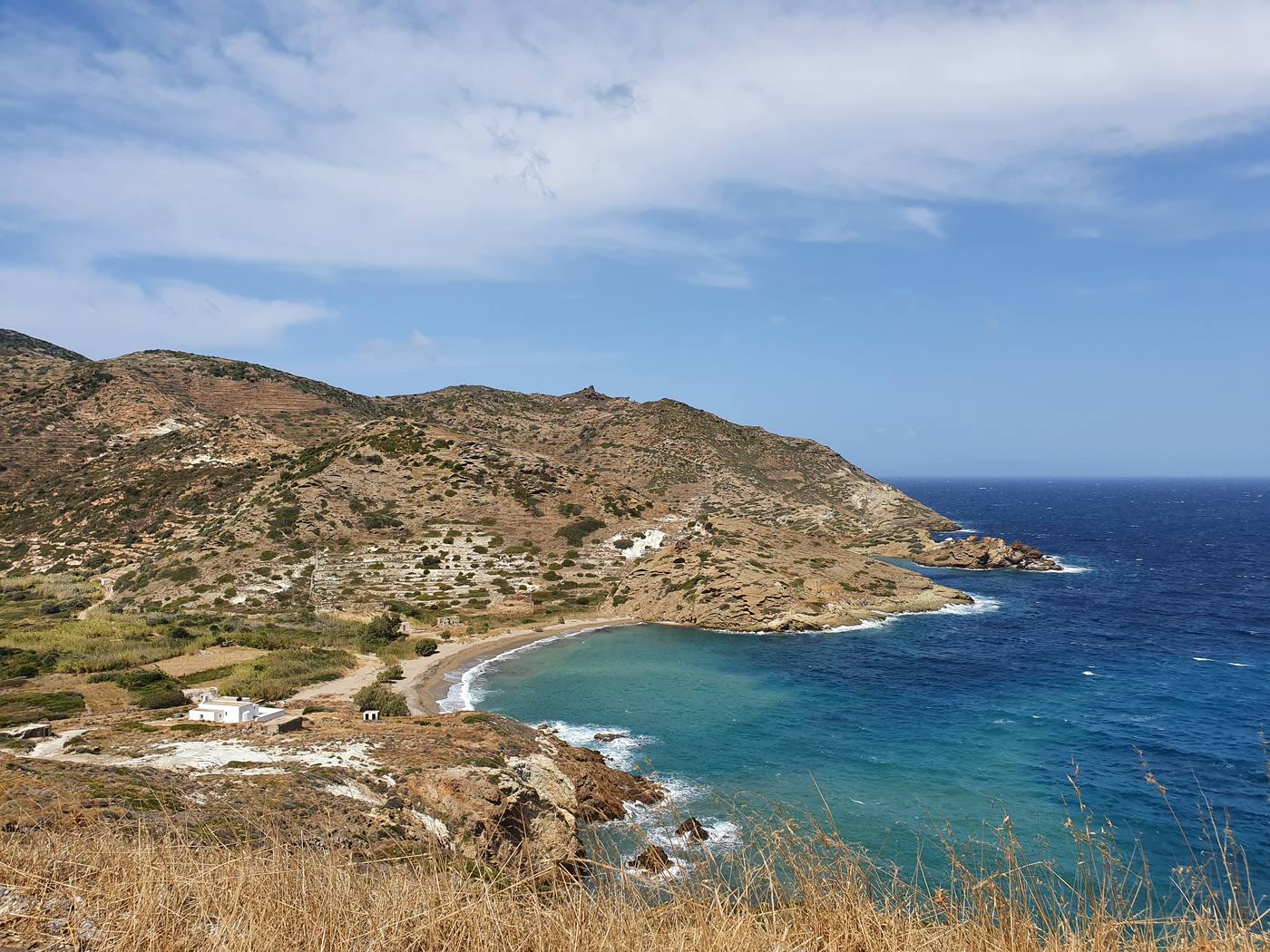
The Kimolos beaches, on a small Greek island beside Milos, divide by coast: sand and shelter in the south, wild empty sweeps in the west, turquoise water in the north. Most have no sunbeds, no canteen and no shade beyond a line of cedars. This is every beach worth the drive, with the wind exposure that decides which one you pick.
In this guide
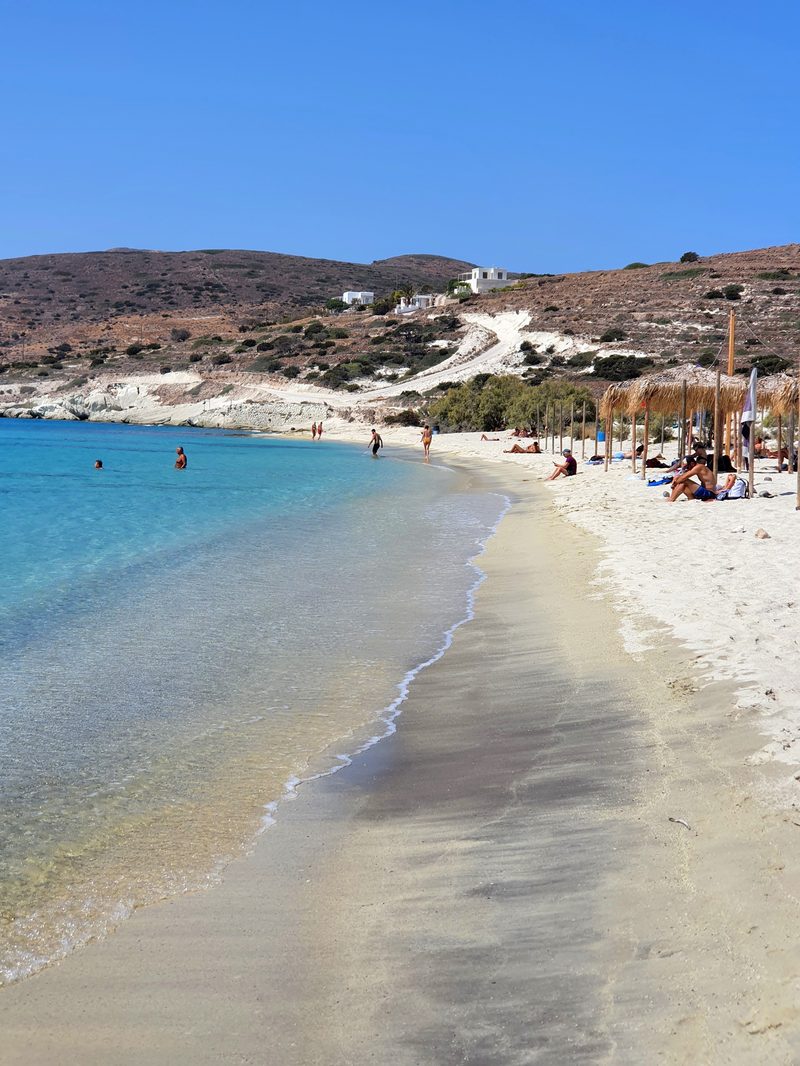
- Beaches covered: 16
- Facilities: None at most; a bar at Prassa, tavernas behind Bonatsa and Kalamitsi
- Access: Asphalt to the south coast, dirt track or footpath for the rest
- Wind exposure: The south coast stays swimmable when the meltemi blows; anything facing north does not.
The wind rule that governs the beaches of Milos applies here too, only more bluntly: there is less coast to hide behind. When the north wind gets up, drive fifteen minutes to the other side, so every entry below states which way its beach faces. Coming over for the day? See the Milos to Kimolos day trip guide.
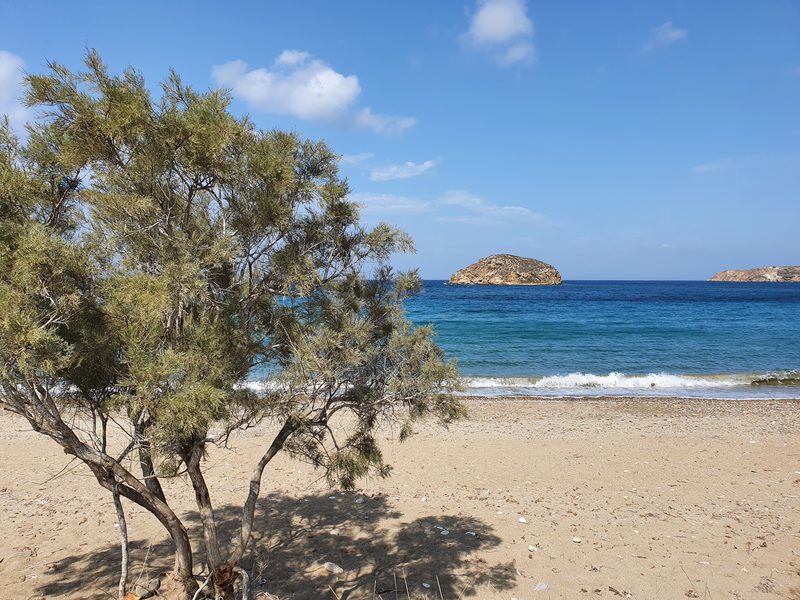
Kimolos Beaches on the South Coast: Sand, Cedars and Shelter
The family side, and the side that works on a windy day. Most of the accommodation is here too: see the Kimolos where to stay and eat guide.
Psathi
- Type: Sand
- Access: At the port
- Facilities: Loungers, cafes, tavernas
- Wind: East-facing, reasonably protected.
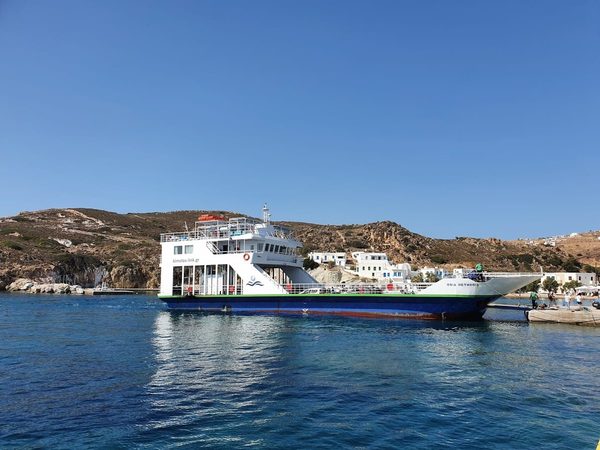
Better than a port beach has any right to be: you can watch the little ferries shuttle to Milos while you swim. Do not expect it to be set up for you, though. Psathi is a plain harbour beach with no sunbed operation, and the organised swimming on Kimolos is at Prassa and Bonatsa instead. A first or last hour rather than a full day.
Ennias
- Type: Large pebbles
- Access: Signposted off the road south
- Facilities: None
- Wind: South-east facing, sheltered.
The pebbles are big enough to make lying on them uncomfortable. Without a lounger in the boot, a swim stop rather than a beach day.
Aliki
- Type: Sand and coloured pebbles
- Access: Asphalt, easy
- Facilities: None
- Wind: South-facing, one of the safest bets in a meltemi.
Named for the salt pan behind it. Long, with unexpectedly colourful pebbles and a few cedars for shade. The pan bakes dry in summer but is serious birdwatching ground in spring and autumn, with over 260 migratory species recorded. For swimming, the next two beaches west are better.
Bonatsa
- Type: Sand
- Access: Asphalt, parking behind
- Facilities: Rooms, tavernas, loungers some years
- Wind: South-facing and well protected, the calmest water on Kimolos.
The name is the Greek word for a flat, settled sea, and the beach earns it: wide, sandy, shallow enough that children can wade a long way out, with cedars for patchy shade. Loungers appear in some years, and there were none when I visited, but a beach-bar concession is renting sunbeds and umbrellas here again as of 2026, so it is worth checking on the day rather than assuming either way.
Kalamitsi
- Type: Sand, then pebble
- Access: Asphalt, next along from Bonatsa
- Facilities: A taverna behind
- Wind: South and west facing, sheltered.
Two beaches sharing a name and a stand of cedars: the first faces west and is sandy, the second pebbly. Both look across at Milos and both suit snorkelling. A small family taverna behind cooks home-style food worth planning the afternoon around, trading since 1991 and recently expanded rather than fading, and the rooms above the beach are still let too.
Klima
- Type: Sand and pebble
- Access: Under half an hour on foot from Chorio
- Facilities: None
- Wind: South-facing, sheltered.
The easiest good beach to reach without wheels, with cedars growing down to the shoreline. Not the Klima on Milos.
Kimolos Beaches on the West Coast: Wild, Empty and Best at Sunset
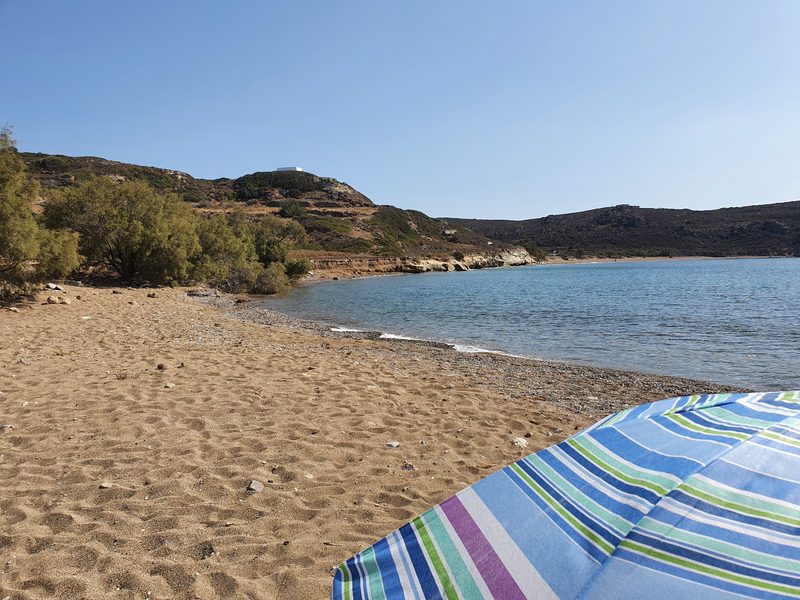
Dekas
- Type: Sand
- Access: Easy dirt road
- Facilities: None
- Wind: West-facing, takes the swell when the wind swings round.
A long strip, all but deserted when I looked in. It draws people who want to be out of sight: some camping rough for days at a time, some swimming without a costume, nobody paying anyone much attention.
Fykiada
- Type: Pebble and rock
- Access: Dirt road
- Facilities: None
- Wind: West-facing, exposed.
The name translates roughly as the seaweed place, which tells you how the swimming is. Come for the photographs instead: the ruins of the island's mining industry sit behind the bay, and rusted iron against a hard blue sky beats the sea as a subject.
Ellinika
- Type: Sand over a rocky seabed
- Access: Dirt road
- Facilities: None
- Wind: West-facing, exposed once the wind picks up.
Ancient Kimolos stood here until an earthquake dropped it into the sea, cutting off the islet opposite, Agios Andreas. Snorkellers still go looking, though locals told me the ruins are hard to pin down. The seabed is sharp: water shoes are close to essential.
Mavrospilia
- Type: Sand
- Access: Dirt road to the western tip
- Facilities: None
- Wind: West-facing and open, but the pick of this coast on a calm evening.
The best beach on Kimolos, in my view. Natural sand, a rugged setting, and a scatter of white rocks called Asprogremna offshore, which strong swimmers can snorkel around on a calm day.
This is where I send anyone for sunset. Climb the rocks and you get the whole western horizon with the bare hump of Antimilos in it. I have never regretted the drive out, even when the wind ruled out swimming.
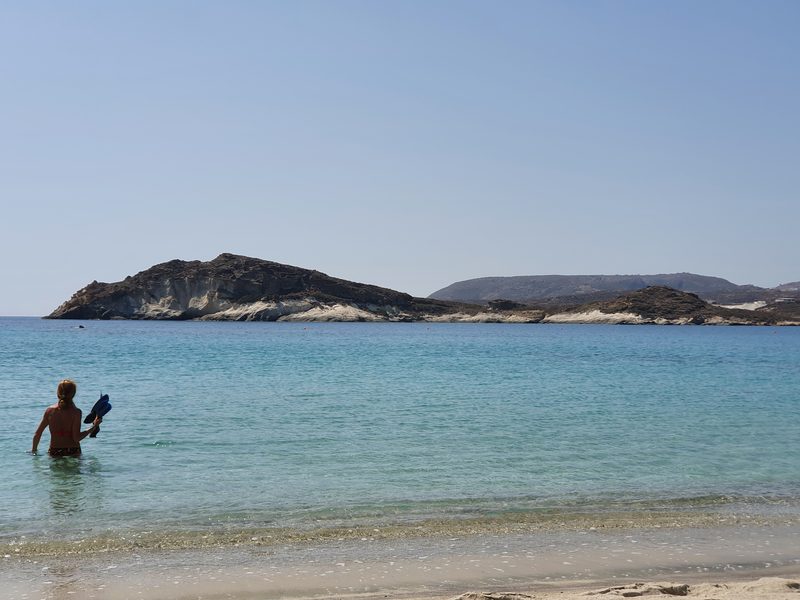
The North and East: Turquoise Water and Long Dirt Roads
Prassa (Agios Georgios)
- Type: Coarse white sand
- Access: Road to the north-east tip
- Facilities: Beach bar, loungers, umbrellas
- Wind: North-facing and fully exposed, so switch to Bonatsa or Aliki when the meltemi blows.
The most photogenic water on Kimolos: pale coarse sand shelving into a turquoise that looks unreal in photographs and not much less so in person. The catch is the neighbour. Mining goes on just inland, and the lorries serving it grind up and down the access road for much of the day, so come for a couple of hours rather than settle in. There is thermal seepage by the pier at the southern end, and the islet offshore, Prassonisi, is a swim away if you watch for boats. The beach bar and loungers are still running in summer, and the mining traffic has not eased.
Monastiria
- Type: Sand and rock
- Access: Long dirt road; 4WD to the sand, otherwise park up the hill and walk
- Facilities: None
- Wind: North-facing and very exposed, avoid on a north wind.
A wild bay ringed by heavy rock formations. I left an ordinary hire car on the hill and walked down, as most people end up doing.
Soufi
- Type: Sand and pebble
- Access: A 20-minute walk on from Monastiria
- Facilities: None
- Wind: Sheltered by cedars and rock, calmer than its neighbour.
Labelled Soufli or Souphi on some mapping apps, and a clear step up from Monastiria: protected, thick with cedars, popular with free campers. A small house sits at one side of the bay.
Vromolimnos
- Type: Plain and unremarkable
- Access: Track and short walk
- Facilities: None
- Wind: North-facing, exposed.
The name means dirty lake, and for once the naming was fair. Follow the trail west for a few minutes, though, and white rocks rise out of the sea that justify the detour on their own.
Goupa, Karas and Rema
- Type: Pebble, plus flat rock ledges
- Access: Short drive from Chorio
- Facilities: None on the beach
- Wind: East-facing, sheltered from the north wind.
The postcard end of the island: rows of sirmata, boathouses cut into the rock with brightly painted doors. Rema's pebble beach is plain, but you swim off the flat rocks around it, straight into deep clear water, and the Revmatonisia formations offshore are the best snorkelling on this coast. The villages are covered in the Kimolos island guide.
The Two You Have to Walk To
Agioklima and Fidaki
- Type: Shingle and rock
- Access: Hiking trail only
- Facilities: None whatsoever
- Wind: North-west facing, so no refuge when the meltemi blows; keep them for a calm day.
Two bays on the north-west coast, between Mavrospilia and Monastiria, reached by a marked footpath with no vehicle access. The draw is thermal water seeping into the sea, and Agioklima has enough trees to let you stay for hours. Carry water, food and a mask, and start early: the walk is punishing in afternoon heat.
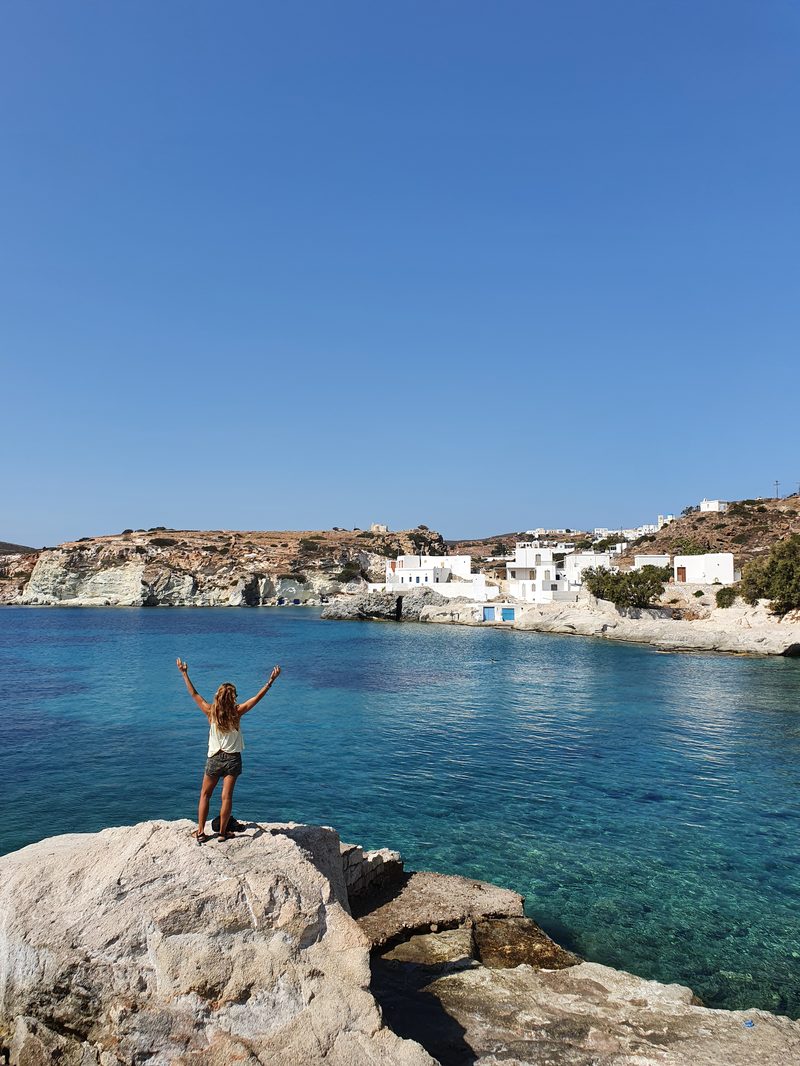
Which Kimolos Beach Should You Choose?
Settled weather: Mavrospilia, and stay for the sunset. A north wind: Bonatsa or Kalamitsi. On foot from Chorio: Klima. Nowhere here has everything, and small seasonal canteens on the south coast come and go year to year, so carry water and food regardless of what you find open.
Kimolos, a Cycladic island in Greece, has around 16 beaches worth visiting, most with no facilities. The south coast (Bonatsa, Kalamitsi, Aliki, Klima) is sandy and sheltered when the meltemi blows; Prassa in the north has the clearest turquoise water but a mining road behind it; Mavrospilia in the west is the wildest, and the island's sunset spot. Several sit at the end of dirt roads, so a vehicle helps.
Planning the rest of your island time? Start with our complete Milos travel guide.
Last updated: 1 August 2026