Milos, in the western Cyclades of Greece, has a small local bus network, run KTEL-style, with every service radiating out of Adamas. A ride costs a couple of euro and gets you to Plaka, Pollonia and a short list of beaches. What it will not do is reach the dirt-road coves or the west of the island, and the timetable thins out sharply once the summer peak passes.
In this guide
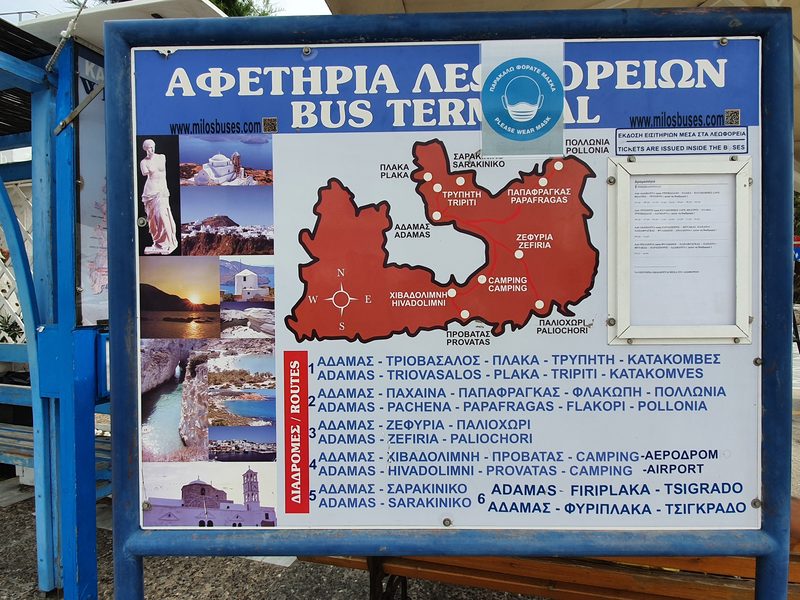
The thing to understand before you plan around it is that this is a service built for islanders first. It exists so that children get to school and villagers can do their shopping in Adamas and get home again. Visitors are welcome on it and it is genuinely useful, but the frequencies follow the rhythm of island life, not the rhythm of a beach day. Accept that and the bus becomes something you can plan around.
The wider question of whether to rent a vehicle at all is covered in the guide to getting around Milos; this page is only about the bus.
Current Milos Bus Timetable
These are the operator's published departure times for 14 September to 20 September. They are taken from the current-dated table on milosbuses.com, not from a stale copy, and this section is re-checked against the operator's site every week.
| Route | Departures |
|---|---|
| Adamas → Triovasalo → Plaka → Katakomves → Trypiti | 07:30 · 08:30 · 09:30 · 10:30 · 11:30 · 12:30 · 13:30 · 15:00 · 16:30 · 17:30 · 18:30 · 19:30 · 20:30 · 21:30 · 22:30 · 23:30 |
| Trypiti → Katakomves → Plaka → Triovasalo → Adamas | 06:30 · 07:50 · 08:50 · 09:50 · 10:50 · 11:50 · 13:50 · 14:40 · 15:15 · 15:50 · 16:50 · 17:50 · 18:50 · 19:50 · 20:50 · 21:50 · 22:50 |
| Adamas → Parasporos → Mytakas → Pachaina → Papafragas → Fylakopi → Pollonia | 06:45 · 09:15 · 10:30 · 11:30 · 12:30 · 14:00 · 15:30 · 17:15 · 19:40 |
| Pollonia → Fylakopi → Papafragas → Pachaina → Mytakas → Parasporos → Adamas | 07:15 · 09:45 · 11:00 · 12:00 · 13:00 · 14:30 · 16:00 · 17:45 · 20:00 |
| Adamas → Zefyria → Paliochori | 11:30 · 15:00 |
| Paliochori → Zefyria → Adamas | 11:50 · 15:30 |
| Adamas → Achivadolimni → Provata | 10:15 · 12:15 · 14:00 · 16:20 · 18:20 |
| Achivadolimni → Adamas | 10:30 · 12:30 · 14:20 · 16:30 · 18:30 |
| Provata → Adamas | 10:50 · 12:50 · 14:10 · 16:50 · 18:50 |
| Adamas → Sarakiniko | 10:10 · 11:10 · 13:10 · 15:00 · 17:00 · 19:10 |
| Sarakiniko → Adamas | 10:20 · 11:20 · 13:20 · 15:10 · 17:10 · 19:20 |
| Adamas → Tsigrado → Fyriplaka | 10:15 · 12:15 · 14:00 · 16:20 · 18:20 |
| Tsigrado → Fyriplaka → Adamas | 10:40 · 12:40 · 14:20 · 16:40 · 18:40 |
| Adamas → Airport | 10:15 · 12:15 · 14:00 · 15:00 · 16:20 · 18:20 |
| Airport → Adamas | 11:00 · 13:00 · 14:35 · 17:00 · 19:00 |
This schedule runs until 20 September. A different timetable takes over from 21 September, and this page will switch to it in the same week.
Fares are a flat 2 EUR, cash only, paid on board. Last checked on 14 September.
The Rest of the Season at a Glance
Buses per day from Adamas on each spoke, for every timetable the operator has published so far. The full departure times above switch automatically as each period starts.
| Dates | Plaka | Pollonia | Sarakiniko | South beaches | Airport |
|---|---|---|---|---|---|
| 14 September to 20 September (current) | 16 | 9 | 6 | 12 | 6 |
| 21 September to 27 September | 15 | 9 | 4 | 12 | 6 |
| 28 September to 4 October | 15 | 8 | 4 | 8 | 4 |
| 5 October to 11 October | 13 | 4 | 3 | 6 | 4 |
| 12 October to 18 October | 9 | 2 | 2 | 0 | 0 |
| 19 October to 25 October | 7 | 2 | 0 | 0 | 0 |
After the last published period the winter service takes over: the Plaka and Pollonia spokes only, a few departures on weekdays, and nothing to the beaches.
Where Does the Milos Bus Actually Go?
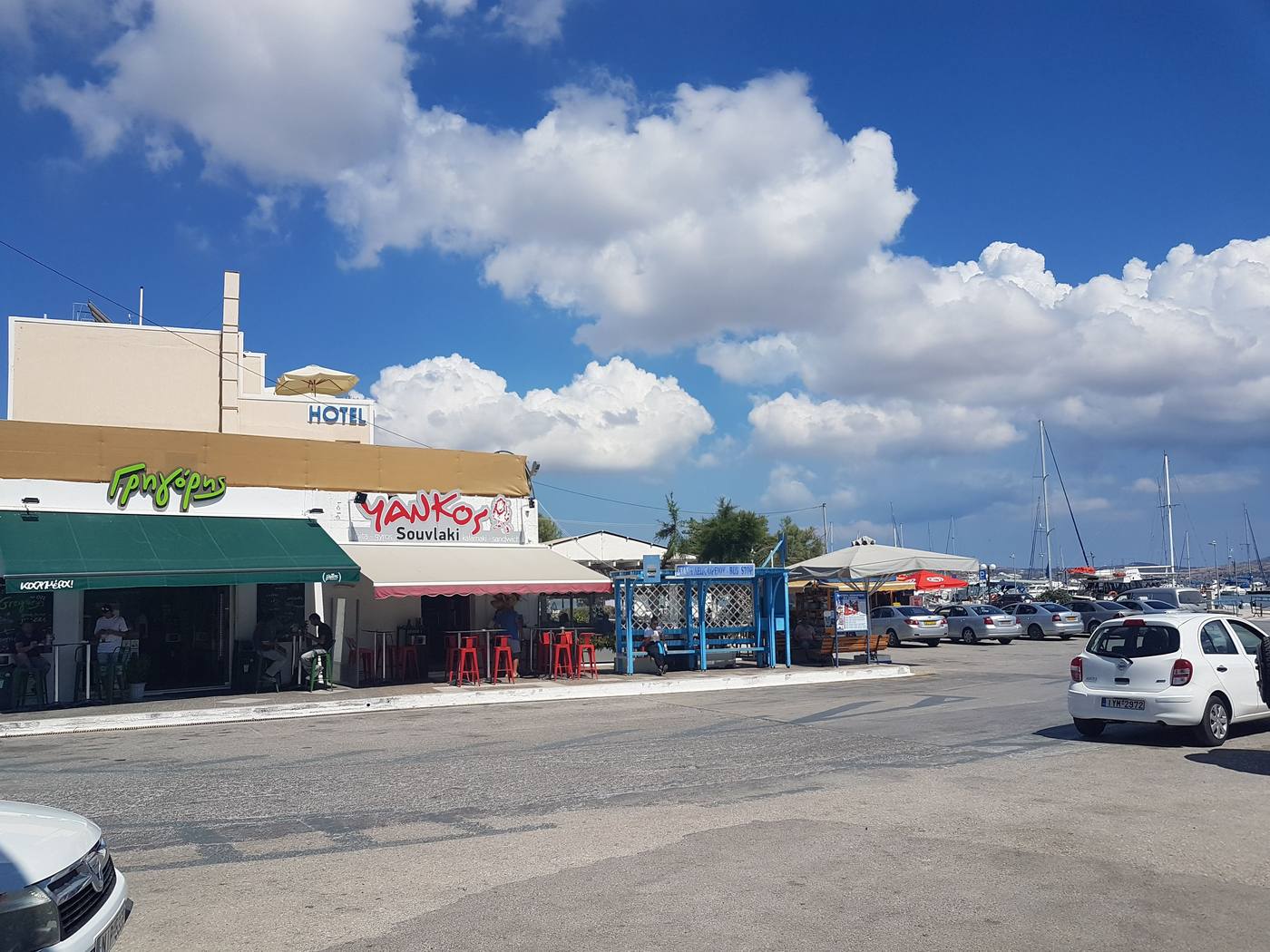
Everything starts and ends at the main square in Adamas, a minute from the ferry quay. There is no through service that skips the port, so if you are travelling between two villages you will usually be changing there.
The network is best thought of as a handful of spokes rather than a route map:
- The Plaka and Trypiti spoke. The uphill run through the Triovasalos and Pera Triovasalos villages to Plaka, the island capital on the ridge, with Trypiti and the catacombs nearby. This is the busiest and most useful line on the island.
- The Pollonia spoke. North-east across the island to the fishing village and the Kimolos ferry ramp. Slower than it looks on a map.
- The south-coast beach spokes. Seasonal services down to the big organised beaches on the south side, plus the Achivadolimni area near the campsite.
- Sarakiniko. The one famous landscape the network has served on the north-coast road, and the highest-value ride on the island for a visitor without a vehicle if it is running on your dates. See the Sarakiniko guide for what to expect when you arrive.
The operator, MilosBuses, doesn't number these lines. Routes are named by destination, not numbered like a city network. The two core year-round lines are Adamas–Triovasalos–Plaka–Tripiti and Adamas–Pollonia; the beach spokes to Paleochori, Achivadolimni, Sarakiniko and Provatas are the ones that run in summer only.
Which Places Does the Bus Not Reach?
This is the part most pages skip, so here it is plainly. The bus does not go anywhere that needs a dirt road, and a large share of the best of Milos needs a dirt road.
That rules out the remote eastern coves, the beaches down rough tracks, and the entire western half of the island, which has no surfaced roads at all. Small villages and the syrmata fishing settlements are largely off the network too, or served so infrequently that a day return is not realistic.
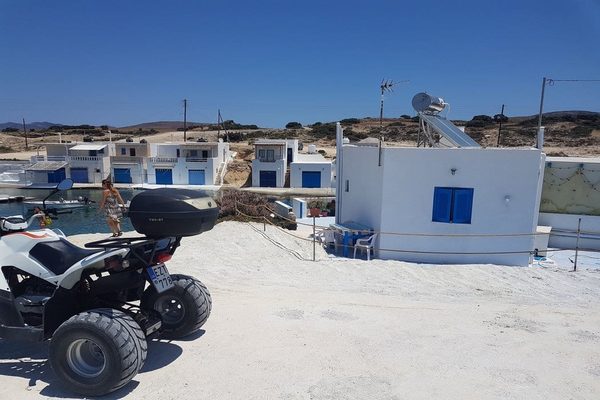
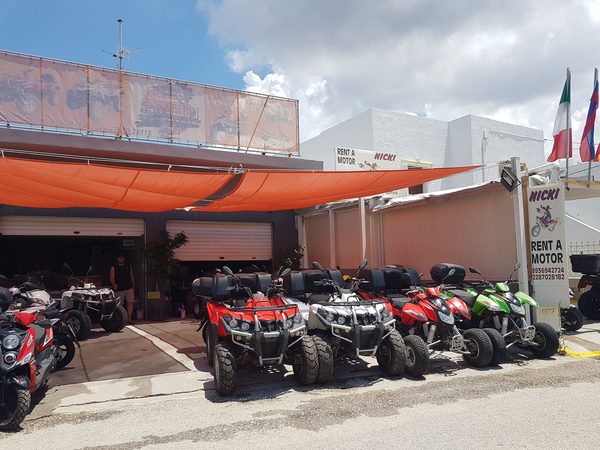
If your list is the full run of Milos beaches, the bus reaches only a fraction of them. For the rest you need a rented vehicle, and on the roughest tracks specifically an ATV or a proper 4WD, or you go by sea. That is not a failing of the service. The island is bigger and rougher than a small fleet can cover.
How Frequent Are the Buses?
Frequency is seasonal, and the difference between the ends of the season is dramatic.
In July and August the timetable expands: extra departures are added, beach services run, and some routes carry on into the evening so that people can eat in Plaka or Pollonia and get back. This is the only period when you can be casual about it.
In June and September you still get a usable service on the main spokes, but the gaps between departures lengthen and the late-evening runs mostly disappear.
I was on Milos in late September on one trip, and the shape of the day had changed completely from my June visit. Buses still ran, but they ran to the islanders' clock, clustered in the morning and again in the early afternoon, with a long empty stretch in between.
Outside the summer months the service contracts to a skeleton aimed at school and shopping journeys, and evening buses effectively stop.
This is the fact that explains why every traveller's account of the Milos bus seems to contradict the last one: the swing between the two ends of the season is enormous. On the Adamas–Pollonia line, the operator's own winter timetable runs just two departures a day, weekdays only, with nothing at all on weekends or public holidays. At full summer peak, roughly the second week of July to the start of September, that becomes about ten departures a day in each direction. Someone travelling in April and someone travelling in August are both telling the truth about their own trip. They are just describing two different services. Because the exact dates and times shift from one week to the next through the shoulder months, check milosbuses.com for the timetable covering your own travel dates rather than relying on a number printed here or anywhere else.
Where Do You Find the Current Milos Bus Timetable?
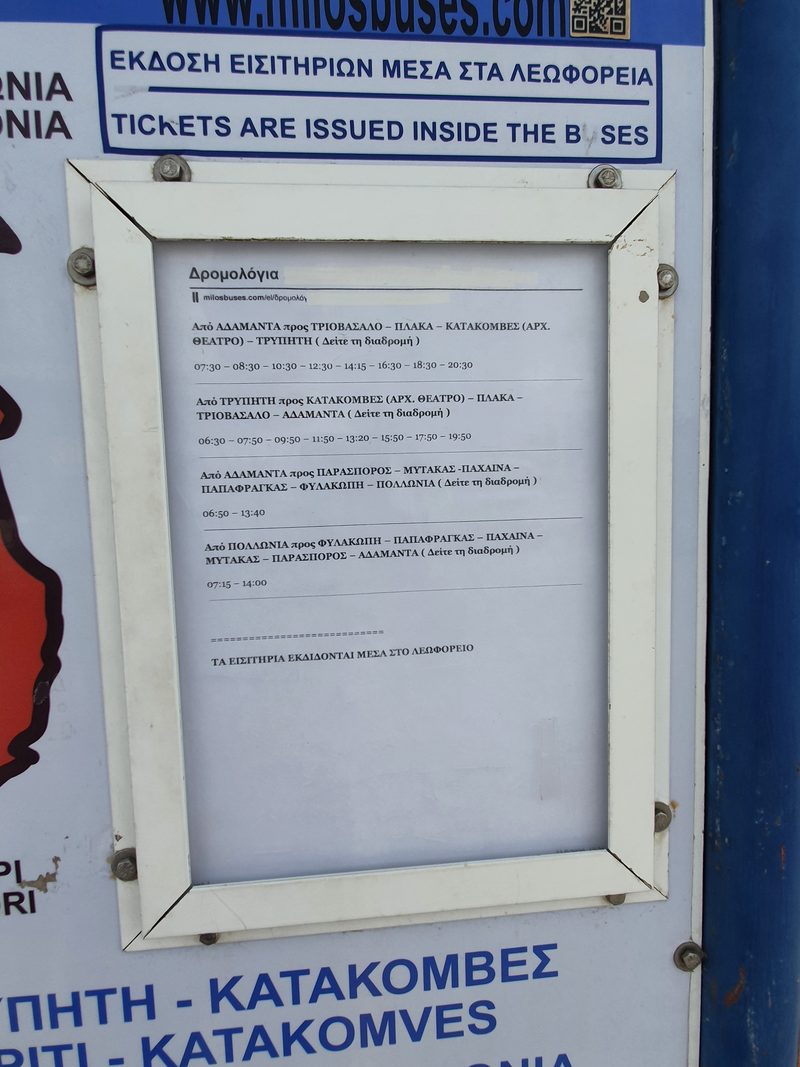
Treat every timetable you find online as potentially out of date. Routes and times on Milos are revised between seasons and sometimes within one, and stale copies circulate for years.
The reliable sources, in order:
- The printed timetable posted in Adamas, at the main square stop and around the port area. This is the version the drivers are actually working to.
- Ask at the port on arrival. The travel agencies on the Adamas waterfront deal with this question constantly and will tell you what is running today.
- Your accommodation. Hosts track the current timetable because their guests keep asking.
- The official local bus site, milosbuses.com, the operator's own page rather than a national KTEL portal. It is live and actively maintained, with separate winter and summer timetables and week-by-week variations through the shoulder seasons, making it the best single source for your actual travel dates.
How Much Does the Milos Bus Cost? (2026)
Fares are flat and cheap by any standard: a flat 2 EUR per journey, regardless of distance or destination, confirmed directly on the operator's own site. Carry cash. The operator states plainly that payment is cash only, so don't count on a card working, and there's no sign of a return or multi-ride ticket, so you buy fresh each time you board.
Can You Do a Milos Holiday Bus-Only?
Some people genuinely can, and it is worth knowing which group you are in before you decide.
It works if you base yourself in Adamas, Plaka or Pollonia, you are content with the organised beaches plus Sarakiniko, and you fill the gaps with a boat trip and the occasional taxi. Add walking, which Milos rewards, and it is a perfectly good week. The Milos travel guide sets out how the rest of a trip fits around that.
It does not work if you want the remote coves, the west of the island, or spontaneity. It is also awkward with young children and a pile of beach kit: buses at peak times fill up and there is no luggage hold worth speaking of.
The discipline that matters most is the last bus back. Check it when you board the outbound service, not when you are wet and hungry at four in the afternoon, and have a backup. On Milos the standard backup is a taxi, and on a busy August evening you should not assume one will be free.
My own habit on islands with a thin timetable is to treat the last departure as an hour earlier than it is printed. It costs you an hour on the beach and saves you a very long walk.
For the backup taxi, the Adamas rank and Milos Taxi both run a booking line, but no island-wide fixed-fare list exists in print anywhere. Agree the price with the driver before you get in, or ask your accommodation what the going rate should be.
Every Milos bus route starts and finishes at the main square in Adamas, the port town of this Greek island. The network reaches Plaka, Trypiti, Pollonia and a handful of the developed beaches, and nothing on a dirt road. Fares are a flat 2 EUR, cash only, and the service swings from a couple of departures a day in winter to around ten a day at the July–August peak. Check milosbuses.com for your own dates. Always know the time of the last bus back.
Planning the rest of your island time? Start with our complete Milos travel guide.
Last updated: 14 September 2026