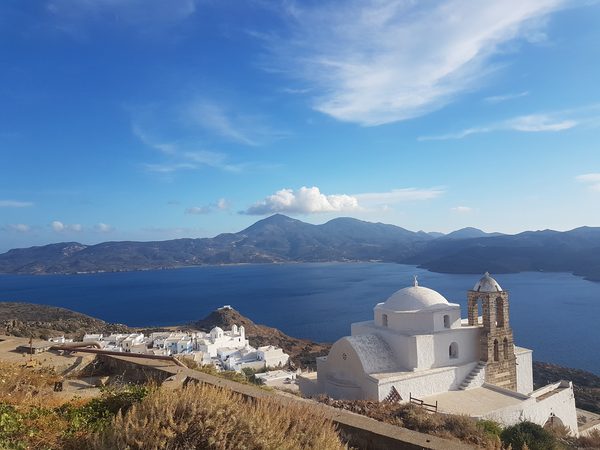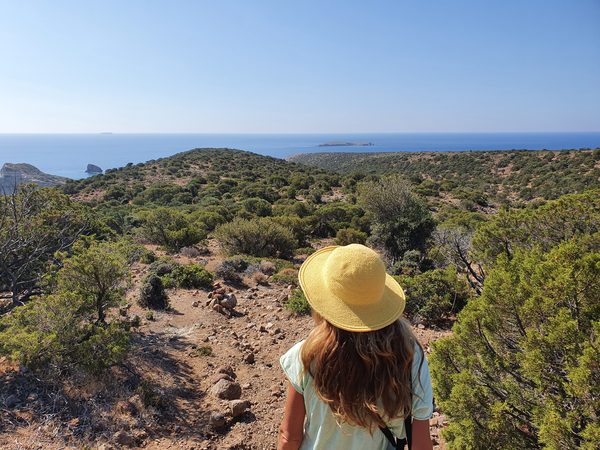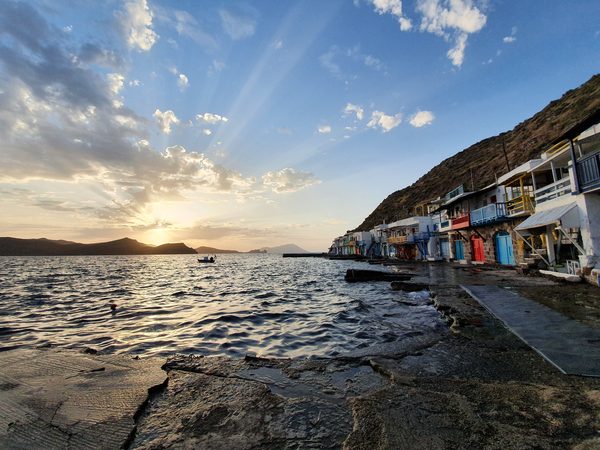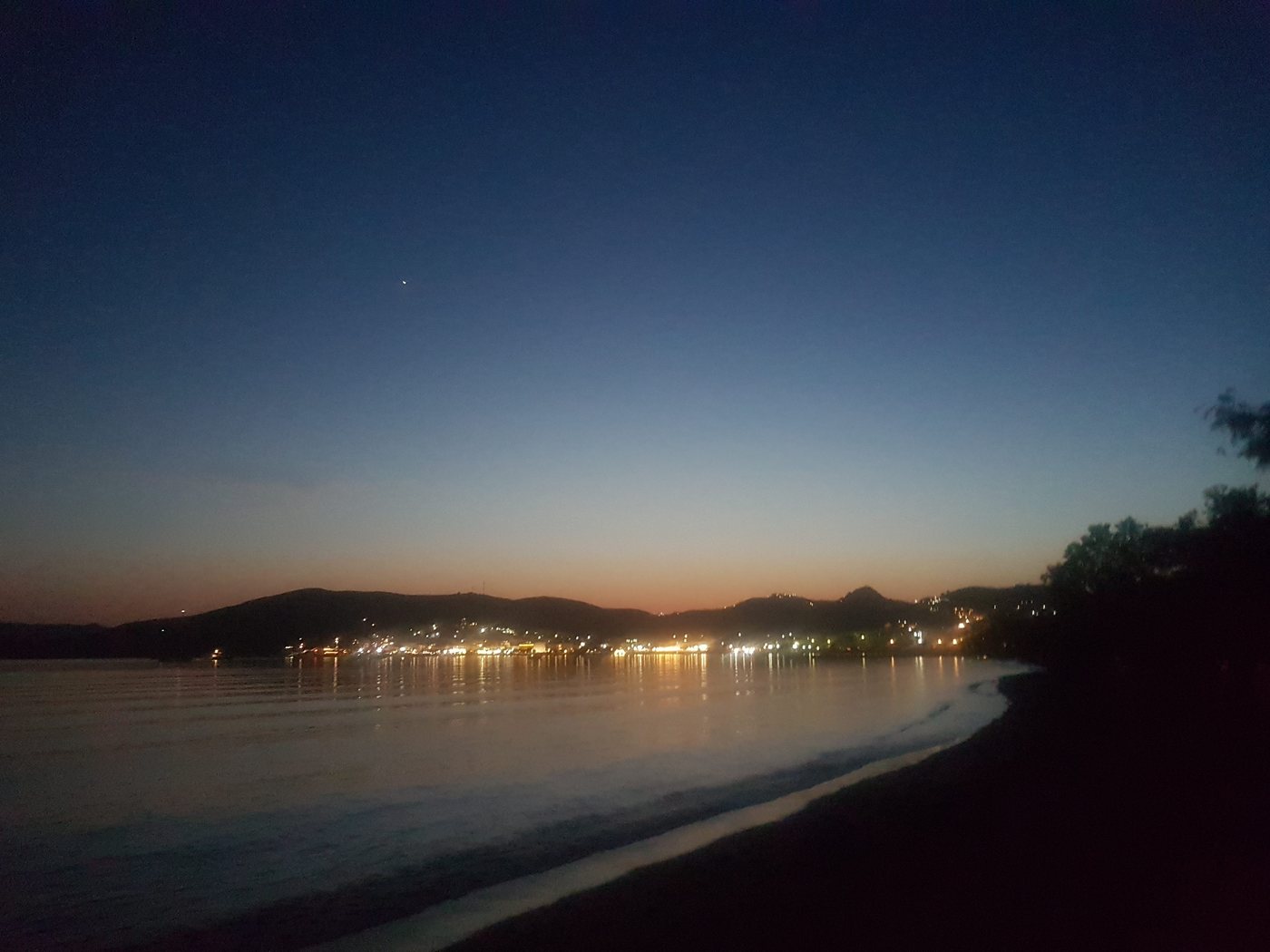
Adamas, also spelled Adamantas, is the largest town on the Greek island of Milos, and home of the main ferry port. It is also a central transport hub for buses, car rentals and Milos boat tours. Adamas can make a good base when visiting the island, as there are plenty of places to eat, three small museums, two beaches within walking distance, and everything else you need for your stay in Milos.
In this guide
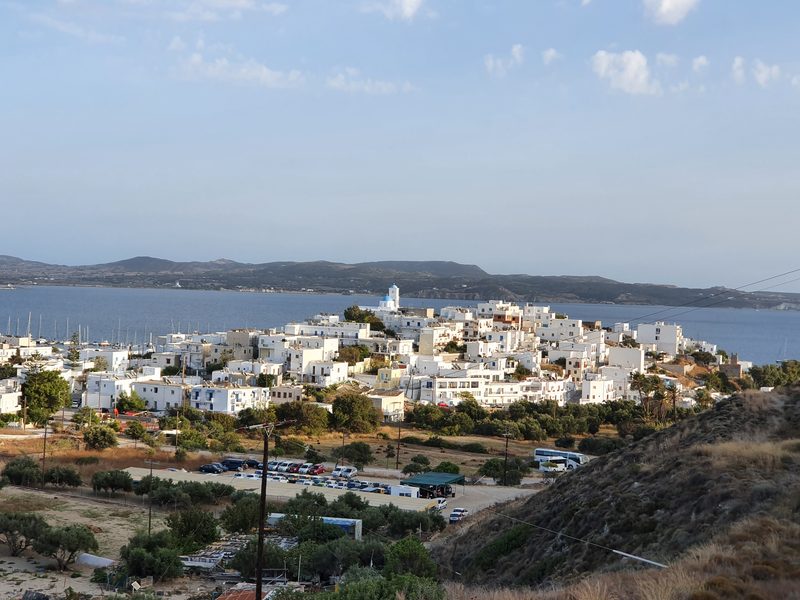
The town of Adamas sits at the inner end of the enormous natural bay that bites into the north coast of Milos, and that one piece of geography explains most of it. Ships have sheltered here for centuries, the mining companies loaded cargo from these quays, and the tourist town grew on top of a working port rather than replacing it.
By the way, Adamas or Adamantas? Both spellings are correct. You will see Adamas and Adamantas used interchangeably, sometimes on the same street.
What Is Adamas Actually Like?
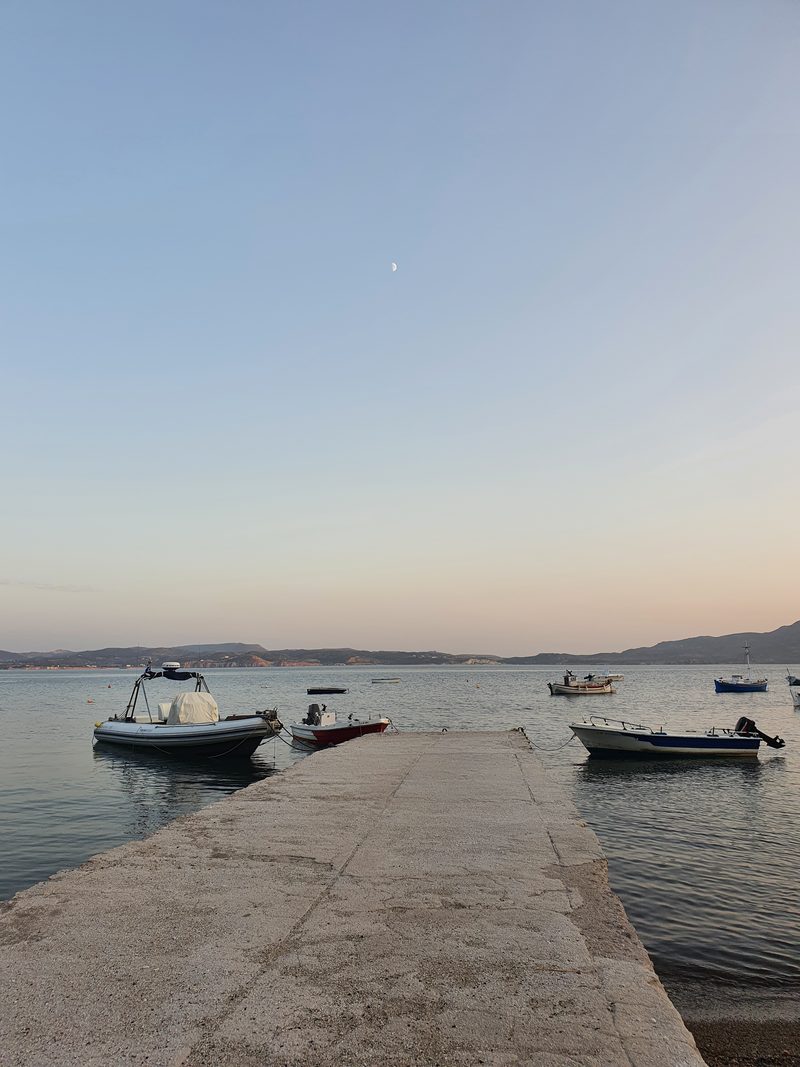
Functional, cheerful, but a little scruffy at the edges. The quay is given over to inter-island ferries coming and going, boat-trip operators and travel agencies. The curve of bay behind it runs almost unbroken with tavernas, cafes and bars, while the streets climbing inland hold the supermarkets, the rental desks and most of the beds.
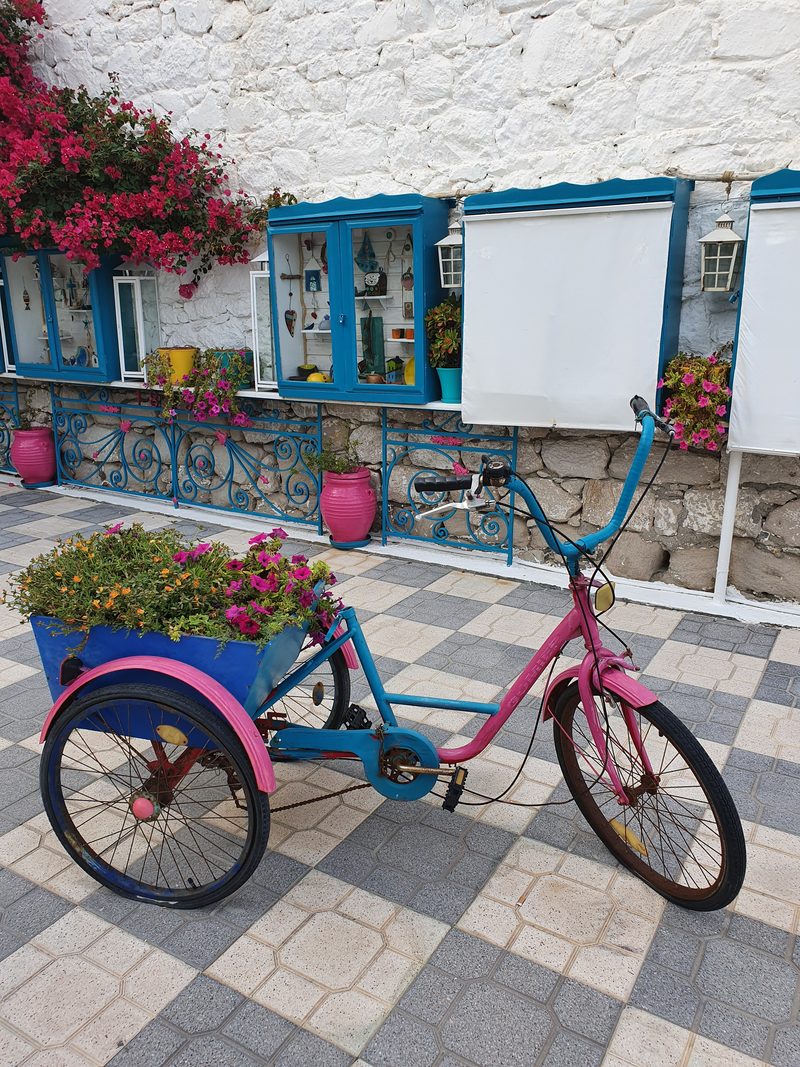
Anyone expecting whitewashed lanes and blue shutters will be briefly disappointed. Adamas is built for work rather than photographs, and it does not compete with Plaka on charm. What it has instead is convenience, which on an island where distances are longer than they look matters more than it sounds. It also improves after dark, once the day boats are back and the town stops looking like a transport hub.
I have stayed both In Adamas and up in the prettier villages, and which I prefer depends on the trip. For a first time visit to Milos, I would recommend staying in Adamas every time, and doubly so for anyone not interested in renting a 4WD or other vehicle to get around.
What Is There to Do in Adamas?
More than its reputation suggests, though not enough to fill a holiday. Give it half a day of proper attention.
Milos Mining Museum
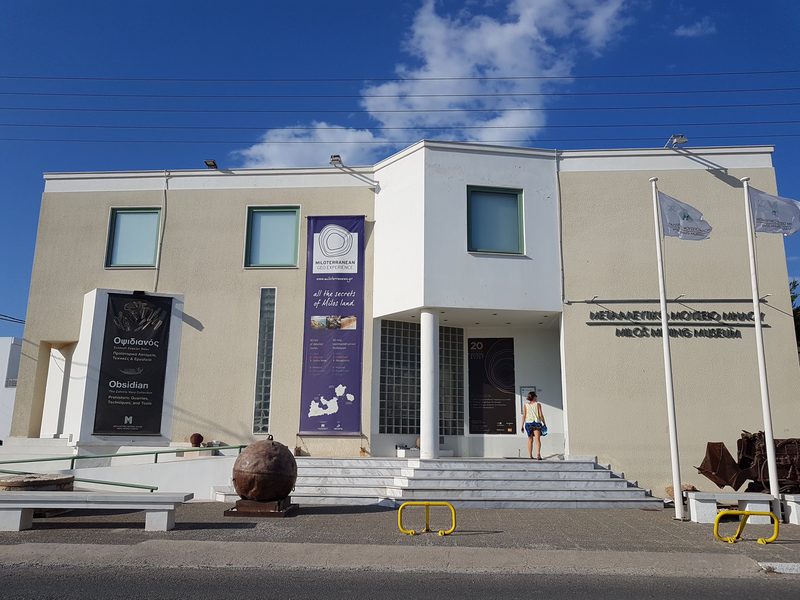
The one attraction in town that changes how you see the rest of the island. Milos has been quarried and mined since prehistory, and this museum is where that whole story lives. What to see inside and why it matters is covered properly in the Milos museums and mining history guide. Admission is 7 EUR (10 EUR with an audio tour), with hours that shift through the season and the museum closed to general visitors from November to March; check the current month on the museum's own website before you go. Getting there is a short, flat walk from the port, on the road round towards Papikinou beach.
Go on your first day, not your last. Sarakiniko and the coloured cliffs at Paleochori make far more sense once you know what the island is made of.
The Ecclesiastical Museum at Agia Triada
Inside the church of Agia Triada, the Holy Trinity, whose foundations go back to the 9th century AD. The collection is small but of real quality: rare books, icons, gold and silver liturgical objects, carved woodwork. The piece to stand in front of is the iconostasis, a full wall of icons and painted panels screening the sanctuary. Look down on the way in, too, because the courtyard mosaic is by the Milos artist Giagos Kavroudakis and easy to walk straight over. This one runs on the curator's own hours rather than a fixed timetable, so treat any posted opening times as a rough guide, and if the door is shut, try again later in the day.
Kimisi tis Theotokou
The church of the Dormition of the Virgin stands on the highest ground in town, which makes it the better of the two churches for a short walk with a view over the bay. Its iconostasis and icons were not made for it. They came from the cathedral at Zefyria, the island's old capital. Kavroudakis designed this courtyard mosaic as well.
Milos Maritime Museum
A footnote next to the mining museum, but cheap on time: prehistoric obsidian tools, old naval charts and instruments, and a traditional wooden Cycladic boat, the Irini. Twenty minutes if you like boats. All three museums are covered in the Milos museums and mining history guide.
Lagada and Papikinou Beaches
Two beaches within an easy walk of the centre. Neither is why you came to Milos. They give you calm, shallow bay water with a town behind it rather than the volcanic drama of the south coast, but both work for a swim before dinner. Papikinou lies out past the Mining Museum, Lagada on the other side of the harbour. Sitting deep inside the bay, they are also the fallback when the north wind has made the exposed beaches unusable.
The Waterfront in the Evening
Not a sight, but it is what most people end up doing. This is the largest concentration of places to eat on Milos, the sun goes down across the water rather than behind a hill, and the boats coming back from Kleftiko give you something to watch. Which tables are worth the money is a separate question, answered in the guide to the best restaurants in Adamas.
Should You Stay in Adamas?
For most first-time visitors, yes. The case is structural rather than aesthetic.
Everything on the island starts here. The bus network radiates out of Adamas rather than passing through it, so you board at the front of the queue instead of flagging down a full bus down the line. Car, scooter and ATV hire desks sit in the same few streets, so comparing them is a matter of walking. See getting around Milos.
The boat trips leave from the quay. The best thing to do on Milos is the sailing round the south-west coast to Kleftiko, and those boats board here, early. From anywhere else that means a drive in the dark. The Milos boat tours guide covers the operators.
The most beds and the widest price range. More rooms, studios and hotels than anywhere else on the island, across every budget. Where to stay in Milos covers the alternatives village by village.
You can arrive and leave without transport. A 06:30 ferry is a five-minute walk, not a taxi booked the night before. See how to get to Milos.
The case against is real, though. Adamas is the least attractive of the bases, the waterfront is the most touristed strip on Milos, and the tables facing the water charge for the position. Rooms on the through roads can be noisy, and a port does not go quiet at night. Plaka has the views and the sunset, Pollonia the prettiness and calmer water, and with a car for the week neither costs you much.
My rule of thumb: no car, or a short packed trip, stay in Adamas. A car and a week to use it, stay somewhere prettier and come in for the boat trip and dinner.
What Can You Sort Out in Adamas?
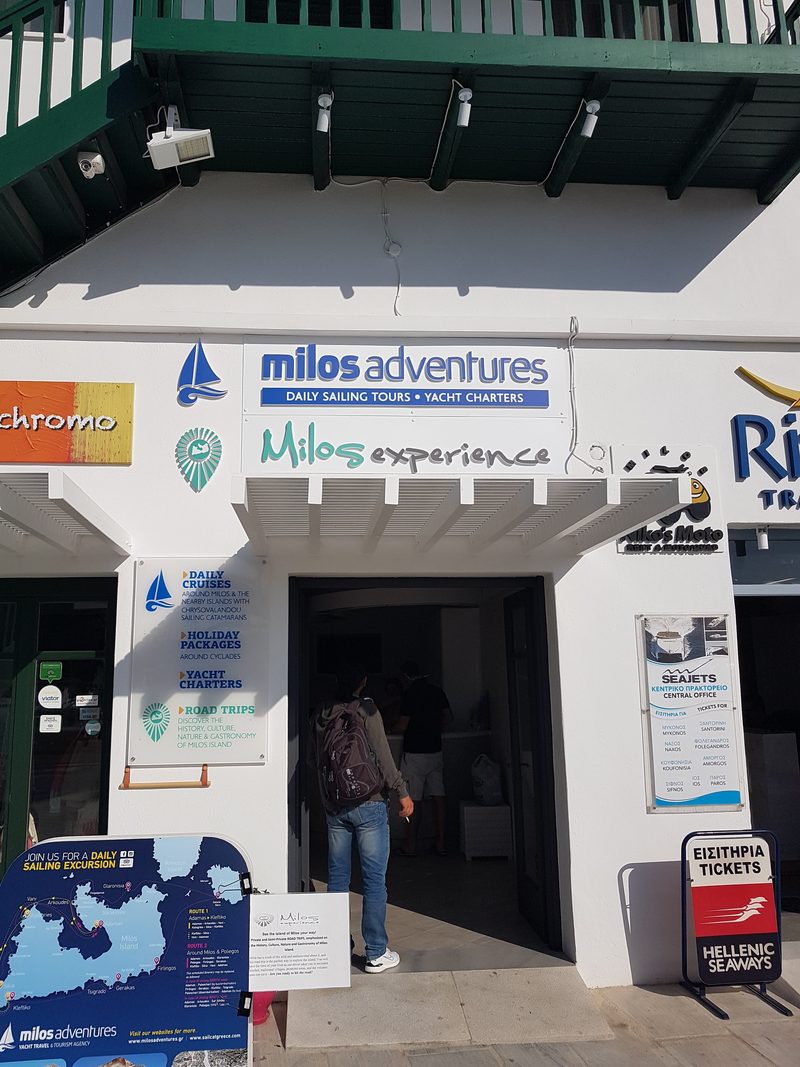
The island's practical infrastructure is here. If something needs doing, do it in Adamas rather than assuming a village will have it.
- Supermarkets. Adamas is where the island does its real shopping. Stock up here before heading for beaches where you cannot count on buying so much as a bottle of water.
- Money and medicine. Cash machines and a pharmacy are in town, and this is the most reliable place on Milos for both. Do not count on the smaller settlements. Greek pharmacies work a rotating weekend and holiday duty system rather than a fixed schedule, so check the door of whichever pharmacy you pass for that week's on-call listing rather than expecting one to simply be open.
- Travel agencies. Several on and behind the quay handle ferry tickets, excursions and transfers, and they are the low-effort way to fix an onward crossing.
- Laundry. Smart&Fast Clean Laundry, on the road out towards Plaka, is the standalone option, useful if you are island-hopping with one bag; several hotels also arrange laundry for guests.
Adamas, or Adamantas, is the largest town on Milos, in Greece's Cyclades, home to around 1,400 people and the port every ferry uses. It is a working harbour rather than a scenic village, but it holds the Mining Museum, the Ecclesiastical Museum at Agia Triada, two swimmable beaches at Lagada and Papikinou, the bus hub, the hire desks and the Kleftiko boats. Stay here for convenience, elsewhere for charm.
Planning the rest of your island time? Start with our complete Milos travel guide.
Last updated: 2 August 2026