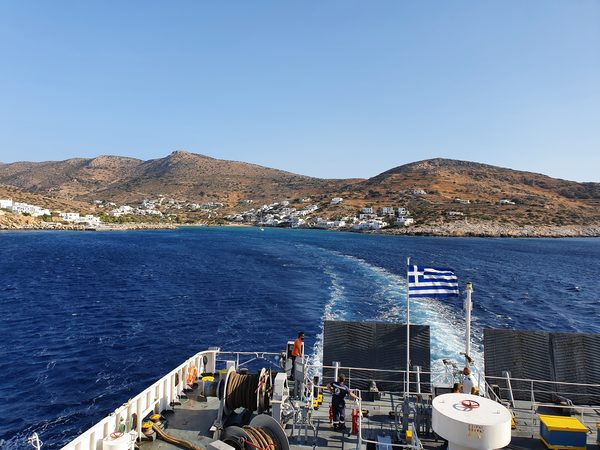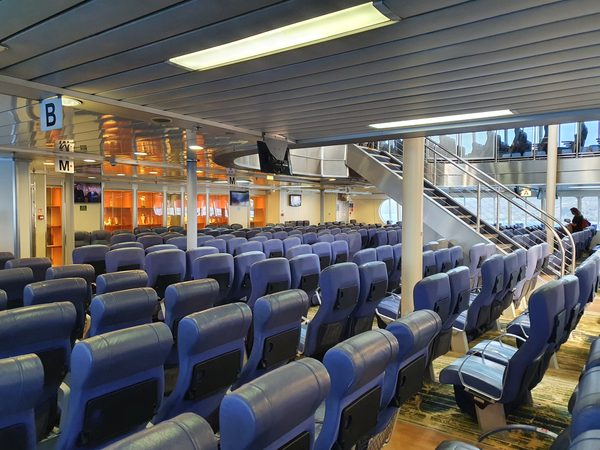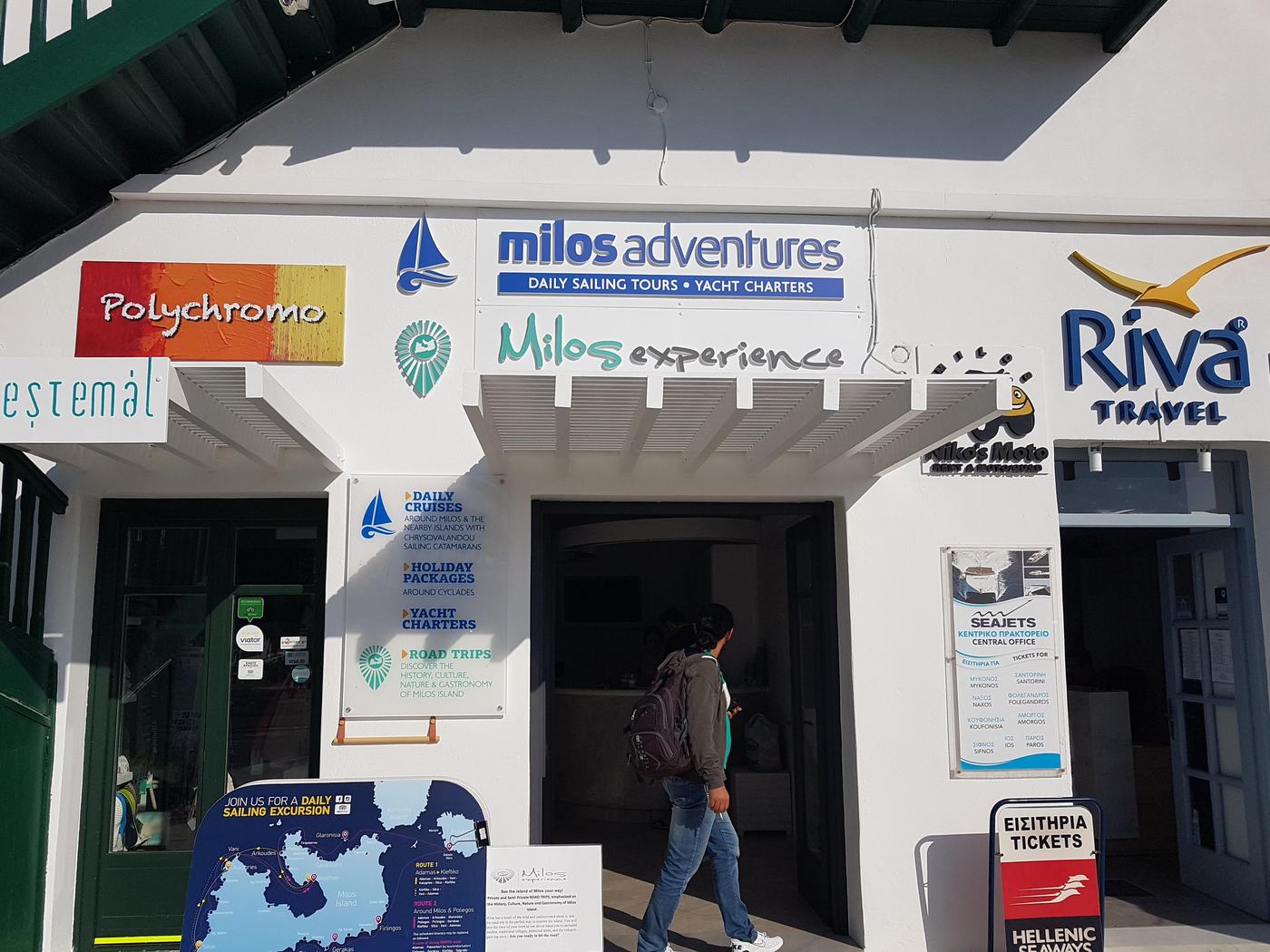
There are two ways onto Milos: a ferry to Adamas, or a small domestic flight from Athens. The ferry is the right answer for most people, as multiple crossings connect Milos with Athens and other Greek islands in the Cyclades. Flying is worth it when your trip is short enough that half a day matters more than the fare. Nobody arrives here direct from outside Greece.
In this guide
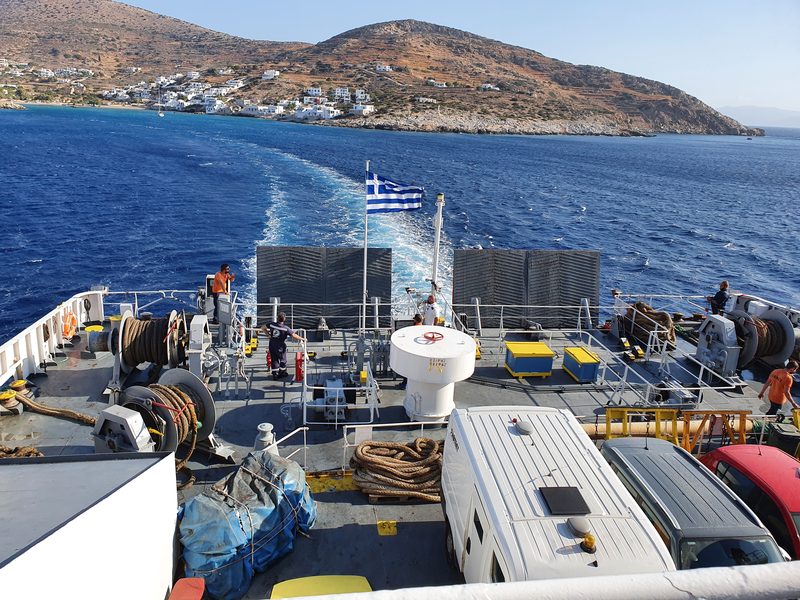
The vast majority of people who visit Milos arrive by ferry. This is partly because Milos airport is limited in size and does not accept international flights. Mainly though, Milos has excellent ferry connections with nearby islands and the Greek mainland and is the easiest way to travel. Besides, for most visitors, Milos is part of a Greek island hopping trip, and taking the ferry is part of the experience!
Find fast ferry and regular ferry times at Ferryscanner.
I normally travel to Milos by ferry from Piraeus Port in Athens and take my car. My nephew who lives in the UK visited Milos by first flying from the UK to Santorini directly, and then taking a ferry to Milos. The options are endless!
Should You Fly to Milos or Take the Ferry?
Take the ferry if you have more than four or five days, are travelling as a family, are combining Milos with another island, or care what the trip costs. Fly if your trip is short, you land in Athens late and want to be on the island the same day, or you are travelling out of season when the sea schedule thins to almost nothing.
| Ferry | Flight | |
|---|---|---|
| Journey time from Athens | Roughly 3-8 hours depending on the boat | Under an hour in the air |
| Realistic door-to-door | Half a day | Not dramatically quicker door-to-door once airport time is counted |
| Cost | Considerably cheaper | Premium, and steep if booked late |
| Frequency in summer | Several daily | A handful of flights daily |
| Frequency in winter | Thin but continuous | Reduced |
| Weather cancellations | Occasional, mostly fast boats | Rare but disruptive |
| Onward island hopping | Built in | Not possible |
The gap narrows once you count the whole journey rather than the flying part. Athens airport sits well outside the city, and you have all that check-in time to factor in as well. When you land in Milos, the airport is 5 km from Adamas so you’ll need a transfer. The boat is one metro ride from central Athens and you walk off it into the town your hotel is in. The plane saves real time, but less than the timetable implies.
Does Milos Have an Airport?
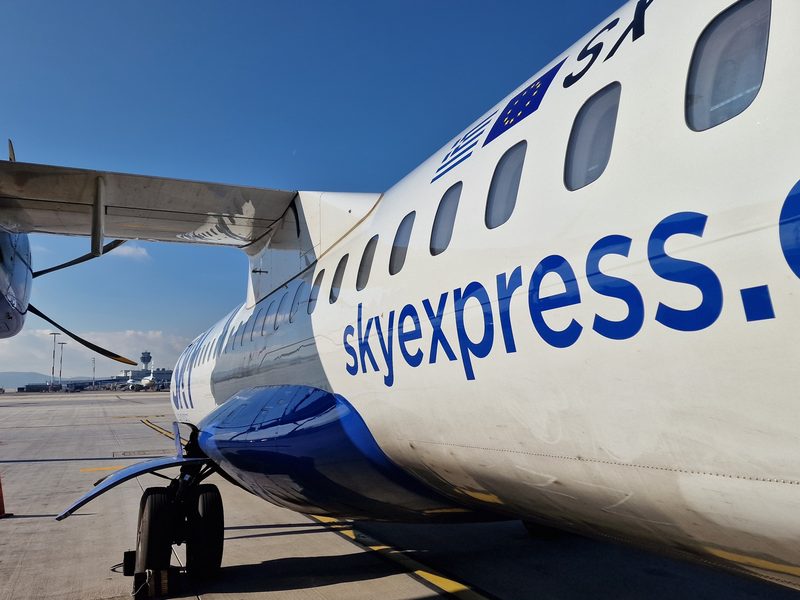
Yes, a small one roughly 5 km south of Adamas, domestic traffic only. No international arrivals and no charters, so the only way in by air is a connection from Athens Eleftherios Venizelos, about forty-five minutes in the air. The route is flown by Sky Express, using a small ATR turboprop, a handful of departures a day rather than an hourly shuttle. The aircraft are small, which matters twice over: the cabin baggage allowance is tighter than you expect, and seats sell out early.
Book months rather than weeks ahead. On a route with this little capacity late fares climb hard, and in August the flights can simply be gone. Watch the baggage allowance too. The cheapest fares are hand luggage only, though a Greek island trip out of a cabin bag is perfectly doable and saves you the carousel.
How to Get From Milos Airport to Adamas
A few minutes by road. There is an airport bus, and in summer it runs roughly to the arrivals, but the thing to know is that it does not run in winter at all. From around October to May there is no airport bus service, so an off-season arrival means a taxi or a pickup arranged with your accommodation. Even in summer, treat it as loosely timed rather than guaranteed.
Arrange a hotel transfer in advance if you can, or take a taxi from the rank. This is a small island, not a city, so do not assume taxis will be waiting in numbers at a late arrival. No published fixed-fare card exists for the run, so agree the price before you get in or ask your accommodation what it should cost. The Milos bus guide covers the island network, and getting around Milos the vehicle options.
Where Do Ferries to Milos Come From?
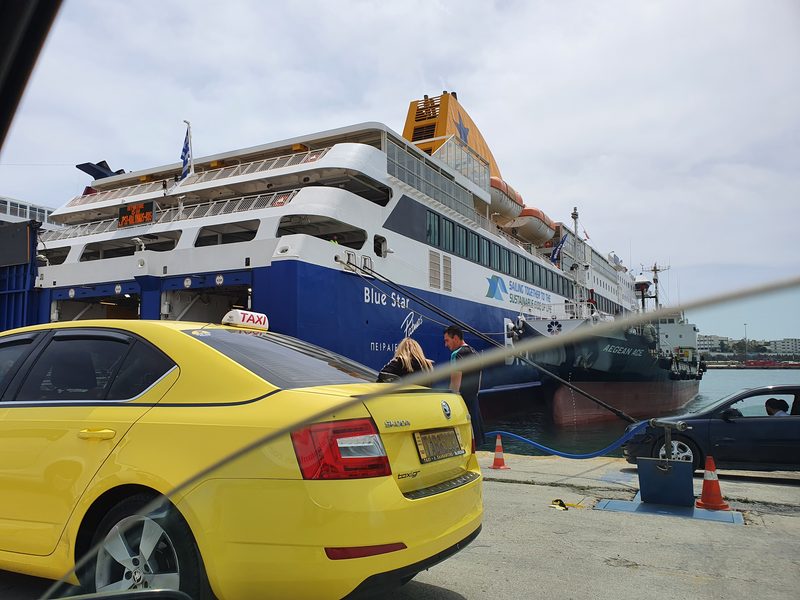
From Piraeus, and from most of the Cyclades. Milos sits on the western Cyclades line of Kythnos, Serifos, Sifnos, Milos and Folegandros, so anything sailing that chain calls here, and there are links east to Paros and the central islands plus a summer connection down to Santorini. Every large ferry, from every direction, docks at Adamas port, which makes Milos simpler to plan than islands with two ports.
Each route below has its own page with crossing times, port detail and booking advice.
| Route | Typical crossing | Notes | Guide |
|---|---|---|---|
| Athens (Piraeus) | 3-8 hours | The main artery; fast boats, big car ferries and a budget slow boat | Athens to Milos ferry |
| Santorini | Short crossing, vessel-dependent | Popular pairing; seasonal frequency | Milos to Santorini ferry |
| Paros | Roughly 1.5-2.5 hours | Shortest useful hop from the central Cyclades | Paros to Milos ferry |
| Mykonos | Longer, often with a stop | Fewer direct options than people assume | Mykonos to Milos ferry |
| Naxos | Varies with routing | Usually via Paros or a multi-stop sailing | Naxos to Milos ferry |
| Ios | Varies with routing | Seasonal; check the itinerary, not just the time | Ios to Milos ferry |
| Sifnos | Short | The natural neighbour on the western line | Milos to Sifnos ferry |
| Folegandros | Short to moderate | Links the western line to Santorini | Milos to Folegandros ferry |
| Syros | Varies | Cyclades administrative hub, useful for connections | Milos to Syros ferry |
| Serifos and Kythnos | Short | The stepping stones back towards Piraeus | Milos to Serifos and Kythnos ferry |
| Kimolos | 25-30 minutes | Small local boat from Pollonia, not the main port | Milos to Kimolos day trip |
Crossing times are broad bands that vary with the vessel and the number of ports it calls at. Look up the specific sailing rather than planning around the band.
What Kinds of Ferries Serve Milos?
Three broad classes, and the choice between them shapes the journey more than the operator name does.
Fast catamarans. Quickest boats, dearest tickets. Enclosed cabins, numbered seats, no stepping outside. Some carry vehicles and some are foot passengers only, worth checking before you book anything involving a car. The smaller ones ride badly in a swell.
Large conventional ferries. Slower by an hour or two, cheaper and far more comfortable, with indoor lounges, open decks, a cafeteria, and the mass to sit steadily in weather that has the catamarans bouncing. If the timing works, this is the better boat.
The slow boat. A long multi-stop sailing, cheapest by a distance, carrying on past Milos to Kimolos and running through the winter when much else stops. It also eats most of a day.
Blue Star Ferries and Seajets are the two names to know: Blue Star runs the conventional, vehicle-carrying ships, and Seajets the high-speed catamarans. Golden Star, Zante Ferries and Aegean Sea Lines are among the smaller names that fill in the rest of the timetable, and they rotate more from year to year than the big two. Treat Blue Star and Seajets as the durable core of the route and the others as usually-also-there.
When Should You Book, and When Do the Boats Run?
July and August. Full boats, full island, the widest choice of sailings you will get. Book the moment your dates are fixed; the popular crossings sell out and what remains is the awkward hours. This is also meltemi season, when the north wind can pull the smaller high-speed boats from the board while the big ships sail regardless.
June and September. The best of it, with plenty of sailings, warm sea and fewer people. A week or two ahead is usually enough, though the last September weeks thin quickly.
April, May and October. One or two departures a day on the main route, and patchy inter-island links. Check your onward leg exists before you commit to an itinerary.
November to March. A skeleton service, mostly the slow ferry, a few times a week, and a bad forecast can cancel a day outright. Flights matter more in winter than at any other time.
You search in February for a July crossing and find almost nothing. That is normal and says nothing about the route. Greek operators file their summer timetables on their own schedules, some months ahead of others, and the boat you actually want is often the last to appear. Search again a few weeks later before you rearrange the trip around an empty result. More on the seasonal picture in when to visit Milos.
What Should You Know Before You Travel?
- Bring your own food. Every boat has a bar. None of them is good value.
- Take seasickness pills before boarding. They do nothing once you need them, and the small fast boats in a chop are where people find out.
- Keep valuables with you. Large bags go in racks or on the car deck, out of your reach for the crossing.
Boarding routines, ticket classes and how far ahead to book all vary by departure port, so those live on the individual route pages linked in the table above.
Your First Hour on Milos
Boat or plane, you end up in the same place: Adamas, on the sheltered inner shore of the island's huge natural bay. What matters is the order you do things in once you are standing on the quay with your bags.
Luggage first. If your room is in Adamas, walk the cases there and come back. Everything is a few minutes from the ramp, and dragging bags around while you make decisions is what sours an arrival. Staying elsewhere, leave them with the hire desk or the hotel transfer.
Then how you move, and there are only three answers. A hire car booked in advance, collected at or near the port, makes the rest of the trip easy. The bus is cheap and fine if you are based in Adamas or Pollonia and travelling light, but it runs to the island's day, not your ferry's. A taxi covers a late or after-dark arrival, and is worth taking without agonising.
Last, the supermarket. The proper ones are a short walk from the waterfront, cheaper and better stocked than anything in the villages. If you are self-catering, or heading for a beach whose canteen may or may not be open, buy water and food now.
The Adamas guide covers the town, the Athens to Milos ferry guide has the port and boarding detail, and the Milos travel guide is where to plan the rest.
What About Getting to Kimolos?
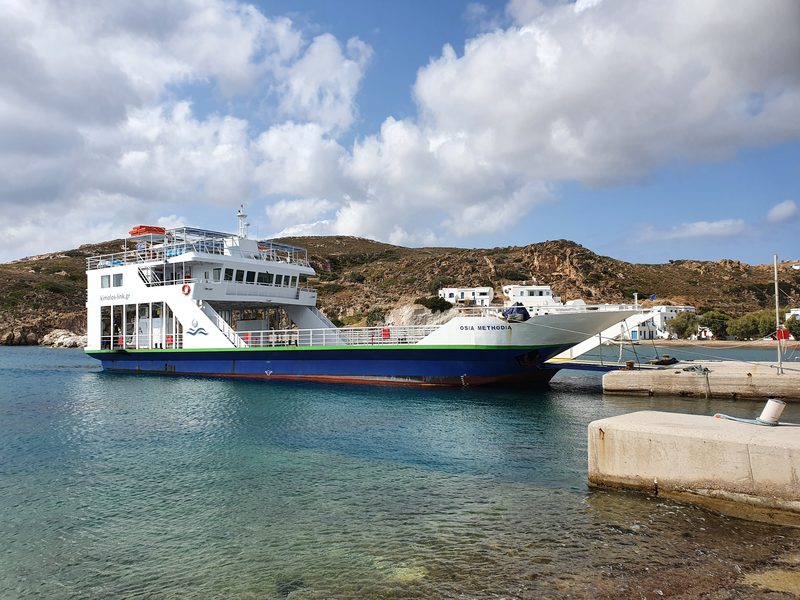
Kimolos, off Milos's north-east tip, has two routes in. The slow Piraeus ferry sails all the way there a few times a week, calling at Milos on the way. The everyday option is a small local boat from Pollonia to Psathi, under half an hour, several times a day. Locals call it the pantofla, the slipper. Tickets are bought at the quay or on board rather than through the online agencies, which surprises people arriving with a printed booking in mind. The crossing runs every day of the year rather than shutting down for winter, though sailings thin out considerably once the season ends; the one-way adult fare is 2.40 EUR. See the Kimolos island guide for the other side.
Can You Reach Other Islands Onwards?
Yes, and for anyone building a multi-island trip that is the whole reason to skip the plane. In season Milos connects to most of the Cyclades, and there is a long-haul sailing to Crete that runs year-round. Do not build a trip around the Dodecanese link, though. A Milos to Rhodes sailing appears some years and not others, and when it does run it is a very long multi-stop crossing rather than a practical connection. Treat Crete as the dependable long hop and anything further east as a bonus you verify before committing to it.
Fix the onward legs before you leave home, though. The western Cyclades run fewer boats than the central group, so a leg you assumed existed may turn out to run twice a week, leaving you to plan around the gap rather than the islands. Milos island hopping sets out which combinations work.
Milos is reached by domestic flight from Athens, under an hour in the air to an airport 5 km from Adamas, or by ferry, roughly 3 to 8 hours from Piraeus depending on the boat, plus links to Santorini, Paros, Sifnos and most of the Cyclades. Every large ferry docks at Adamas. Fly if time is short, sail if it is not, and book July and August months ahead.
Planning the rest of your island time? Start with our complete Milos travel guide.
Heading to Santorini? See our guide to the best day trips from Santorini.
Heading to Mykonos? See our guide to the best day trips from Mykonos.
Heading to Athens? See our guide to the best day trips from Athens.
Last updated: 7 September 2026