The Ios to Milos ferry crossing is a summer seasonal route with high-speed boats, but there can be days with no sailing at all. When planning a Greek island hopping trip that combines Ios and Milos, keep in mind that ferry schedules for the coming summer may not be released until the end of April.
In this guide
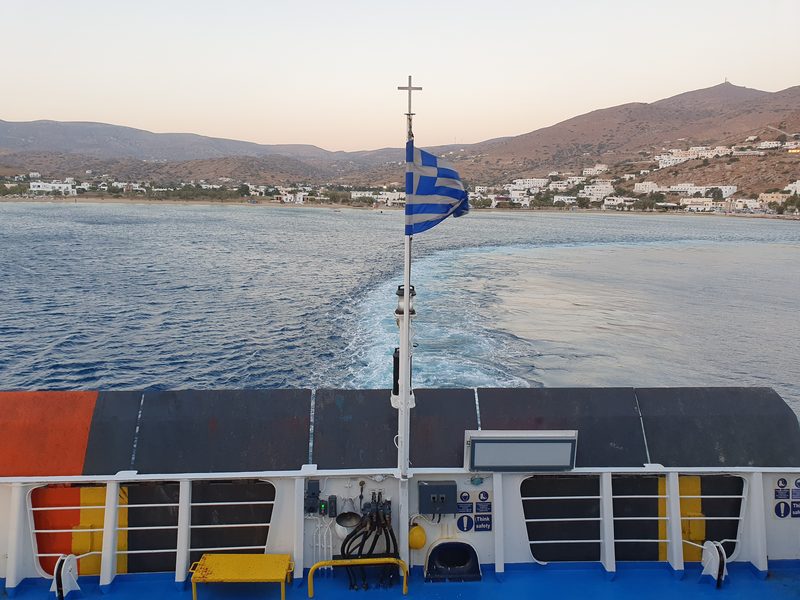
Ios sits in an awkwardly useful spot. It is on the busy Santorini corridor and close enough to Milos that the crossing barely counts as a journey. That is why this leg exists at all: it is the bridge people use to swing off the Santorini–Naxos–Paros conveyor belt and onto the quieter western chain that Milos anchors. Nobody plans a holiday around the Ios to Milos ferry. They plan a route, and this is the link that makes the route work.
Compare operators and book your ferry at Ferryscanner.
Where Does This Leg Sit in a Cyclades Route?
Most people reach this crossing having come up from Santorini. Ios becomes a one or two-night stop, and Milos is the next move west. Done in that order you finish on the side of the Cyclades with the direct Piraeus connections and an airport, which is the sensible way round. The reverse direction has its own logic if you are flying home from Santorini, covered in the Milos to Santorini ferry guide, and the wider chaining picture is in the Milos island hopping guide.
What you should not assume is that these two Greek islands are joined at the hip because they look close on a map. Milos belongs to the western Cyclades line and takes most of its traffic from Sifnos, Serifos, Kythnos and Folegandros. Ios belongs to the central–southern line. The boats linking them cross between two systems, which is exactly why there are so few.
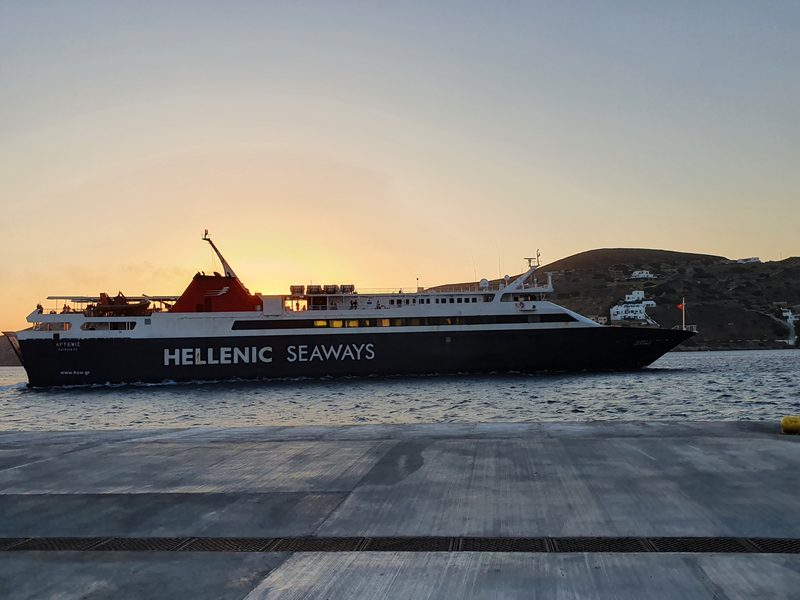
What Actually Sails This Route?
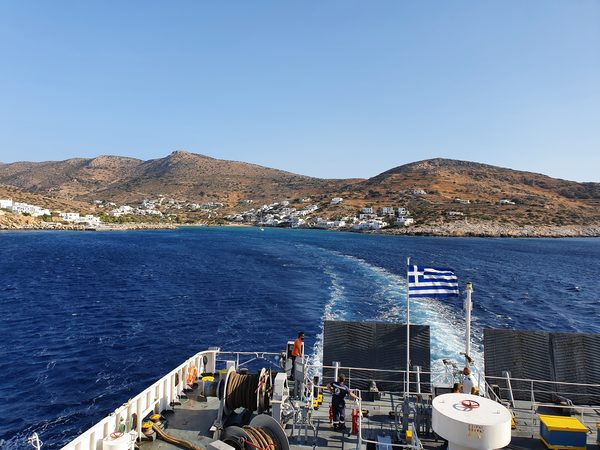
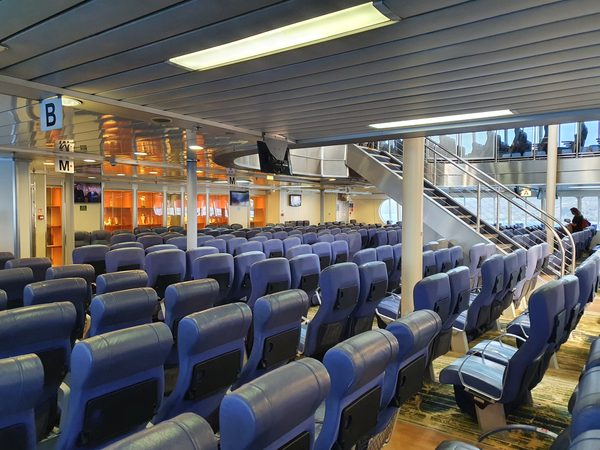
The timetables and vessel types sailing between Ios and Milos vary from year to year. This is one route where you can’t rely on a previous year’s schedules! This means that while high-speed ferries sail according to the season and demand, slower ferries by Blue Star Ferries and Fast Ferries also fill the route periodically with conventional car-carrying ships.
Crossing time varies a lot with the boat. A Seajets catamaran on a direct-ish run can be under two hours; a conventional ferry working the wider Cyclades circuit can run closer to four. Plan on that range rather than a single figure, and read the itinerary of a specific sailing before assuming you have the quick one.
Sailings, fares and the days each week are deliberately not written into this page, because they change every season and often mid-season. Look them up for your own dates and treat anything quoted in an article, including this one, as out of date.
How Narrow Is the Season?
Narrower than it looks on paper. The conventional ferries keep some kind of service running close to year-round as part of their standing Cyclades circuits, so the link never fully disappears the way a pure high-speed route would. What thins out badly in the off-season is the fast, direct option: Seajets treats this as a spring-through-autumn addition, busiest from summer into early autumn, rather than a year-round fixture. Outside that window you are more likely to be on a slower conventional sailing, or looking at a backtrack via Piraeus if nothing useful is running that week.
If your trip falls in April, May, October or later, check before you commit to an Ios night, and do not assume the fast catamaran will be there. The safer shape for a shoulder-season trip is to treat Milos as a Piraeus-in, Piraeus-out island and add Ios another year. More on the season in the when to visit Milos guide.
When a single seasonal boat stops running, patching one leg rarely works, and the fix is usually to reverse the whole island order. Plan this crossing first and let the rest of the route bend around it.
Why Does the Port Come Before the Chora Here?
Ios has a split that catches people out on a departure morning. The ferries leave from the port settlement down in the bay, officially Ormos though everyone still calls it Gialos as well, while the village most visitors stay in is Chora, up the hill above it. They are two different places about 2 km apart, and the gap between them takes real time on a morning with a boat to catch. A KTEL bus runs the port-Chora corridor and taxis wait at the quay, so there is no shortage of ways down, only a shortage of time if you leave it late.
A fast boat with a five-minute stop does not wait, and it is entirely possible to stand in Chora watching your ferry arrive in the bay below with no realistic way to get down in time. Budget the transfer, not just the walk to the quay. Milos, for its part, puts you straight into the main town at Adamas.
What Should You Plan Around?
Assume a handful of sailings, not a daily one. Build the rest of your itinerary around the boat rather than the other way round.
Book the leg first, then the rooms. With this few departures, accommodation flexibility is cheaper to find than ferry flexibility.
High-speed boats feel the meltemi. The north wind that blows through much of July and August makes fast craft uncomfortable and occasionally cancels them, while larger conventional ferries carry on. On a small catamaran in a strong meltemi it is a rough hour.
Leave a buffer before a flight. Do not chain this crossing onto a same-day flight out of Milos. Delays compound down a long high-speed chain, because every island call adds to the lateness.
Know your plan B before you need it. If the boat is cancelled, the alternatives are another island's connection or Piraeus, and both cost you a day.
If you have an early boat, consider spending the last night down by the port rather than up in Chora, and take the nightlife hit. It removes the one thing on this route that genuinely goes wrong.
Is the Hop Worth Making?
Yes, if the calendar cooperates. Milos is a different sort of island from Ios in every respect, and the coastline is the reason people go. The Milos beaches guide shows what the western swing buys you, and the how to get to Milos overview covers every other way in.
If the calendar does not cooperate, do not force it. The workaround always runs through Athens.
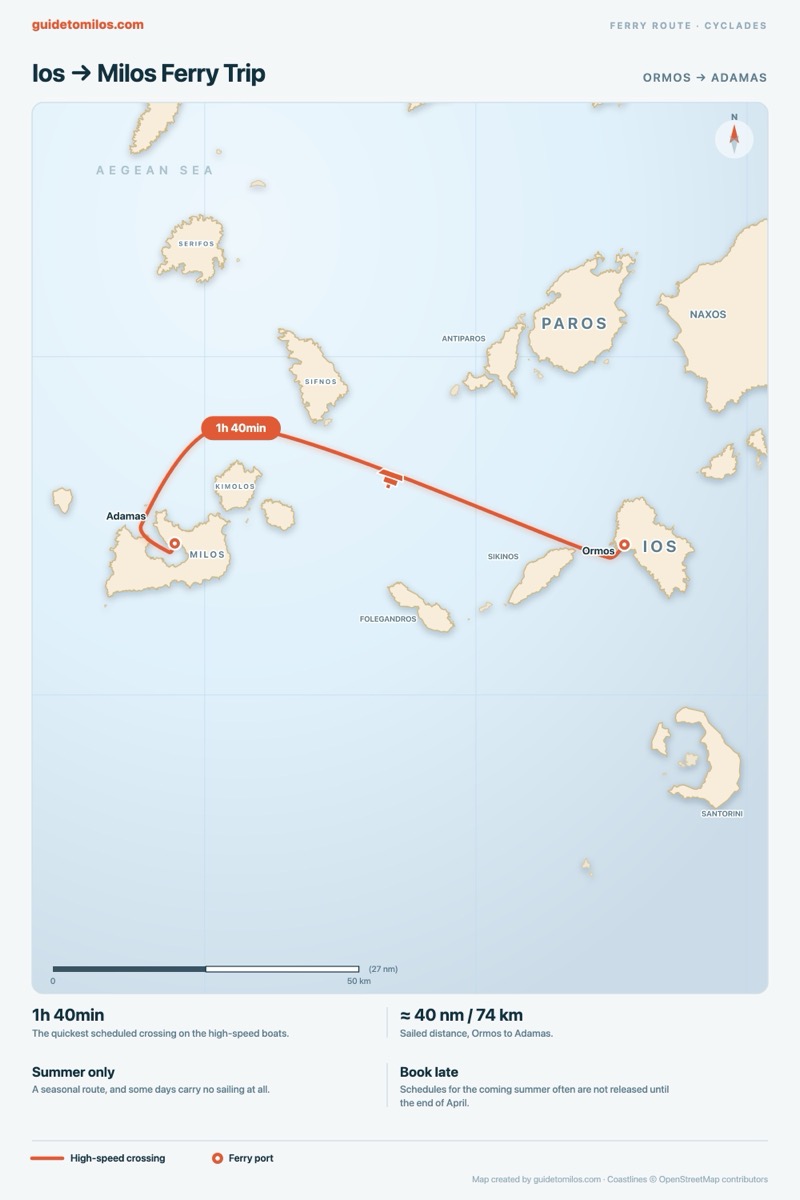
The Ios to Milos ferry is a seasonal high-speed crossing of roughly one to two hours between two Greek islands, running on a small number of days per week in summer only. Ferries leave from the port down in the bay, not Chora up the hill, and arrive at Adamas on Milos. Check live schedules before fixing your island order.
Planning the rest of your island time? Start with our complete Milos travel guide.
Heading to Santorini? See our guide to the best day trips from Santorini.
Heading to Athens? See our guide to the best day trips from Athens.
Last updated: 2 August 2026