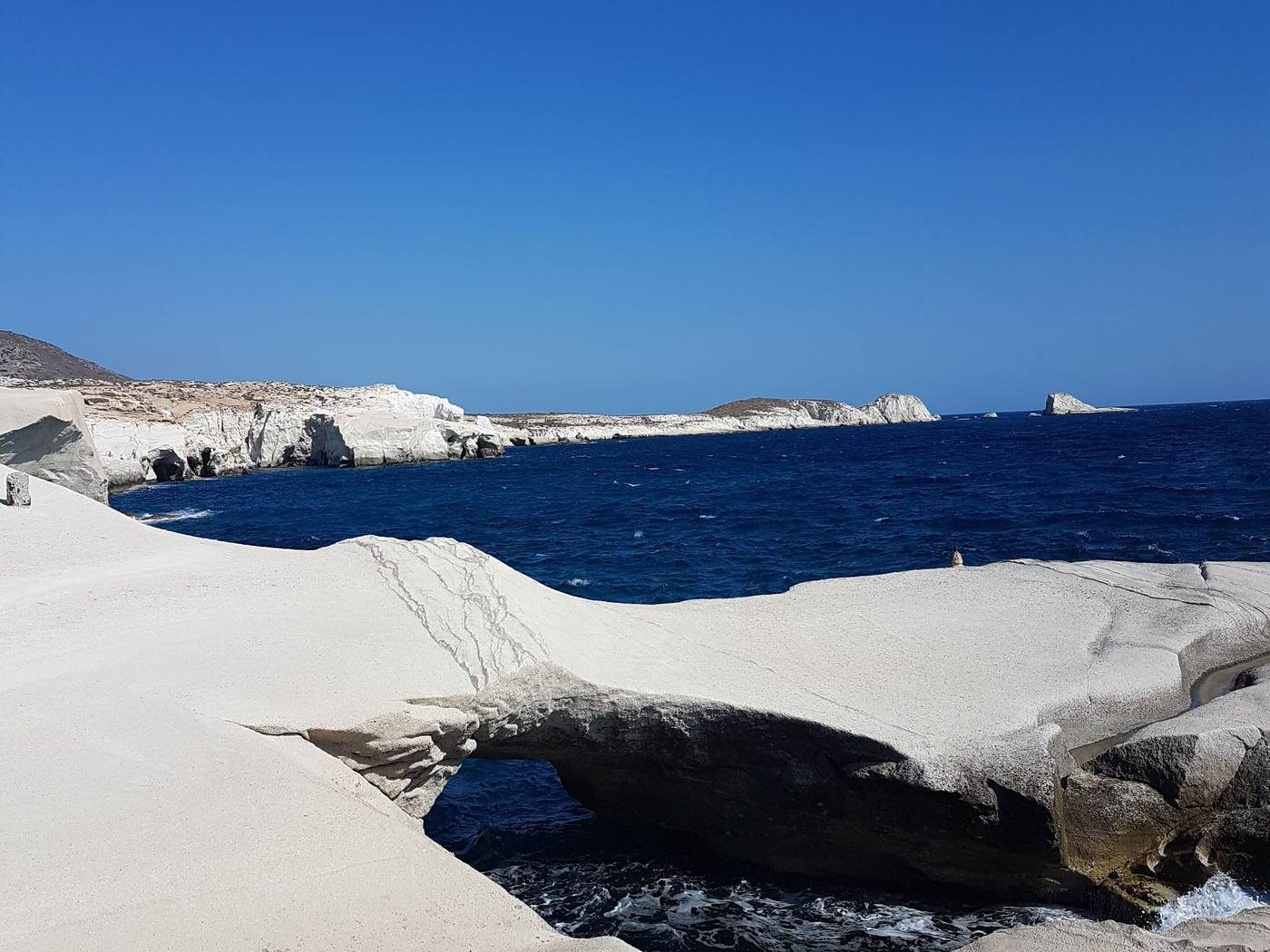
The best time to visit Milos, in the Aegean's Cyclades, is September: the sea is still warm, the meltemi wind has usually eased and the crowds have gone home. June and early October come next. August works if you book far ahead, and from November Milos becomes a quiet, half-closed working island.
In this guide
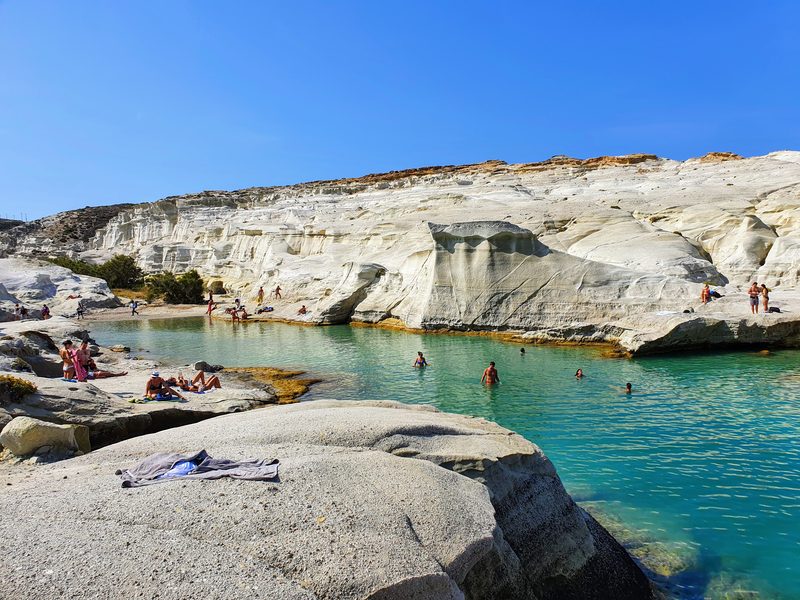
Milos runs on a season: awake around Greek Easter, peaking in August, unwinding through October, and spending the winter as a working island of a few thousand. Your month trades warm sea and full services against crowds, prices and wind. Wind matters more here than most people expect, because so much of what you come for happens on the water.
What Is the Weather Like Through the Year?
| Season | Conditions | Sea | Crowds |
|---|---|---|---|
| April–May | Mild, green, breezy | Coldest of the year | Low |
| June | Warm, longest days | Warming fast | Building |
| July–August | Hot, over 30C at times, windy | Warm | Heaviest |
| September | Warm, softer light | Still warm | Thinning fast |
| October | Mild, rain more likely | Still swimmable | Very light |
| November–March | Cool, wet, windy | Cold | None |
Cycladic summers run cooler than Athens, but 30C-plus days are still normal in July and August.
What Are the Meltemi Winds and When Do They Blow?
The meltemi is a dry northerly that sets up over the Aegean in high summer, mainly a July and August affair on Milos with the odd appearance in early September. A beach day reads it better than any forecast: breakfast glassy and still, umbrellas working loose by late morning, mid-afternoon to sunset the part that ruins plans, and by dinner it has usually let go.
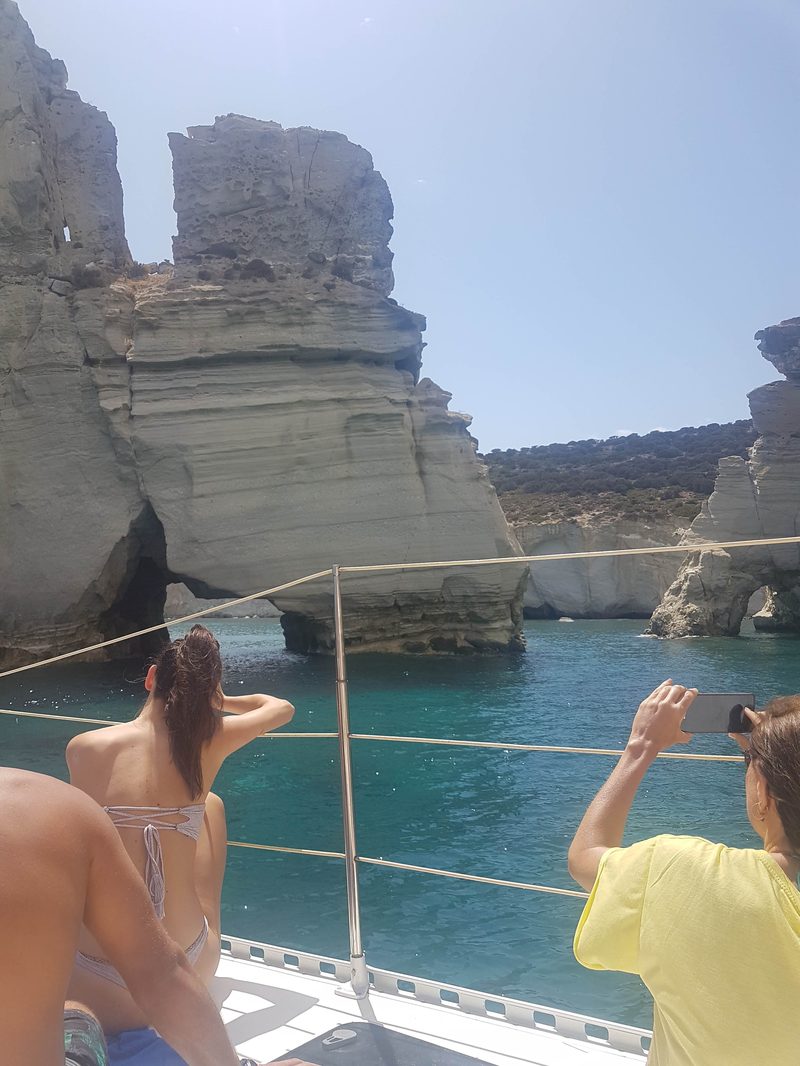
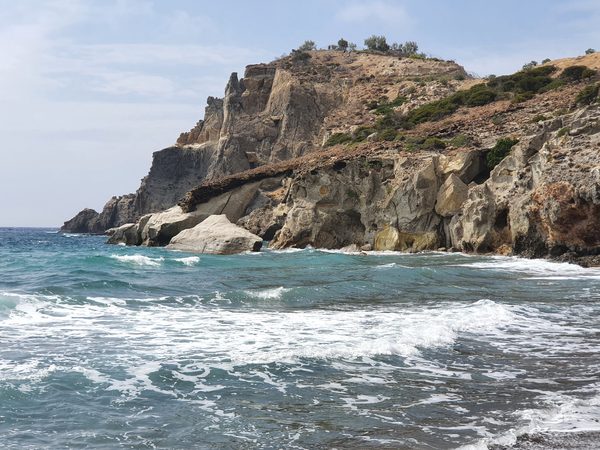
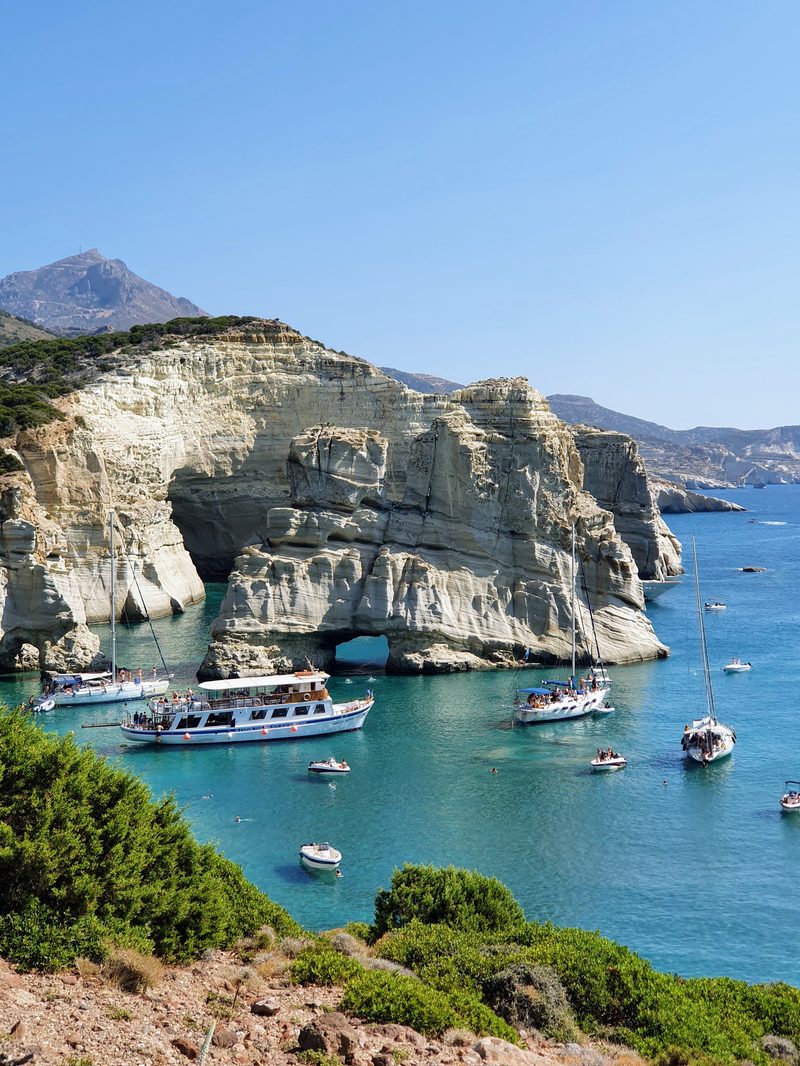
North-facing beaches take it full on: sand moving, swimming that goes from tiring to genuinely unsafe once the currents are in play. South-facing beaches can be almost still the same afternoon, which is why the rule running through this whole site is when the meltemi is up, go south. The Milos beaches guide has the north-south split. Strong wind also cancels boat trips, including the Kleftiko run, so book yours early in your stay.
I was on Milos in mid-June and the wind was a non-event; the same island a few weeks later can hand you three days of chasing shelter round the south coast. That gap is the difference between planning around the meltemi and barely noticing it.
What Is Milos Like in Spring (April–May)?
Spring is the season for everything that is not swimming. The island is at its greenest, the light is clean, and the walking is comfortable in a way it is not in July. The catch is the sea, at its coldest of the year, and a seasonal layer of tavernas, rooms and boat operators that only wakes up gradually: a few open around Greek Easter, most wait until May, and Kleftiko trips can be patchy until the fleet is running its full summer schedule.
Best for: hiking, villages, low prices. Weak for: swimming and boat trips.
What Is Milos Like in June and July?
June is the month to send most first-timers to. The sea has warmed to the point where swimming is a pleasure rather than a dare, everything is open, days are at their longest, and the crowd sits well below what arrives a month later.
July is hotter, busier and windier. It runs at full tilt, but this is when the meltemi is most likely to reshuffle your plans and when room rates climb. With children who need calm water, July asks for flexibility.
Should You Avoid August?
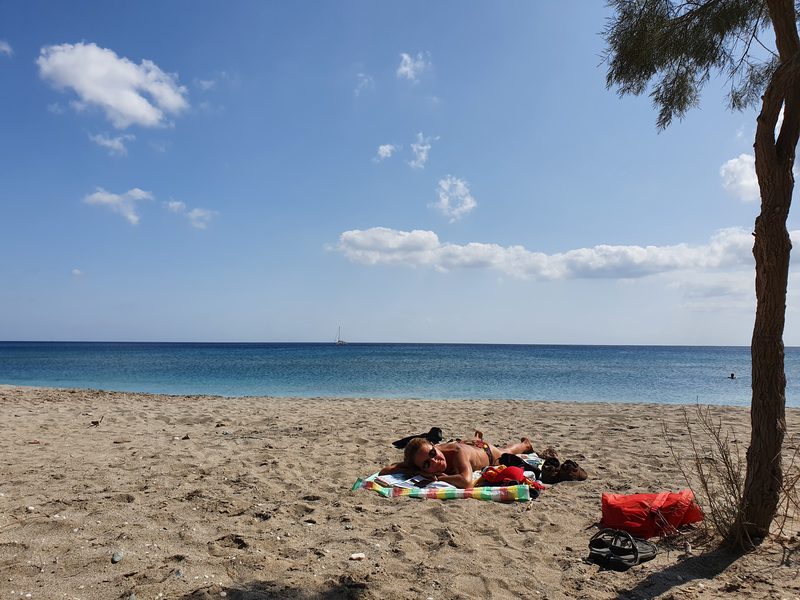
Not necessarily, but go in with your eyes open. August is when Greece takes its own holidays, so ferries and rooms fill with Greeks as well as foreign visitors. Milos never reaches Santorini or Mykonos levels, but this is its busiest month.
- Book early. Rooms and ferry tickets need locking in well ahead on fixed dates. See the routes and options.
- Expect higher rates. August tops the pricing curve, though Milos stays reasonable by Cycladic standards. The what it costs guide has the seasonal spread.
- Plan around the wind. Build the south-coast alternative into every beach day.
- Use the festivals. August is peak panigiri season, with a village feast somewhere most weeks.
What Is Milos Like in September?
September is the month I would pick for myself. The crowd curve falls off a cliff once the Greek holidays end and schools go back, and the sea stays properly warm. Step out at eight into air with an edge on it and an hour later the water is the warmer of the two. That catches out anyone who packed for autumn. The meltemi may gust in the first week; by mid-month the Aegean has usually settled.
The island stops feeling rationed: beaches that needed an early start in August have space at midday, tavernas in Pollonia and Plaka seat you without a booking, and boat trips run daily without filling. Rates come off the peak.
I spent late September here and swam every day of it, usually with a beach more or less to myself. The last hour of light is the best I have seen in the Cyclades, so if you photograph, come now rather than in July.
There is a trade-off: towards the end of the month smaller operations start closing, ferry frequency thins, and a beach canteen busy in August may not be there. The deeper into September, the more you check rather than assume.
Best for: swimming, boat trips, photography, anyone who found August too much. Weak for: certainty in the final week.
What Is Milos Like in October?
October is the quiet, cheap, slightly chancy month, and for the right traveller it is excellent. Mild air makes hiking and the villages far more comfortable, and the sea stays swimmable well into the month for anyone not put off by air cooler than water. The meltemi loses its grip and rates drop noticeably. The gamble is weather and openings.
Weather. The odds of rain rise through October, and a southerly can drop a grey, windy day into an otherwise fine week. Boat trips become unreliable, and Kleftiko excursions taper off through the month with no fixed last sailing: it comes down to that autumn's weather more than the calendar, so if a sea-cave day matters, come earlier in the season rather than banking on late October.
Openings. Mining keeps Milos working year round, so it does not empty out the way some Cyclades do, and Adamas holds a core of tavernas and shops. But the seasonal layer thins: rooms, canteens, restaurants, rental desks. Exactly which ones are still trading by November changes year to year, so check directly rather than assume. Early October still feels like a season; late October feels like the shutters going up.
Transport. Sailings from Piraeus reduce, crossings can take longer, and a strong wind can cancel one with no same-day alternative, so flying becomes dependable. Late October is when the island looks most like itself: empty beaches, working boats, the mining landscape clear of summer glare.
Best for: value, walking, villages, quiet. Weak for: boat trips, reliable beach weather, evenings out.
How Warm Is the Sea, and What Closes in Winter?
The pattern matters more than the numbers: the Aegean stays warm well into autumn and is at its coldest in spring, which is why the shoulder-season case for Milos points at autumn. Where figures exist: the sea bottoms out around 15-16C in February and March, climbs through 18-22C in May and June, and peaks around 25-26C in August, still sitting above 24C through September before it starts to slide again.
From November to March most of the visitor layer closes, leaving a handful of year-round tavernas and shops in Adamas, a quiet Plaka and empty beaches. Ferries thin out and cancel readily in the winter winds, so flying is the default. Very few visitors see this side of Greece, but it only works if quiet is the point; for the off-season feeling with services running, take October.
Which Festivals Can You Plan Around?
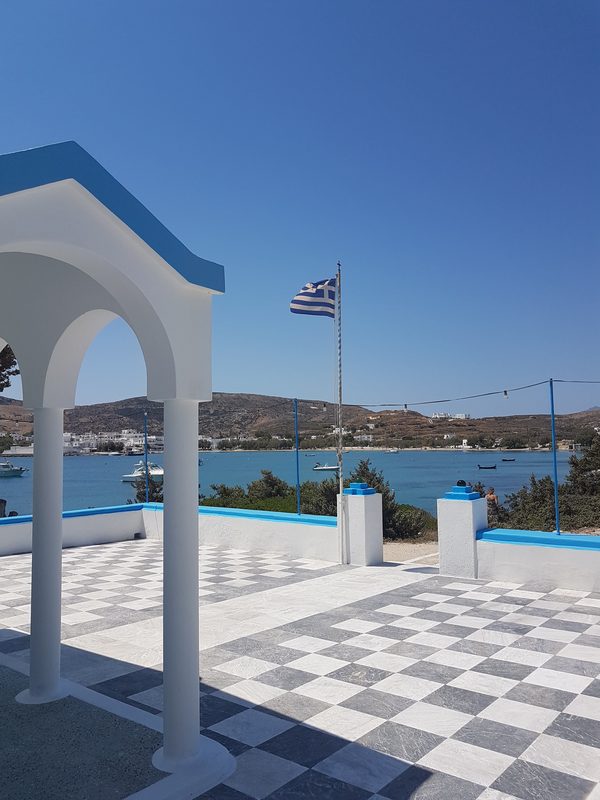
Greek village feast days are called panigiria, and they follow saints' days rather than the tourist calendar. Each is held at the church of the saint concerned, with food, wine, music and dancing after the service. The words "Agios" and "Agia" mean "Saint". If your dates catch one, go.
The calendar is dense from early August to mid-September. The anchors, per the current listing: 5 August at Parasporos (Transfiguration); 14 August at Zefyria (the Dormition) and 15 August in Adamas (the Assumption), one of the biggest dates in the Greek calendar; 17 August at Komia; 22 August across several village churches; 26 August at Pollonia; 28 August at Agrilies and Provatas; 29 August at Katsoulis; 31 August at Trypiti; and running into September, 6 September at Provatas, 7 September at Psathades, 8 September at Panagia Korfiatissa in Plaka, 13 September at Kaneria, and 16–17 September at Halakas. Two movable feasts also fall 50 and 56 days after Orthodox Easter, at Agia Triada in Adamas and at the Trypiti catacombs. Panigiria move around slightly year to year and not every village holds one every year, so treat this as the current shape of the calendar rather than a fixed date list.
There is also a Milos theatre festival, staged at venues around the island in July and August, and in 2026 that included a production at the ancient theatre in Trypiti. Its exact billing varies between sources (Milos Festival and Milos International Theatre Festival both appear), so treat the name loosely and check the current year's listings for that summer's programme and venues.
What About Greek Easter?
Orthodox Easter usually falls on a different Sunday from the Western one, and it is the most significant date in the Greek year and bigger than Christmas. Almost no foreign visitors plan around it. The villages do things at Easter they do at no other time: the full run of services, a great deal of fireworks, the burning of a Judas effigy, and dishes cooked only for this period. Practice varies village to village.
Easter Sunday lands in April or May: 12 April in 2026, 2 May in 2027, and 16 April in 2028. Expect Greek families travelling to their home islands around the date, and thinner availability on ferries and in rooms than the month otherwise suggests.
The trip changes shape with the month: the suggested itineraries read differently in October than in July, and the full Milos travel guide covers the rest.
The best time to visit Milos is September, with June and early October close behind. The meltemi, the Aegean's summer wind, blows mainly in July and August, worst from mid-afternoon on, sending you from the north-coast beaches to the south-facing ones. The sea stays warm well into autumn and is at its coldest in spring. Most seasonal businesses close from November to March, when ferries thin out and cancel more often.
Planning the rest of your island time? Start with our complete Milos travel guide.
Heading to Santorini? See our guide to the best day trips from Santorini.
Heading to Mykonos? See our guide to the best day trips from Mykonos.
Heading to Athens? See our guide to the best day trips from Athens.
Last updated: 1 August 2026