Milos is a mid-priced Greek island. It costs noticeably less than Santorini or Mykonos, but certainly more than it did before the beaches went viral. What you pay depends less on the island and more on three choices: which month you come, whether you rent your own wheels, and how many boat trips you say yes to.
In this guide
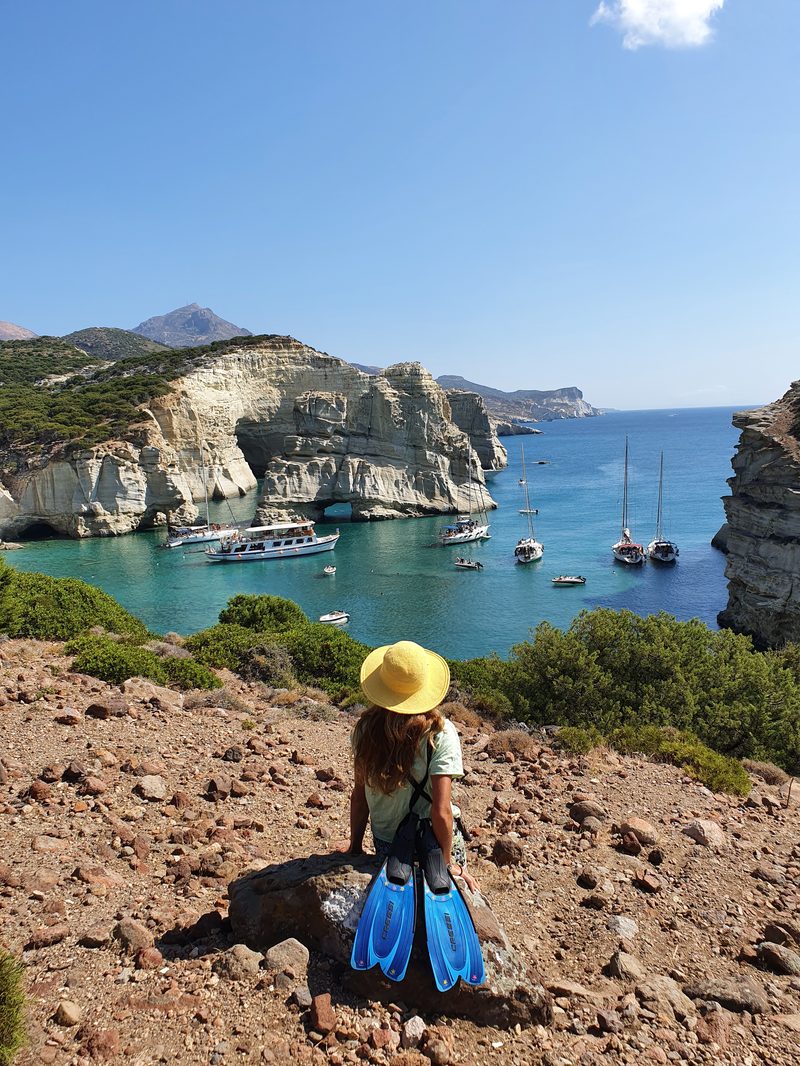
Milos never developed the megaship-and-honeymoon economy that pushed Santorini into a different bracket, so its tavernas, rooms and rental firms still price for Greek visitors as well as foreign ones. But the island has been discovered. Sarakiniko and Kleftiko did that, and boutique conversions, adults-only hotels and villas with pools have stretched the top of the range a long way upward. Two couples can spend the same week here and come home with costs that differ threefold, having seen the same beaches.
My first trip to Milos was to a quiet Greek destination that offered incredible value for money. I seem to recall we rented an apartment with full kitchen for less than 40 Euros a night! Fast forward ten years, and calling Milos a quiet, affordable Greek island is simply not true. Milos has been discovered, and prices have gone up alongside the increasing numbers of visitors. Sure, we’re not talking Mykonos or Santorini prices here, but unless traveling out of season, it’s certainly not a budget destination.
How Expensive Is Milos Compared to Other Greek Islands?
Set the Cyclades out in tiers and Milos lands in the middle one. At the top sit Santorini and Mykonos, where the view itself is a priced product. At the bottom sit the islands with little international traffic. Kimolos, next door, is one of those, and part of why a day trip or overnight to Kimolos feels like stepping back a price tier as well as a decade.
Milos sits closer to Paros and Naxos than to either extreme: no caldera-premium pricing, but a seafront table in Pollonia in August that costs real money and a crop of new hotels aiming at the customer Santorini has served for years. The clearest comparison is with Santorini itself: a mid-range hotel away from the caldera there is not wildly different from a mid-range Milos hotel, but Santorini's headline "average" nightly rate is dragged far higher by a caldera-view luxury tier that Milos has no equivalent of, and the same pattern holds at dinner: a caldera-view restaurant in Oia can run to several times what a non-view Santorini taverna charges, a gap Milos simply does not have. The comparison worth making on Milos is not Milos against Santorini but Milos-in-August against Milos-in-June.
What Does Accommodation Cost on Milos (2026)?
Accommodation is the biggest line on almost every Milos budget and the one with the most room to move, and it is also the category where I am not going to print a nightly price: rates move with the date, the platform and the week you search, and any figure quoted today reads as either optimistic or wrong within a season. Four tiers, in practice, ranked from cheapest to dearest:
Simple rooms and studios. Family-run, usually with a fridge or kitchenette, on a quiet street a few minutes from the port at Adamas or in the villages around Plaka. Clean, plain, entirely adequate, and consistently the best-value tier on the island.
Mid-range hotels. Breakfast, sometimes a small pool, usually parking. Where most visitors end up, and where the island still represents decent value against what a similar standard of hotel would cost you on Santorini or Mykonos.
Boutique and top-end. Suites, adults-only properties, villas with pools, the newer builds around Pollonia. This tier has expanded fast (a 41-suite clifftop property near Provatas, every suite with its own private pool, opened in June 2026) and it is where Milos starts to price like a bigger island.
Sirmata. The painted fishermen's boathouses at Klima, Mandrakia and Firopotamos, some converted into striking little rentals. Not budget accommodation despite their size, booked out months ahead, and literally on the water: on a rough day the spray reaches the door. Demand has reportedly grown fast enough that the most sought-after houses are booked six months out for July and August.
Two quirks push the apparent average up. Search for a room in January and you will meet a thin, expensive-looking selection. Many owners simply have not put next summer online yet, and plenty delist over winter altogether, so early research paints the island dearer than it is. And the campsite at Achivadolimni, the island’s genuine bottom rung, opens seasonally rather than year-round, so for part of the year the cheapest tier simply is not on offer. Ring +30 22870 31410 to check your own dates. Where you base yourself carries a cost tail too. Pollonia and the outlying villas need a vehicle, while Adamas costs the same or less and is where every bus starts. That decision is worked through in the where to stay on Milos guide.
Is Eating Out on Milos Expensive?
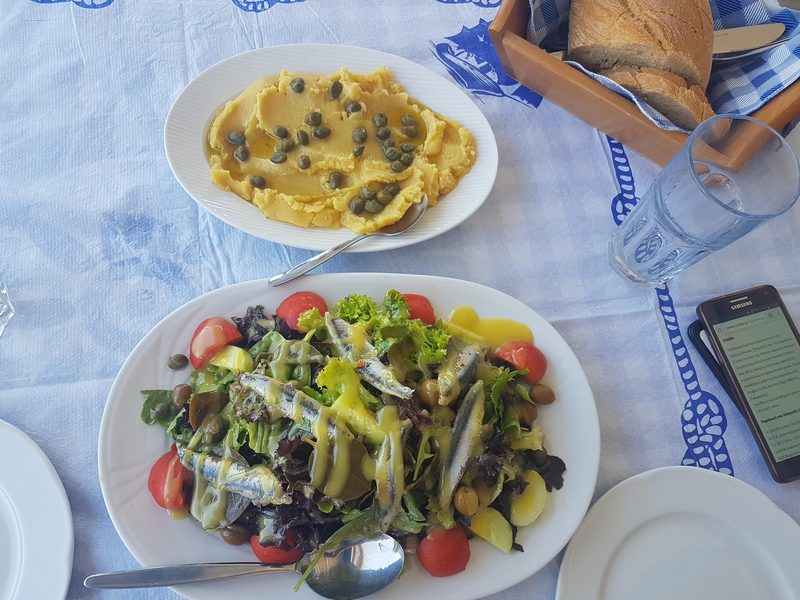
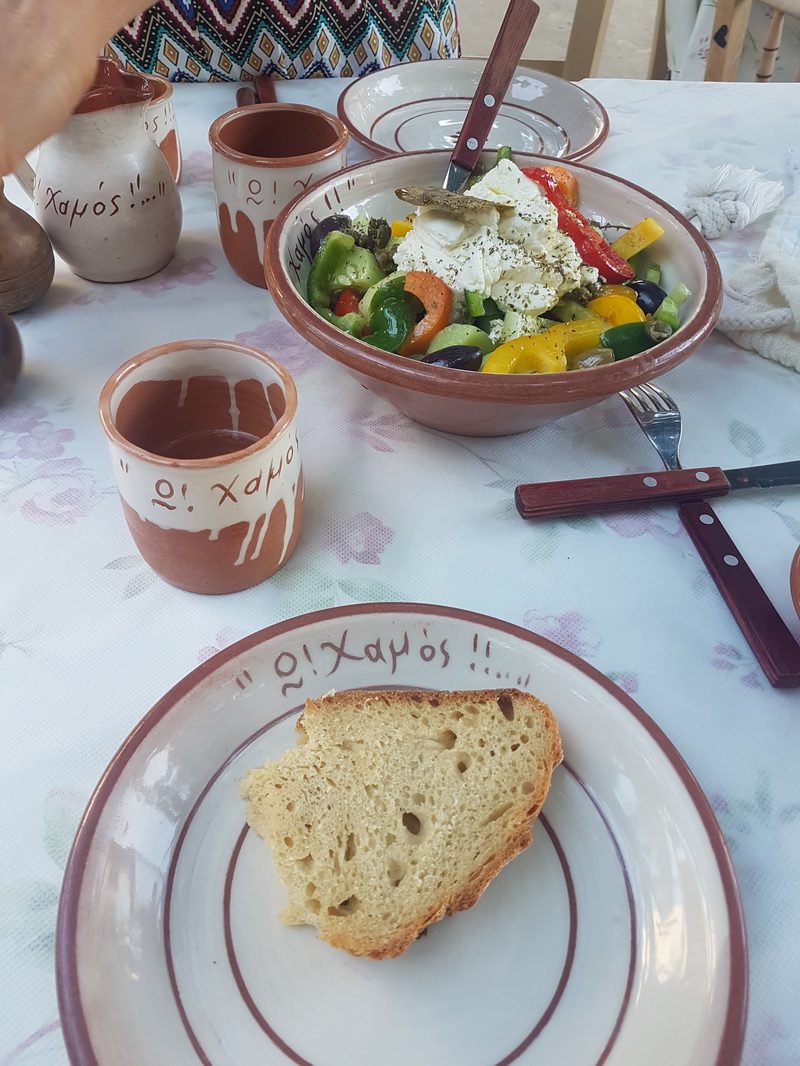
This is where the island has held its value best. Milos cooks well: goat slow-baked overnight, sardines and cuttlefish, xinomizithra cheese, capers off the roadside walls, the little fried pitarakia pies from a village bakery. A straightforward taverna meal still lands in normal Greek-island territory rather than resort territory. The spread within a single evening is wide, though:
- Bakery and street food. A pie, a coffee, a gyros. The cheapest satisfying food on the island: a bakery pie runs around 2.20-2.50 EUR as of 2026, and a gyros or a takeaway coffee costs roughly what either would anywhere else in the Cyclades.
- A village taverna. Salads, small plates, a main and house wine for two. The category that keeps Milos affordable: a main course runs roughly 18-28 EUR as of 2026, a half-carafe of house wine adds another 4-8 EUR, and a straightforward dinner for two away from the water lands somewhere around 40-70 EUR.
- A seafront or upmarket restaurant. The modern Greek places in Pollonia and Adamas, the sushi restaurant, the wine lists. Expect upward of 50 EUR a head at the waterfront end of the market, so comfortably over 100 EUR for two, 2026 prices.
- Fresh fish anywhere. Priced by weight and easily the biggest item on a bill: a whole fish typically runs 45-65 EUR a kilo and usually serves two or three. Ask the price per kilo before it goes on the grill, and no taverna worth eating at will mind.
The old, unglamorous places have largely kept their prices sane (mains around 8-12 EUR are still findable inland, with a full meal for under 20 EUR a head achievable away from the water) while the newer arrivals have moved sharply upmarket, and both sit within two minutes of each other in Adamas. Which are worth it is the subject of the Milos restaurants guide.
My rule on Milos is to eat inland and drink by the sea. The tavernas a couple of streets back from any waterfront charge less for better cooking, and a glass of wine at sunset costs the same everywhere.
How Much Does Getting Around Milos Cost?
Milos is bigger and emptier than people expect, the best beaches are scattered round the edges, and several sit at the end of dirt tracks. Transport is not an optional line, because it decides how much of the island you actually see.
The bus. Services run out of Adamas to the main towns and several popular beaches. A flat 2 EUR fare, paid in cash only: the operator's own site is explicit that no card payment is accepted, and there is no multi-ride or return ticket. Cheap by any measure, and genuinely frequent in high season: MilosBuses run roughly ten departures a day on the main routes at the July-August peak, thinning to as little as twice a day outside July and August. Which beaches and villages the network actually reaches is covered in the Milos bus guide.
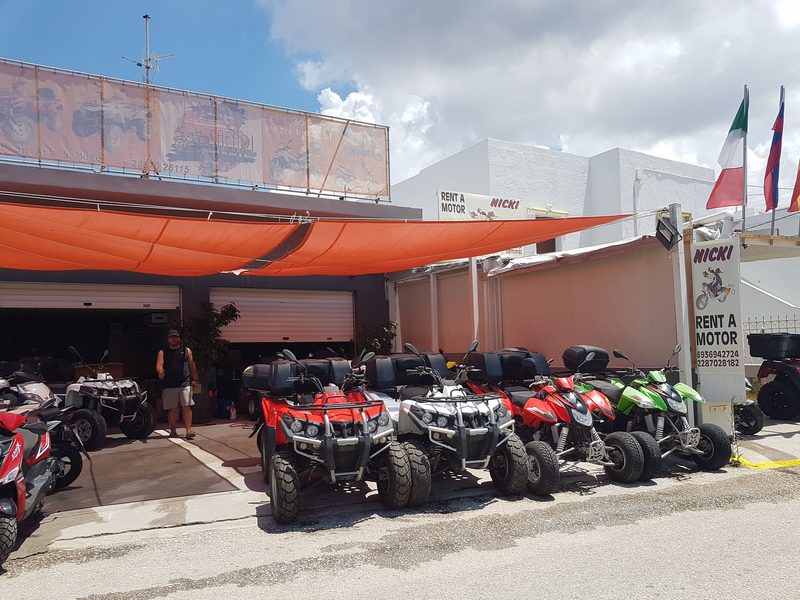
ATV or quad. The default Milos rental, lined up in every village. Cheaper than a car, fine on asphalt and the better dirt roads, exposed to sun and wind, wrong for four people with luggage. Rental runs roughly 25-45 EUR a day in the shoulder season, rising to about 55-85 EUR a day at the July-August peak, 2026 prices. Which beaches a quad can and cannot reach is covered in the Milos ATV rental guide.
Car. More comfortable, more secure, necessary if you are outside the main towns or travelling with children. Book early, since there are only so many hire cars on a small island and August takes all of them. Typical 2026 rates run around 21-30 EUR a day in low season (May, October), 31-50 EUR in June and September, and 45-80 EUR in July-August, with short one- or two-day hires costing more per day still. Two costs people forget: island fuel is dearer than mainland fuel (Greece's national average sat around 1.95 EUR/litre for diesel and 2.00 EUR/litre for petrol in July 2026, with islands and tourist areas typically running a further 0.05-0.10 EUR/litre above that), and many rental agreements exclude unsurfaced roads, which is exactly where several good beaches are. At least one major Milos agency's own booking terms state plainly that a car driven off the official road network and immobilised will be charged for its own recovery, and that the standard collision-damage waiver does not cover off-road use.
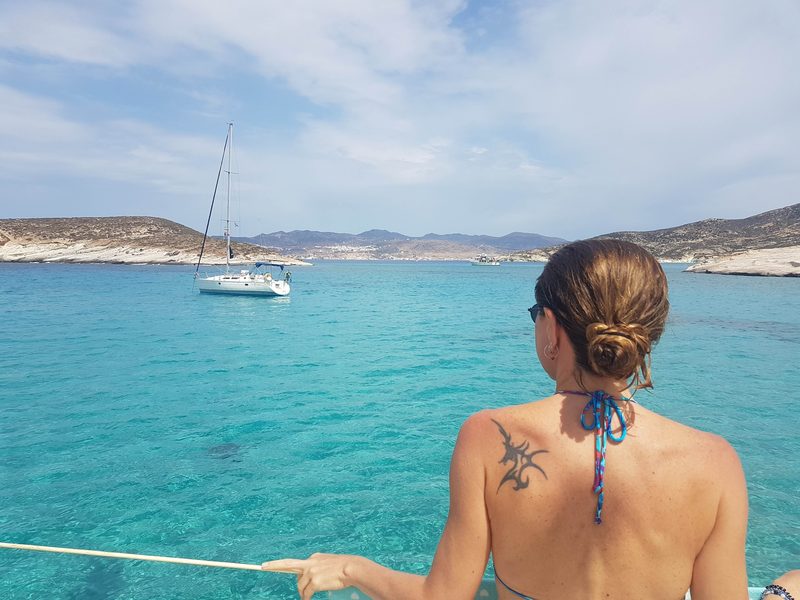
Boat trips. Kleftiko cannot be reached by road, so a boat is the one unavoidable extra on most itineraries. Prices vary enormously by vessel, group size and season, and shift often enough that a fixed figure printed here would be out of date before it was useful. What holds true is the shape of the market: a large shared motor boat carrying 100-plus passengers is a genuinely different, cheaper product from a small sailing boat or catamaran that includes a cooked lunch, and the smaller boats cost meaningfully more per person. Check current prices directly with the operators in the Milos boat tours guide.
Ferries. Conventional ships from Piraeus are slower and considerably cheaper than the high-speed services. As of 2026, a conventional ferry from Piraeus to Milos runs from around 33-41 EUR one-way against roughly 74-90 EUR for the high-speed catamaran (a 4-7 hour crossing versus 2h35-2h40), and the same gap in kind applies on the short hops to Sifnos, Folegandros and Santorini, where the fast boat typically costs meaningfully more than the slow one for a shorter crossing. The exception is the little local ferry from Pollonia to Kimolos: a flat 2.40 EUR one-way whichever boat is running, one of the few genuinely fixed fares in this whole article.
Where Does the Money Evaporate?
Four things account for most of the gap between a reasonable Milos budget and an alarming one.
August, when rooms, rentals, boat seats and even taverna queues all move at once, is the single most expensive decision on the list. Sunbeds at the organised beaches such as Paleochori, Provatas and Firiplaka, charged per set per day and sometimes carrying a minimum spend at the canteen; at Paleochori two sunbeds and an umbrella run roughly 50-80 EUR a day depending on how close to the water you sit, and a week of them is real money for shade you could have brought. Stacked boat trips do the same. One Kleftiko day is essential, but a sunset cruise, a Polyaigos day and a second sailing makes four, and that is a hotel tier's worth of money spent on the sea. And the boutique layer, where the gap in price between a good mid-range hotel with breakfast and a suite with a plunge pool is wider than the gap in your actual holiday. The island's pleasures are outdoors.
Where Does the Money Go Furthest?
June and September, above all, for warm water, better light, usable beaches and rates from a different world. The month-by-month case is made in the when to visit Milos guide. Village rooms with a kitchenette, since nearly all the simple accommodation has a fridge and a hob, and a supermarket breakfast removes a meal a day from the budget without removing anything from the trip. Ordinary inland tavernas, consistently the best value and often the best cooking. The bus, for the part of the week you do not need your own wheels. And Kimolos, a short crossing from Pollonia, where the little money you spend goes noticeably further: its accommodation, scooters and quads all come in cheaper than the equivalent Milos booking, directionally if not by a fixed percentage.
What Drives Your Daily Budget on Milos?
A single figures-per-day table for "budget," "mid-range" and "comfortable" would need to invent numbers no source on this page actually supports, so here instead is what separates a lean week from a comfortable one, using the figures already established above.
A budget day looks like: a simple room with a kitchenette, the flat 2 EUR bus for the legs you don't need your own wheels for, a couple of days of quad hire at shoulder-season rates, and one Kleftiko trip on a large shared boat rather than a small sailing one. Cooking a supermarket breakfast and eating at inland tavernas, where mains run 8-12 EUR, keeps food costs down without cutting corners on quality.
A mid-range day adds: a hotel with breakfast, a hire car for the week at whatever the season's going rate is, taverna dinners at 18-28 EUR a main, and one full Kleftiko day.
A comfortable day moves into: a boutique hotel or a sirma, a car at peak-season rates, a seafront restaurant at upwards of 50 EUR a head, and a smaller sailing boat or catamaran trip that includes lunch and costs noticeably more than the large shared boats.
The gap between the tiers is dominated by two things: which month you travel in, since car hire alone can more than double between shoulder and peak season, and how many boat trips and boutique nights you stack on top of the basics. Timing narrows the gap between budget and comfortable far more effectively than cutting corners does.
How Do You Save Money Without Ruining the Trip?
- Move your dates before you move your standards. A week shifted from mid-August to mid-September buys a better room, a quieter beach and cheaper travel at once.
- Book the room and the vehicle together, early. Both are finite on a small island, and both punish lateness with price, right up until they punish you with nothing available at all.
- Take a cool bag. Half the good beaches have no canteen, or one that opens when it feels like it. Lunch bought in Adamas costs a fraction of lunch bought at a beach bar.
- Do one boat trip properly rather than three cheaply. Pay for the boat that actually gets inside the Kleftiko caves and spend the other days on land.
- Treat a sunbed as an occasional luxury, not a default. Bring an umbrella; several of the best beaches have no facilities anyway.
So, Is Milos Expensive or Not?
Milos has not been cheap for some years, but it remains one of the better-value islands in the Cyclades for what you get: beaches nothing else in Greece matches, food still cooked for locals as much as for visitors, and a place not yet fully priced for its own fame.
Three circumstances turn it expensive. You come in August, you stay in the boutique tier, or you say yes to every boat leaving Adamas. Avoid all three and a week here costs roughly what a week on Paros or Naxos costs. Avoid none and it costs what Santorini costs, without the caldera. For the wider planning picture, start with the complete Milos travel guide.
Milos sits mid-range among the Greek islands: cheaper than Santorini and Mykonos, dearer than it was a decade ago, and comparable to Paros or Naxos. Accommodation is the biggest cost and the most elastic, boat trips to Kleftiko are the one unavoidable extra, and the difference between an August trip and a June or September one is larger than the difference between any two hotels.
Planning the rest of your island time? Start with our complete Milos travel guide.
Heading to Santorini? See our guide to the best day trips from Santorini.
Heading to Mykonos? See our guide to the best day trips from Mykonos.
Last updated: 1 August 2026