Milos, like other notable Greek Cyclades, seems to have an abundance of great food and places to eat. Goat cooked slowly overnight, cheeses made a few kilometres from your table, capers picked off the roadside walls, and fish landed that morning in the village you are sitting in. This guide covers what to order, which villages are worth driving to for dinner, and what a meal actually costs.
In this guide
Eating well on Milos means eating in tavernas. The formal-restaurant tier barely exists here, and you will not miss it. Kitchens are small, menus are short, and the places locals rate look least impressive from the street. Prices have crept up as visitor numbers have grown, and Milos now has a few genuinely expensive kitchens alongside the everyday ones. More often than not, the everyday ones are still the better meal.
I have eaten my way round Milos in both June and late September while researching a guidebook to the island, and September was the better trip for food: same kitchens, half the queue.
What Should You Eat on Milos?
The building blocks are the ones you find across the Cyclades: grilled fish and squid, goat and lamb, salads built on tomato and cheese. Milos also has a few things you will struggle to order elsewhere.
- Pitarakia. Small fried cheese pies, the island's signature snack. Bakeries make them as well as tavernas, and the bakery version is the cheaper breakfast.
- Local cheeses. Xinomizithra, soft and sour, turns up in salads and pies. Skotyri, a soft goat cheese with heat to it, is worth going out of your way for.
- Goat and lamb. Slow-oven cooking is the default treatment for meat here, and what the best-known kitchens are built on.
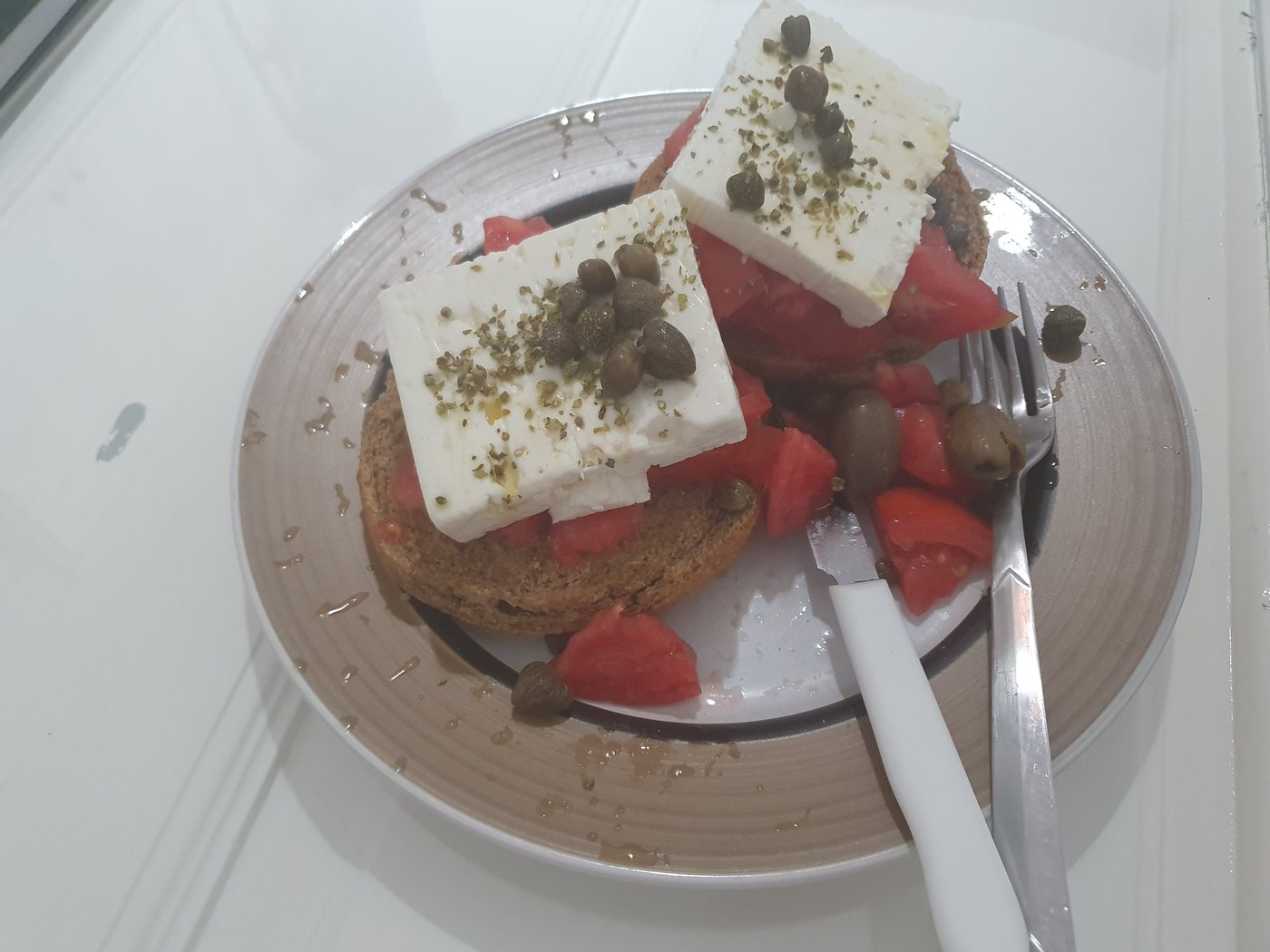
- Capers. They grow wild along the walls and verges, and end up in most salads.
- Skordolazana, a garlic-heavy pasta dish, and karpouzopita, a watermelon dessert pie. These are the two things visitors remember ordering here and nowhere else.
- Vegetables. Milos grows produce with almost no irrigation. The tomatoes are the ones I still think about.
On the signs: a taverna is the everyday sit-down place, an ouzeri is built around drinks with small plates, and a mezedopolio serves many small dishes rather than a main course each.
Fish is normally priced by the kilo, not by the plate, and the waiter will bring it to the table to be weighed or chosen. Ask what the piece in front of you will come to before you agree to it. That is standard practice across Greece, and it is also how a relaxed dinner turns into a surprising bill.
Where Should You Eat, Village by Village?
Milos is small enough that dinner anywhere is half an hour's drive or less from anywhere else, so pick the village first and the table second.
Small-island kitchens change hands and hours more often than a guidebook can track, so treat any name below as a strong starting point rather than a guarantee, and check a recent review or the venue's own page before building an evening around it.
Adamas and Papikinou
Adamas is where the ferry lands and where most visitors have their first and last meal, which makes the waterfront the most touristed strip on the island. The best meal in the area is a short walk away along Papikinou beach, at O Hamos.
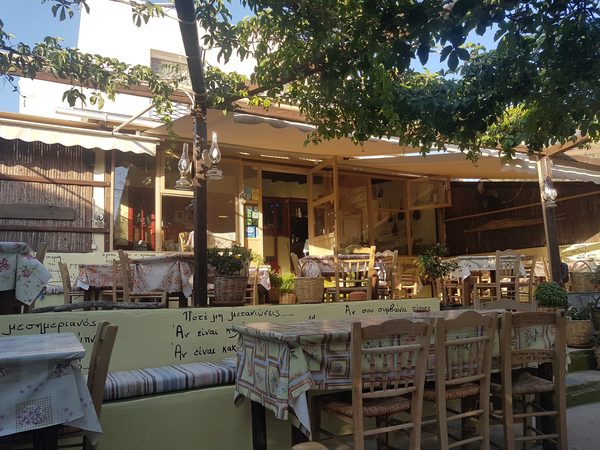
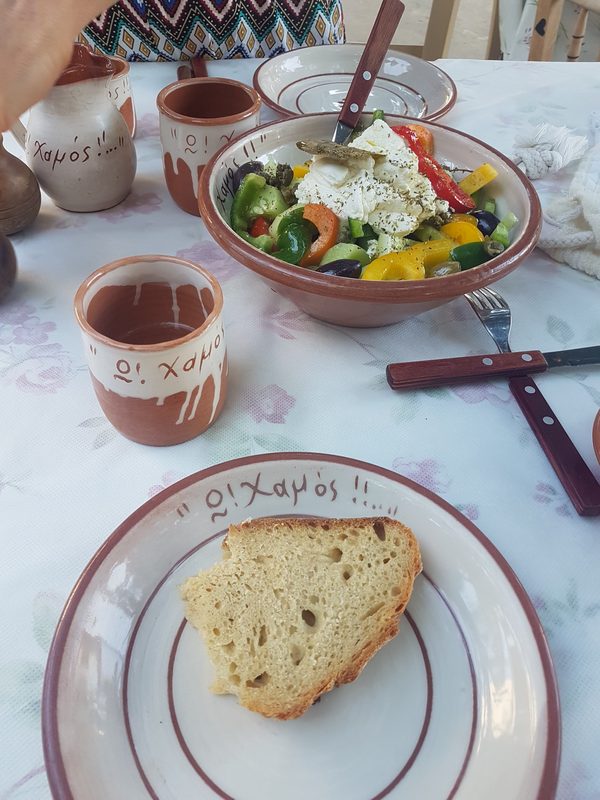
O Hamos is the name every islander gives when asked where to eat. It is outdoor, shaded and deliberately handmade: poetry inked onto the backs of the chairs, a menu you leaf through like a family notebook, complete with the story of how the taverna came to exist, and most of what arrives grown or reared on the family's land. The kitchen leans on meat cooked slowly in the oven, goat and sheep especially, alongside salads, starters and its own cheeses; the vegetarian dishes are not an afterthought, and the chickpea dish is one of the better things on the island. Portions are large enough that two hungry people can eat properly on a salad and a couple of mains.
The queue is the price of admission. Aim for the dead zone of the Greek afternoon, when the lunch service has wound down and dinner is hours away, eat slowly, then move down to the loungers for the sunset. O Hamos is still trading in 2026 (reviewers were celebrating birthdays there in July), and it remains walk-in only, with no sign of a shift to bookings.
On the port itself, Mikros Apoplous is the modern Greek kitchen overlooking the bay, strong on fish, and Nostos Seafood Experience goes further in the same direction. Expect mussels, shrimp, octopus, anchovies, lobster, whole fresh fish and big flavours. Both cost more than a village taverna. Full run-down in the Adamas restaurants guide.
Plaka and the Trypiti Side
Plaka is the island capital up on the ridge, and eating there works best combined with the climb to the kastro for sunset. Avli – Milos does home-style Greek cooking in generous portions. Shrimp saganaki, shrimp pasta and cheese pie with honey are the dishes to look for, and you may be handed a jug of wine while you wait for a table. Fatses, beside the Archaeological Museum on the main square, is the quirkier option: part cafe, part restaurant, walls hung like a small gallery, reggae in the afternoons and live Greek music some evenings. The giant Greek salad is not modestly named and the stuffed aubergines are very good, though service is unhurried by design.
Downhill in Triovasalos, Bakaliko tou Galani is where locals eat through the winter, which is the recommendation that counts. It looks like nothing from the street and the menu runs to dozens of small dishes; the pitarakia, the grilled mussels and the kavourmas pork are where I would start. Park in the Triovasalos car park and walk the last couple of hundred metres. It has historically opened evenings only. In Trypiti, Barriello has held high ratings for years on traditional Greek and Mediterranean cooking using produce from its own farm. More in the Plaka restaurants guide.
Pollonia
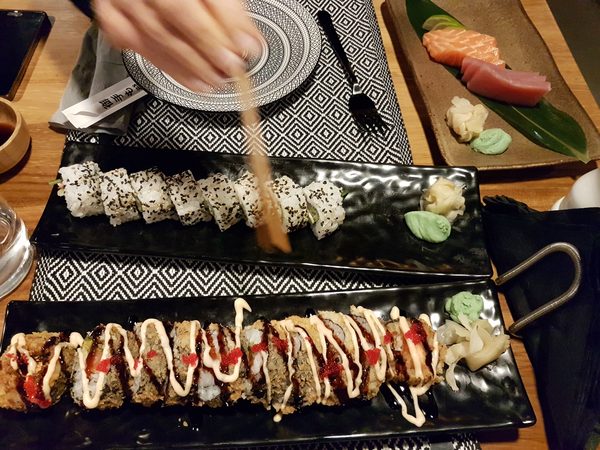
Pollonia, the fishing village on the northeast tip, has the island's densest run of good tables along one short seafront. O Yialos is the upmarket end, with cuttlefish-ink risotto, shrimp tartare, a long wine list and Pollonia Bay in front of you; outside July and August it also caters private occasions. A few doors along, Hanabi was the first sushi kitchen on Milos and is still where to go when you have eaten your body weight in grilled fish. See the Pollonia restaurants guide.
Mandrakia
Mandrakia is a tiny fishing settlement of syrmata, the boathouses built into the rock, and Medusa is the reason to drive out. Fish taverna, outdoor tables above a bay of strange pale rock, sardines and swordfish souvlaki both worth ordering, grilled calamari the thing I would get next; a few meat dishes for anyone who does not eat fish. The owner, Periclis, is good company and has stories, including one about the King of the Netherlands eating there. Walk round the bay afterwards, because the rock has something of Sarakiniko about it without any of the people. Medusa fills up, so the same odd-hours tactic applies as at O Hamos.
Klima
Astakas is the only cafe-restaurant in Klima, the row of painted fishermen's houses below Trypiti, and the setting is the point: the sun goes down directly in front of it. It gets busy in peak season, so book. I have not eaten there myself, but islanders recommend it without hesitating, and everyone at the tables looked content. The Klima village guide covers getting down there and the timing for the light.
Paleochori
Paleochori, on the south coast, is the beach with volcanic heat directly underneath it. In places it is hot enough to cook with. Sirocco is the kitchen doing it, and the volcanic-sand cooking is still very much a live signature dish in 2026, not a legend from an older edition of this guide. It is local theatre that is also a real cooking method. I have not eaten there, so take it as reported rather than tested. See the Paleochori beach guide.
Emborios and the Far Corners
Embourios, a small settlement on the great bay's quieter shore, has a family taverna known across the island, and the drive out is half the experience. It closes for the whole week around the festival of Agios Ioannis Siderianos on 26 September, exactly when I was last on the island, so it stays on my list rather than in my notes.
Not a restaurant, but worth the stop: the Charalampakis cheese-making operation off Pahena beach on the Pollonia road, where the skotyri is the one to take away. It has never really run to published hours, since this is a small family shop rather than a business with a website or a booking system, so treat it as somewhere to call ahead or simply turn up and ask for a tour rather than a fixed-hours stop.
What Does a Meal Cost in 2026?
Milos has stayed better value than its reputation implies: two courses with wine still costs less than the same evening on Santorini or Mykonos. What has changed is the spread, with a tier of newer restaurants sitting well above the island average.
At the time of the guidebook research, a full meal for two at a well-regarded village taverna came in around 35–40 EUR. Treat that as a floor rather than today's price. As of 2026, a taverna main course typically runs 18–28 EUR, whole fish by the kilo 45–65 EUR (usually enough for two or three), and a house-wine carafe 4–8 EUR. Dinner for two at an everyday village taverna comes out around 40–70 EUR all in; at the upmarket waterfront tier in Adamas, budget closer to 50 EUR a head, so 100 EUR or more for two.
Two things keep a bill sensible: order fewer dishes than feels right, and check the per-kilo price before the fish goes on the grill. Whether the island as a whole is good value is a bigger question, worked through in the is Milos expensive guide.
What Should You Know Before You Go?
- Greek dinner starts late. Kitchens fill from about 21:00 and stay busy past 23:00. Turn up at 19:30 and you will get a table anywhere, at the cost of eating in an empty room.
- August needs a plan. Book anywhere you care about, several days ahead for Pollonia or Klima. Some of the best-known places, O Hamos chief among them, are still walk-in only, which leaves the odd-hours approach; where a phone number exists, a call or a message through the venue's own page is the normal way to book, rather than a formal reservations platform.
- Carry some cash. Cards are normal in the bigger places and less certain in small village kitchens, so do not arrive at a remote taverna with nothing in your pocket.
- The bakeries are underrated. Pitarakia and the local pies cost a fraction of a sit-down lunch and beat the beach canteen most days.
When Is the Best Time to Eat Well on Milos?
June has everything open, produce at its best and no queues yet. July and August bring the full choice and the full wait. September is the best combination on offer, with warm sea, kitchens running and tables you can walk into. October to April leaves a short list of places around Adamas and the Plaka villages, open for residents, with almost nothing running on the beaches: fine if you are on the island anyway, not a reason to come. Bakaliko tou Galani in Triovasalos is the one place in this guide reliably said to carry on through winter; treat any other name as a summer-season bet unless you check directly before travelling.
The rest of the planning, from where to base yourself to how to get around and when to come, starts with the complete Milos travel guide.
Milos food centres on slow-cooked goat, cheeses like xinomizithra and skotyri, pitarakia cheese pies and wild capers. O Hamos on Papikinou beach near Adamas is the best-known taverna on this Cycladic island and famously hard to get a table at, so go at an odd hour. Fish is priced by the kilo. Ask the total before it goes on the grill. Dinner for two at a village taverna runs to roughly 40–70 EUR at 2026 prices, and most kitchens close from late October to Easter.
Planning the rest of your island time? Start with our complete Milos travel guide.
Heading to Santorini? See our guide to the best day trips from Santorini.
Heading to Mykonos? See our guide to the best day trips from Mykonos.
Last updated: 31 July 2026