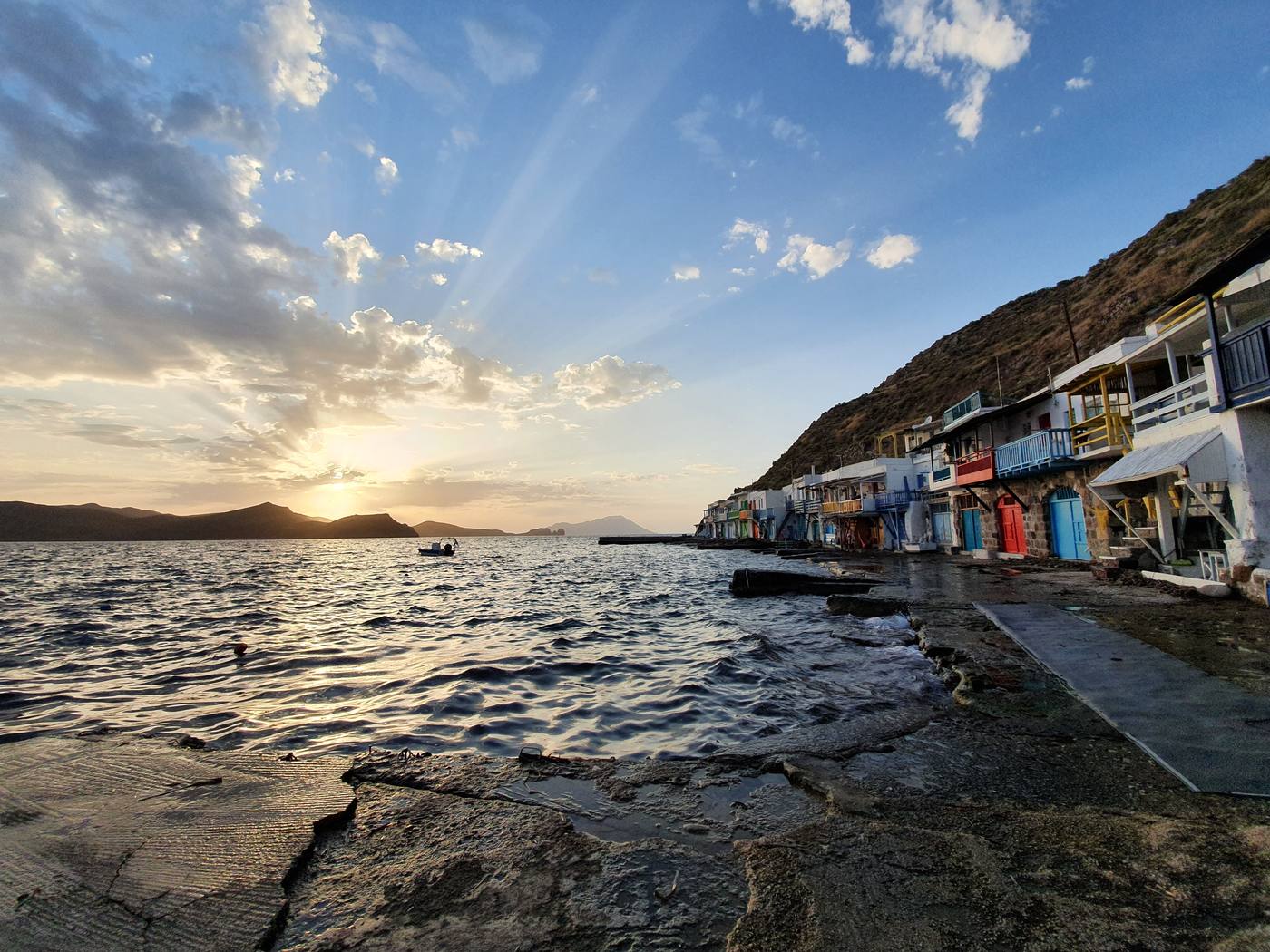
Klima, on the Greek island of Milos, is the village you have already seen. A single row of boat garages painted lemon, turquoise, coral and cobalt, built straight onto the shingle below the cliffs of Trypiti, with the sea lapping at their doorsteps. It takes twenty minutes to walk end to end. Give it an evening instead, and it becomes the best hour on Milos.
In this guide
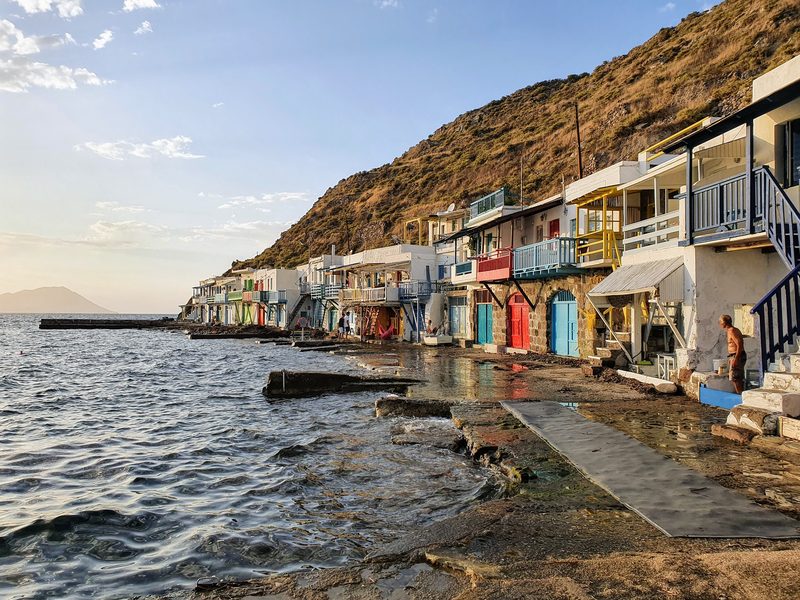
The village sits on the shore of the great bay directly below Trypiti, at the foot of the slope carrying the catacombs and the Roman theatre, its row of houses looking west across the water. That position is not accidental: an important ancient settlement stood on the hillside above, and this was its shoreline. It is a fishing settlement rather than a resort, with the unplanned geometry that comes with it.
- Location: On the bay shore directly below Trypiti, facing west
- Access: Steep road down from Trypiti, parking above the village
- Time needed: 20 minutes to walk it, 2 hours to do it properly
- Best light: Late afternoon to sunset
What Are the Sirmata?
The painted buildings are called sirmata, and understanding them is the whole point of coming here.
Each is two storeys: a garage at sea level opening straight onto the water through a wide wooden door, where the boat spent the winter, and the fishing family's living quarters above. That is the entire design, with nothing decorative and nothing wasted.
They exist because of winter. Rather than haul a wooden caique off to a sheltered harbour every autumn, families built the harbour under the house: boat in, door shut, live upstairs, wait for spring. The same solution turns up elsewhere on the Milos coast, and Firopotamos and Mandrakia have their own rows, but Klima is the one everybody photographs.
The colours look like boat paint because that is what they resemble. They are bold marine reds, blues and greens rather than restored-Cycladic pastels, and no two neighbours match, which is most of the charm.
I have walked this row in mid-June and again in late September, and September was better by a distance, with fewer people in every shot and the light already low and warm by seven in the evening.
What Is It Actually Like to Visit?
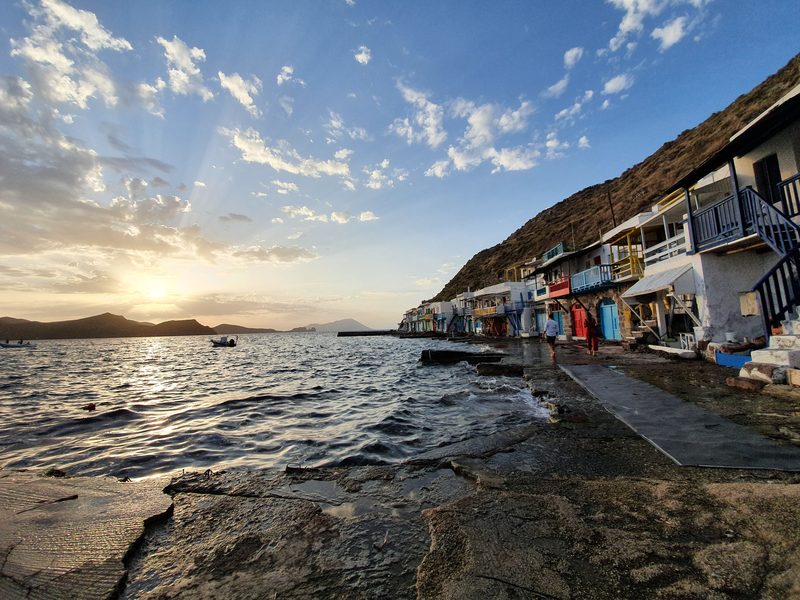
Smaller and rougher than the photographs suggest, and better for it.
There is one lane, barely wide enough for two people to pass, with the cliff rising immediately behind you. Water slaps the concrete a metre away, and in places the lane simply becomes shingle. No shops, no promenade, no ticket office, no signage explaining any of it.
The village is still lived in and partly still worked, with nets, fuel cans and crates outside doors and some garages holding working boats rather than sun-loungers. Worth remembering when you line up a photograph: the doorstep you are on belongs to somebody.
Swimming off the shingle and the concrete aprons is pleasant in flat conditions, in water that deepens quickly and stays clear, with a view back at the painted doors. It is not a beach: no sand, no shade, no facilities. Treat it as a dip.
The catch: Klima is a twenty-minute village. Drive down at midday, take four photographs into flat overhead light and drive back up, and you will wonder what the fuss was about. The colour and the quiet belong to the last two hours of daylight.
Is There Anywhere to Eat?
Yes, there is one place I would point you to with confidence, and it is the reason many people come. Astakas is Klima's cafe-restaurant, open 09:00 to 23:00, later in high season, with a reputation across the island for fish eaten close enough to the water to hear it, and the sun going down while you eat. The tables with that view are finite in number, so book ahead in July and August, or call directly. There is one other small taverna in the village, but I have not checked it closely enough to name it with confidence, so ask locally if Astakas is full.
Beyond that, assume nothing. There is no supermarket, no bakery and no reliable daytime cafe. Bring water, particularly if you walked down. Wider choice sits up the hill in Plaka and Trypiti.
Can You Stay in a Sirmata?
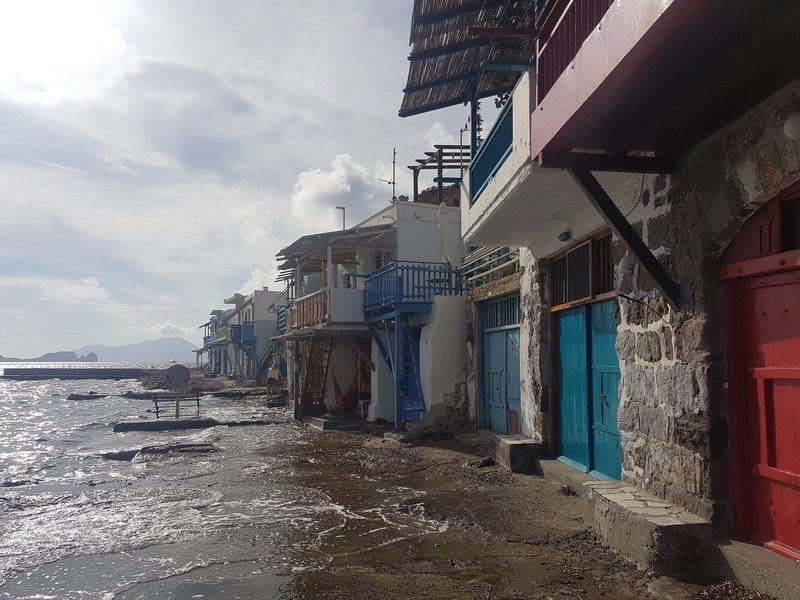
You can. A number of the upper rooms are let seasonally as small self-contained studios that keep the original shape, one room with the sea outside the door and the boat garage below, and with nothing else within walking distance once it is dark. Demand for these has grown sharply, and the handful of houses people actually want are said to be booked up half a year ahead for July and August, so this is not a same-week booking if you have your heart set on a specific one. For how that stacks up against basing yourself in Adamas, Pollonia or Plaka, see the where to stay on Milos guide.
How Do You Get to Klima?
By car. The only road in drops steeply from Trypiti, narrow and tightly cornered and single-track in stretches. Fine in a small car taken slowly; unpleasant in anything large, and meeting a van coming up means somebody reverses. Park above the village, because the last section is walked either way.
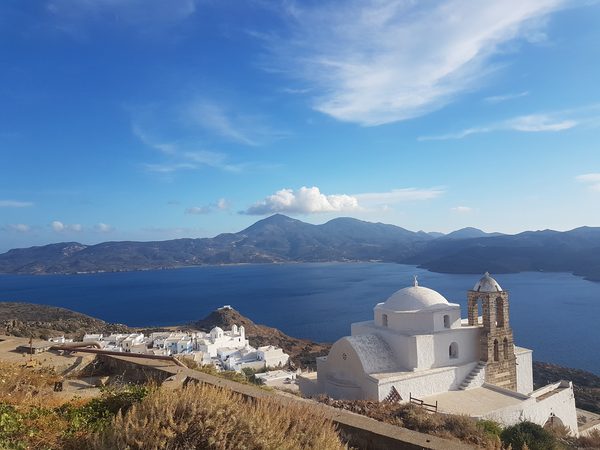
On foot. Walking down from Trypiti past the catacombs and the Roman theatre is the better arrival, and it is steep coming back up, so carry water. The route and the sites along it are covered in the Trypiti catacombs and Roman theatre guide and the Milos walking and hiking routes guide.
By boat. Most round-the-island boat trips from Adamas or Pollonia sail past Klima on the way to Kleftiko, close enough for the classic broadside view of the row, which is how the village was meant to be seen. Some anchor offshore here for a swim stop; none moor and put you ashore.
When Should You Go?
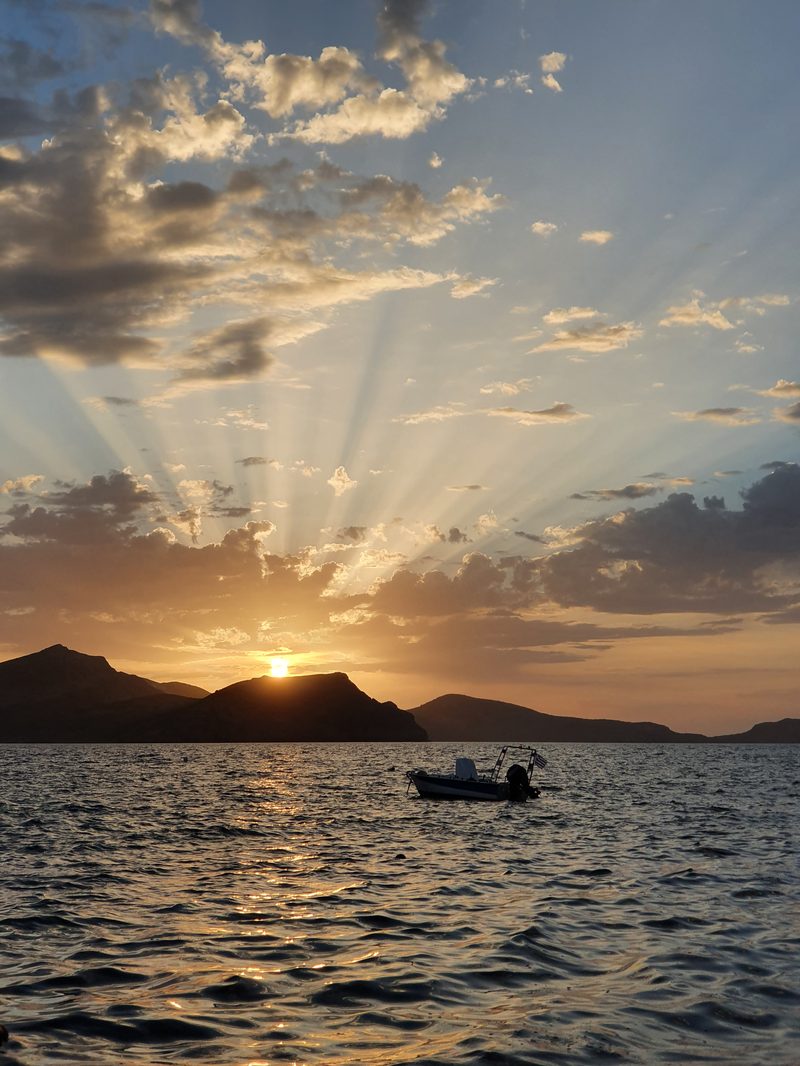
Late afternoon into sunset. The row faces west across the bay, so the low sun hits the doors square on and the colours saturate. This is the reason to time your visit. The best sunset spots on Milos covers where else to be at that hour.
Morning. Quiet, but the village sits in the cliff's shadow and the colours look muted. Good for having the lane to yourself, poor for photographs.
Midday. The worst of both: hardest light, most visitors, no shade.
Season. June and September both work; September brings a warmer sea, thinner crowds and an earlier sunset. Klima itself does not formally close for winter, since the sirmata are private houses, some lived in year-round, but what does stop is the boat traffic and, in all likelihood, Astakas's longer hours. Expect a quiet, half-shuttered village rather than a locked one.
Who Is Klima For?
Anyone with a camera, anyone curious about how people lived off this coast, and anyone happy to build an evening around one small place rather than tick it off. The natural pairing is the island capital earlier in the day, then the catacombs on the way down, then Klima for the last of the light. The Plaka guide covers the castle, the museums and the restaurants. It does not suit anyone after a beach, a bar strip, or an afternoon's worth of things to do.
Klima sits on the bay shore below Trypiti, on the Cycladic island of Milos, reached by one steep road or on foot past the catacombs. Its sirmata are two-storey fishing houses with boat garages at sea level, painted in bold marine colours. The village takes twenty minutes to walk and has one lane, no shops and no sand. Go for the last two hours of daylight, and stay for dinner if you can get a table by the water.
Planning the rest of your island time? Start with our complete Milos travel guide.
Last updated: 1 August 2026