Milos rewards a list more than most Greek islands: its attractions are scattered, and half of them need a boat, a quad or a walk. This guide runs through the best things to do in Milos in the order I would tackle them, starting with the white rock at Sarakiniko and taking in a sail to Kleftiko, the kastro at sunset, the catacombs and the mines.
In this guide
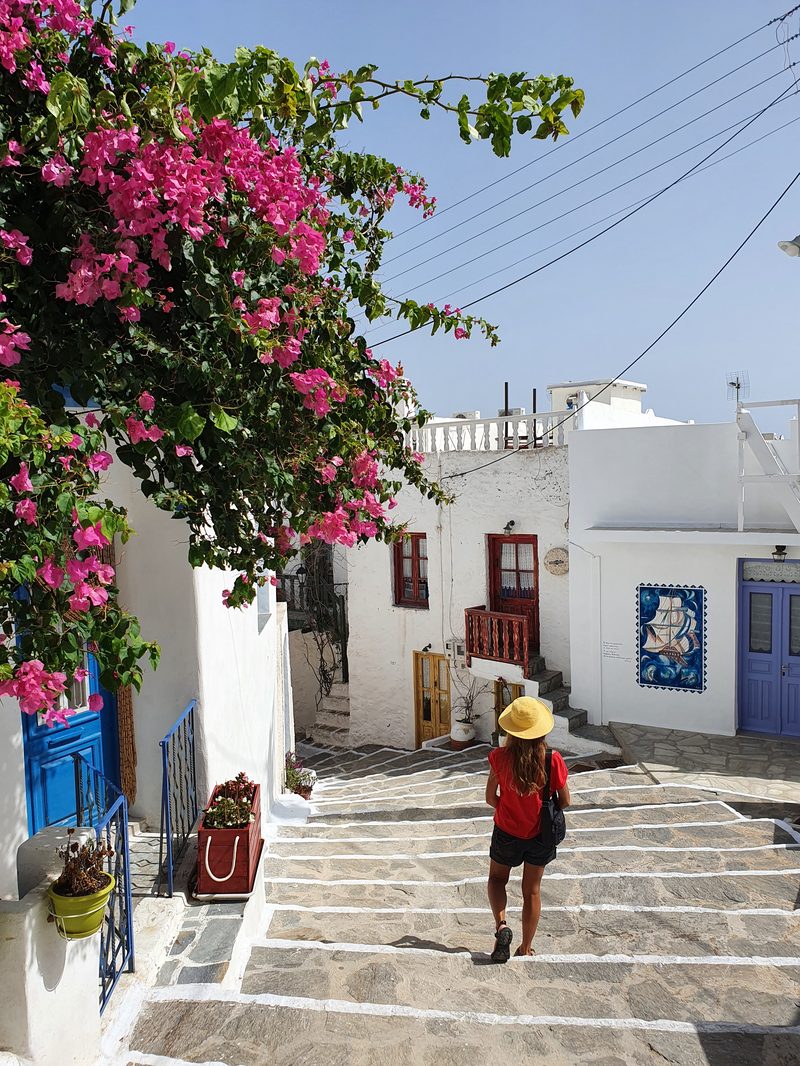
Milos is a volcanic island in the western Cyclades, about 160 square kilometres, with one ferry port at Adamas and its capital, Plaka, on the ridge above. Every bed is on the eastern half; the western half was never settled or surfaced, which is why so much of this list means leaving the tarmac. I co-wrote a guidebook to Milos and Kimolos and have been back in June and late September. Related: the Milos travel guide carries the planning layer.
The meltemi, the north wind of July and August, shapes every day. When it blows, the northern beaches are unswimmable and half the boat trips stay tied up. The island's horseshoe shape is the saving grace, since the wind can only hit one coast at a time.
1. Sarakiniko
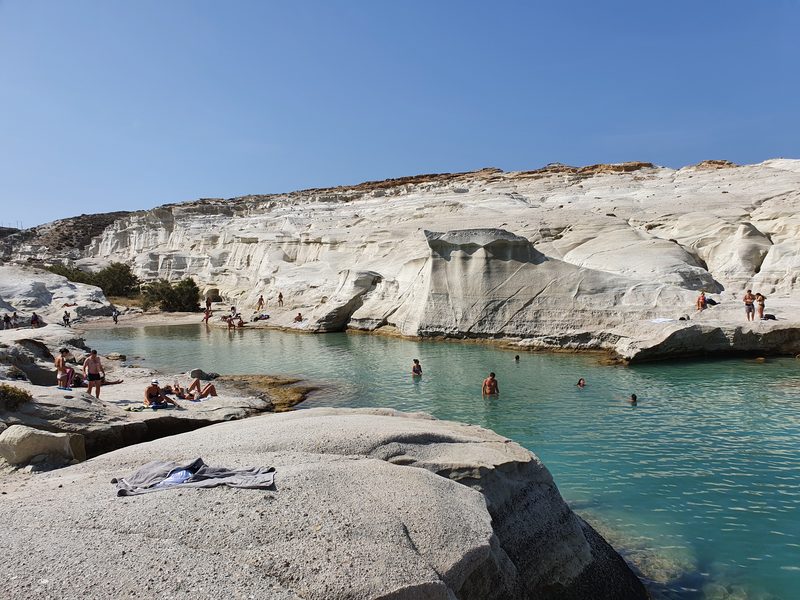
The photograph everybody has seen. A shelf of pale volcanic rock on the north coast, weathered into smooth humps and clefts above a channel of very deep, very blue water. Sand amounts to a few square metres, and nothing else: no shade, no loungers, glare that will cook you at noon. Smaller than the pictures imply, and it fills up: go before nine or after six.
This is the first beach the meltemi writes off. On a north-wind day, drive to the south coast instead.
2. A Boat Trip to Kleftiko
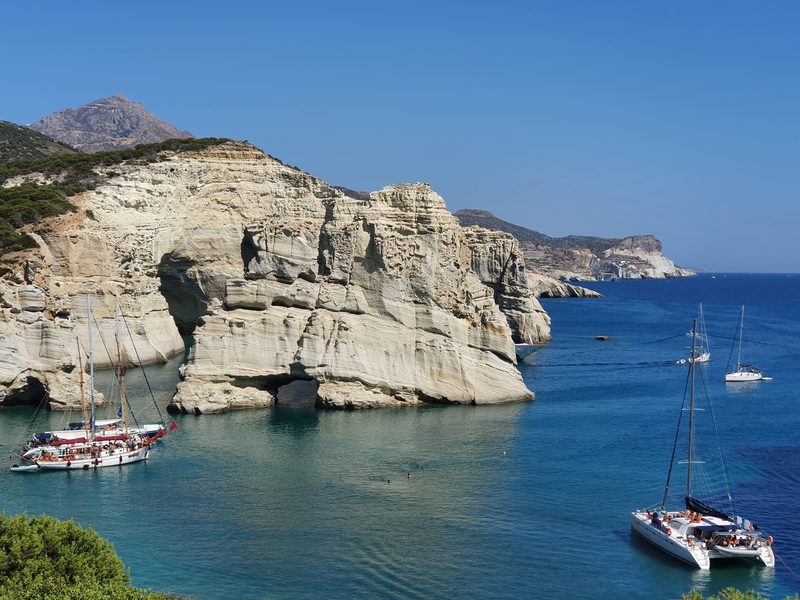
Kleftiko is a cluster of chalk-white sea stacks and caves at the far south-western tip, on a coast no road reaches, so you can only swim there off a boat. Departure points and trip lengths vary a lot; the Milos boat tours round-up sorts them out. If your week has room for one paid activity, spend it here. The half of Milos you cannot drive to is the better half.
Book your boat day early in the trip. A southerly cancels sailings, and on your last day there is no second attempt.
3. Sunset From the Kastro Above Plaka
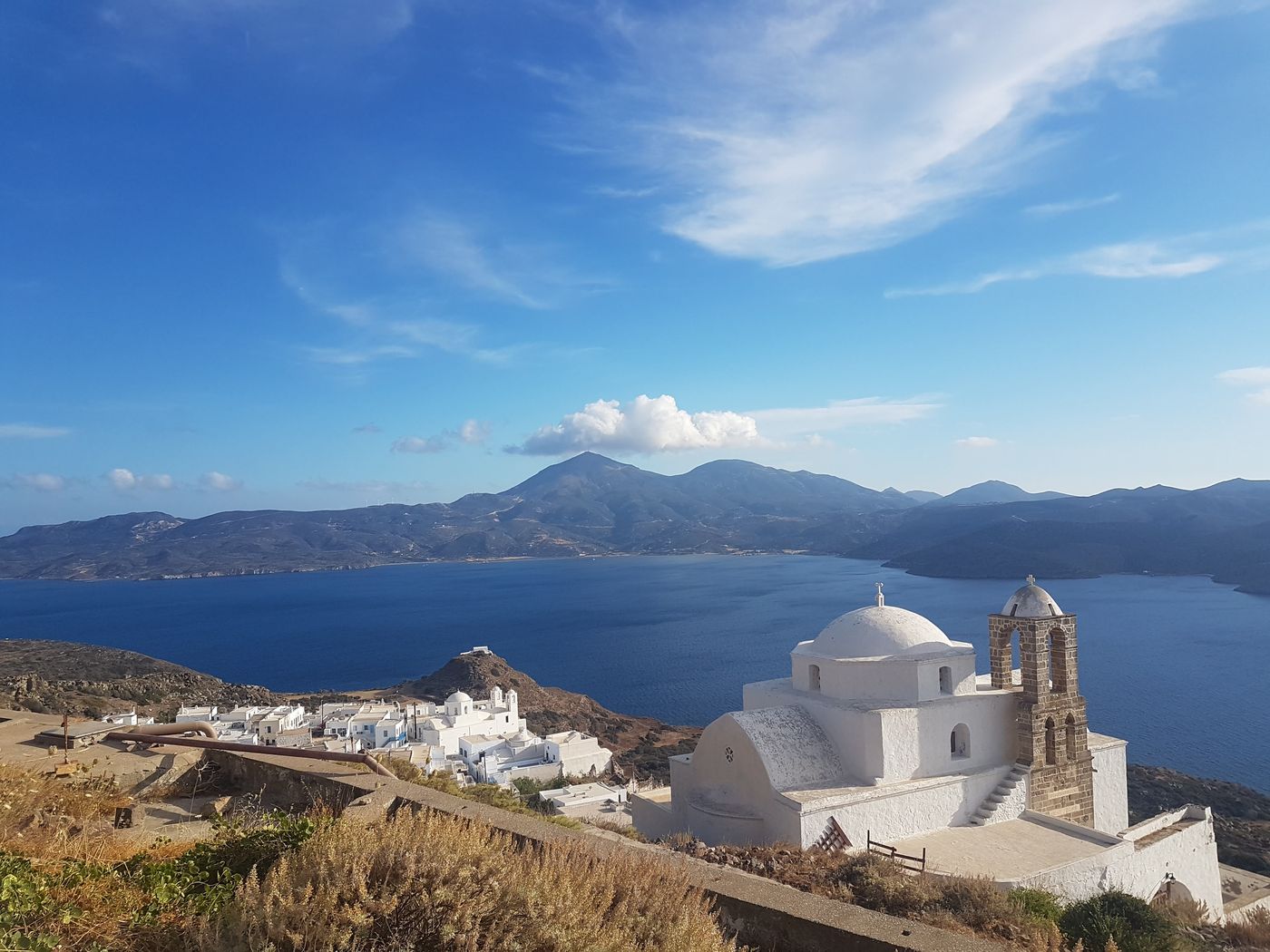
Plaka is the capital, a town of white lanes high on a ridge. Above it stands what the Venetians built after taking the island from Byzantium in the 13th century, and it was not a walled fortress but a fortified village, its outermost houses locked shoulder to shoulder to form the defence. Ruins now, and a stiff climb, but the whole Aegean opens out at the top. Go in the evening, passing the sailors' church of Panagia Thalassitra on the way up.
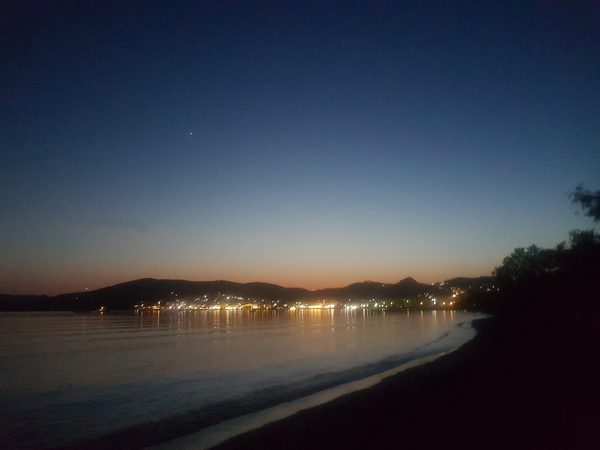
Take water and shoes with grip. The last stretch is worn rock and you come down in poor light.
Plaka closes to traffic, so park outside. Plaka guide · sunset and photography spots.
4. The South-Coast Beaches
Milos claims around 70 beaches; only a fraction deserve a day, and most of those are on the south coast, under cliffs banded rust, ochre and grey by old volcanic activity. Firiplaka is the long one with the easy walk-in; Tsigrado next door needs a rope-and-ladder descent through a hole in the rock, which sorts the visitors out quickly. Provatas is the flat, shallow, family option. This is the coast you retreat to when the north wind is up.
Start at the Milos beaches hub, then Firiplaka and Tsigrado, Provatas and the remote beaches.
5. The Catacombs, the Roman Theatre and the Venus de Milo Spot
Three sights a short walk apart below Trypiti, and the most substantial history on the island. The catacombs are the largest in Greece, 184 metres of burial corridors cut in the 1st century AD, holding perhaps 2,000 Christian dead until landslides closed them in the 5th. Downhill sits the theatre, 3rd century BC, rebuilt by the Romans and seating over 7,000. Between them, a farmer turned up the Aphrodite of Milos in 1820; a replica marks the spot, the original being in the Louvre.
Opening hours here are shorter than you would like: the catacombs run daily 08:30–15:40 (last entry 15:10) except Tuesdays, admission 10 EUR (5 EUR discounted), and only one chamber is open to visitors on a roughly 15-minute guided visit. The ancient theatre has no ticket booth and no admission fee, and in 2026 it hosted a summer production as part of the island's theatre festival, so it is worth checking what's on rather than assuming it is simply a ruin to walk through.
6. The Mining Museum in Adamas
The least glamorous entry here, and the one that changes the rest. Milos was built by volcanic activity and made wealthy by what that activity left behind: obsidian traded across the Aegean from around 8,000 BC, then sulphur, bentonite, kaolin, perlite and manganese. The museum covers that industry and the people who worked in it. Do it on day one, and afterwards the quarry scars and the lorries on your road stop looking like blemishes and start looking like the reason for the place.
Museums and mining history · Adamas guide.
7. The Fishing Villages and Their Sirmata
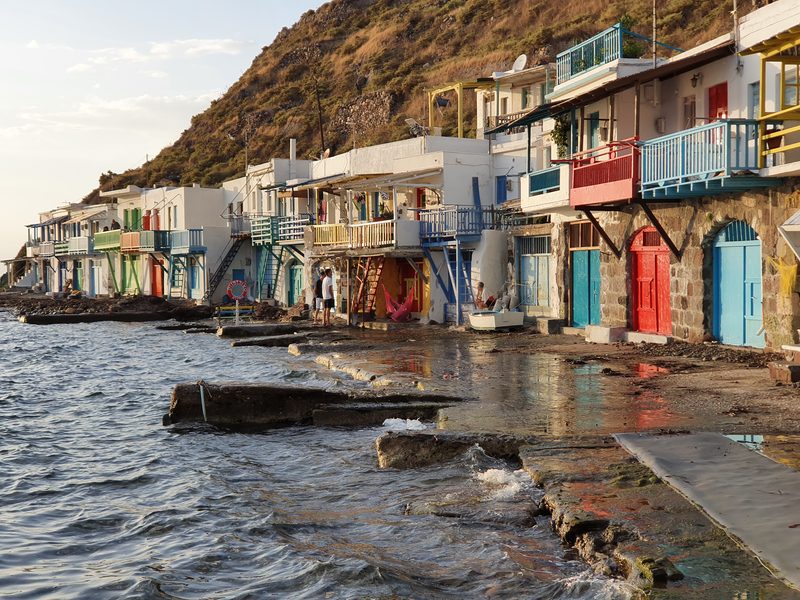
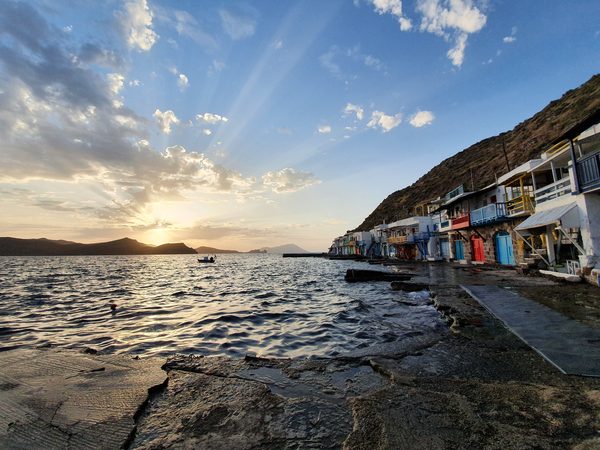
Along the sheltered inlets sit rows of sirmata, the two-storey fishermen's houses with a boat garage cut into the rock below and living quarters above, doors painted every colour available. Klima is the famous one, below Trypiti, best in the last hour of daylight when the sun hits those doors head-on. Firopotamos has the finest rock setting, Mandrakia is the one to arrive at hungry, and Agios Konstantinos struck me as the least performed. Many are let for the season now, which is how they survived.
These are lanes, not car parks. Leave the vehicle at the top and walk down.
8. Lunch on the Hot Sand at Paleochori
Paleochori is a long south-coast beach under crumbling coloured cliffs, and its selling point is underfoot: the ground is still geothermally active, so patches of sand run genuinely hot and the shallows warm your ankles. Sirocco, at the eastern end, is the taverna still doing this: lobster, lamb and squid buried in sand that reaches around 102C, its own signature dish rather than a one-off gimmick. It also holds up in a meltemi.
9. A Day on Kimolos
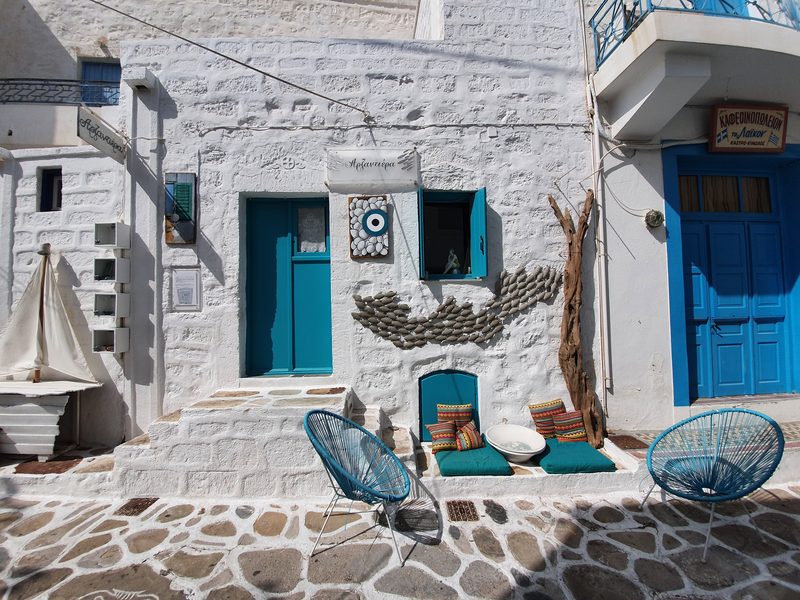
The small ferry from Pollonia crosses to Psathi in twenty-odd minutes and lands you on the island Milos was before anyone noticed it: one hillside village, Chorio, with a Venetian castle quietly falling apart inside it, a mushroom-shaped rock called Skiadi on the plateau, and beaches you may have to yourself. There is no bus, so a day means walking, a taxi or a scooter, and the last boat governs everything.
I would rather give Kimolos a night than a day, and I say that having done it both ways.
Kimolos day trip guide · Kimolos guide · its beaches · where to stay and eat.
10. Walking the Geo Trails
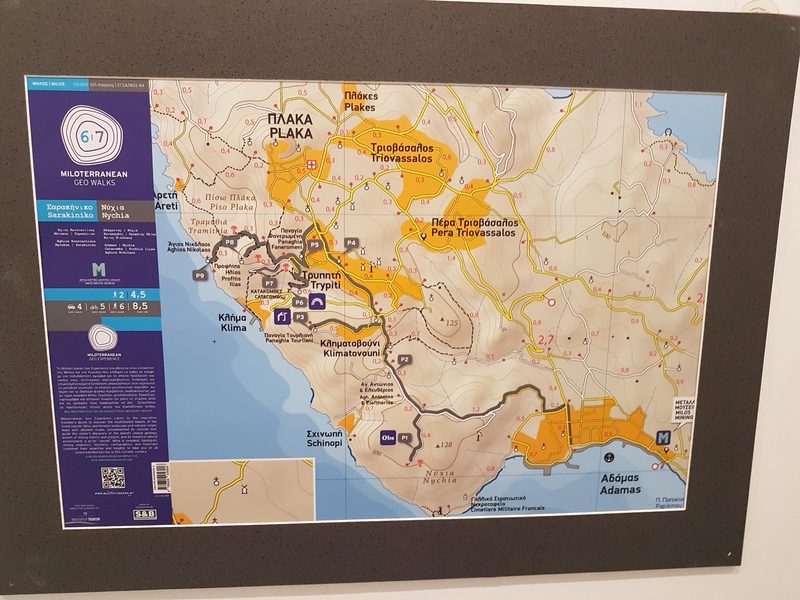
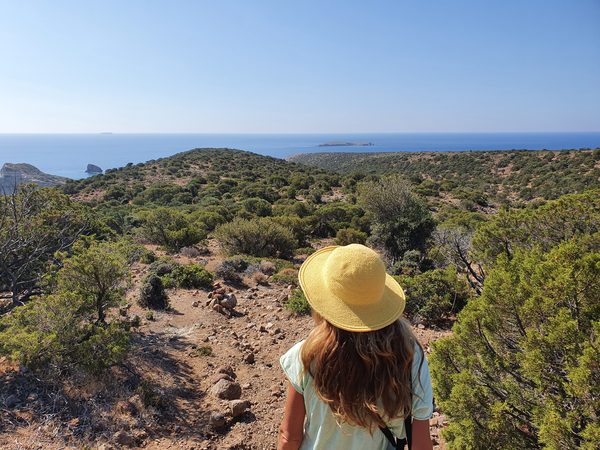
Walking here is short and strange rather than long and strenuous. Routes run from 45 minutes to three hours, most linking a village to a beach. The signposted Miloterranean Geo Experience network puts panels along them explaining the craters, old workings and Natura 2000 ground, and they earn their keep: without one, a played-out sulphur working is just another brown slope. The Trypiti loops are the easy introduction, the coastal string from Fylakopi to Mandrakia the best half-day, and Profitis Ilias at 751 metres the summit.
Proper shoes, not sandals. The rock is sharp, and the island has an endemic viper that turns up in the remoter corners.
11. Sea Kayaking and Diving
The coast that makes the boat trips worthwhile is better still at three miles an hour. Kayaking gets you inside the caves and under the arches the tour boats idle past, with guided day paddles stopping at coves nothing else can get to. Underwater, Greece cannot match the tropics for fish, but Milos has wrecks, caverns and, occasionally, a monk seal. Two PADI-affiliated dive centres work the island, Dive in Milos near Adamas port and Milos Scubaholics out of Pollonia; kayak trips are easiest booked through one of the marketplace listings covering the island rather than a single named operator.
Sea kayaking and diving guide.
12. An Evening in Pollonia
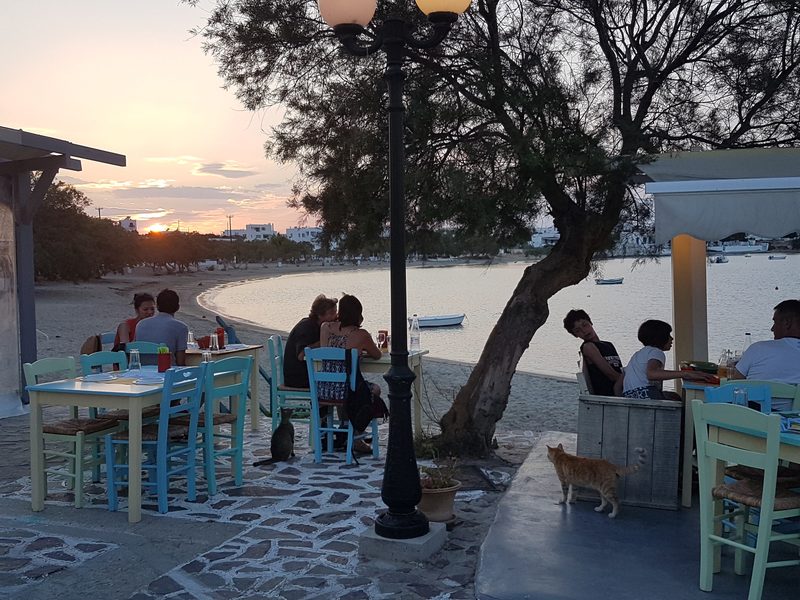
Pollonia is the quiet corner of Milos: a compact seafront settlement in the north-east with a shallow beach, a promenade and restaurants good enough to draw people across the island for dinner. Nothing to tick off, which is the point. Walk past Agios Nikolaos church for the view, and ask a local to point out the chair-shaped rock: sit on it with the right person and, the story goes, you stay together.
Pollonia guide · Pollonia restaurants.
13. The Wild West by Quad or 4WD
Out west the tarmac gives out, and so do the last village, petrol pump and shop. This is the most memorable driving on the island. About 22 km from Adamas, most of an hour on dirt, stands the monastery of Agios Ioannis Siderianos, built in 1582 with pilgrims' rooms attached. A loop road runs past it; the northern arm is the better surface. Out here too is the bentonite quarry at Aggeria, a vast multi-coloured hole in the ground that gets almost no visitors and was a highlight of my last trip.
Don't take a standard hire car onto these tracks, because most policies exclude unsealed roads. Hire a quad or book a 4WD tour.
ATV rental in Milos · getting around Milos.
14. Papafragas and Ancient Fylakopi
On the north coast near Pollonia, Papafragas is a narrow flooded gorge where the sea has cut inland through soft rock, leaving a slot of clear turquoise water between vertical walls. It photographs better than it swims, with an awkward descent and tiny space, so treat it as a fifteen-minute stop. Nearby lie the ruins of Fylakopi, a Bronze Age town that mattered enormously around 2,300 BC, of which very little stands; for ancient Milos the Archaeological Museum in Plaka does the job better. The site's opening hours are informally staffed and known to lapse for stretches, so treat it as a bonus if you find it open rather than something to plan a stop around.
15. The Small Museums of Plaka
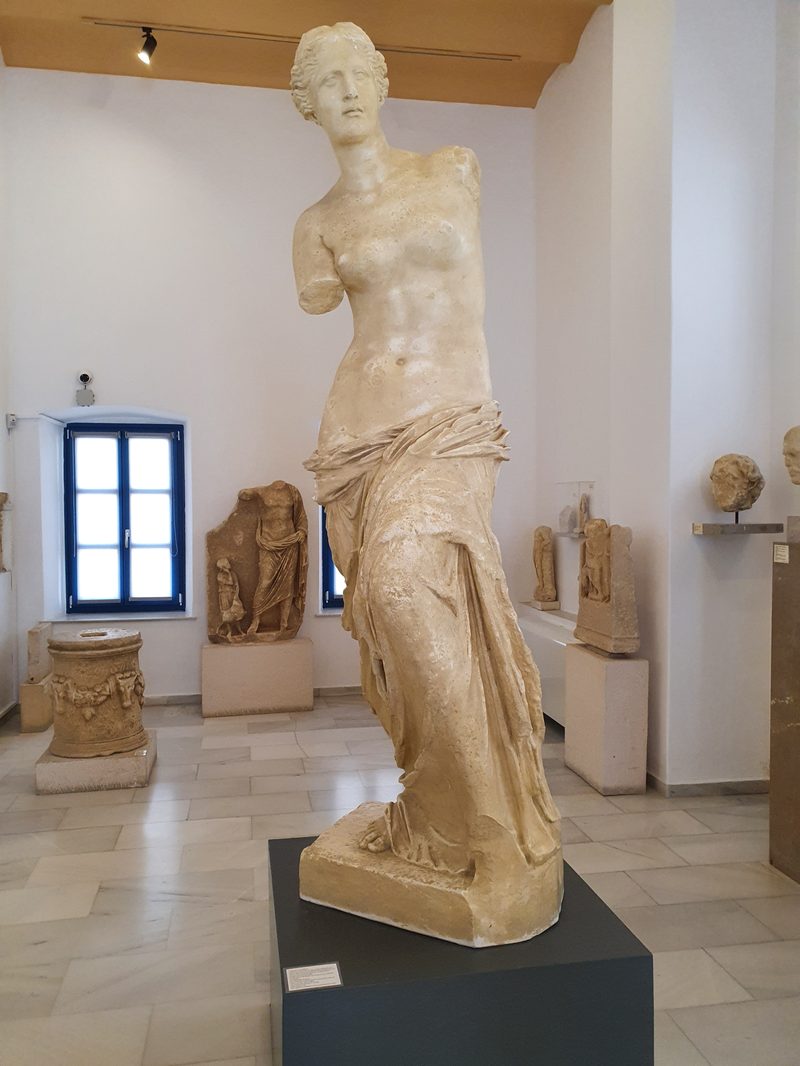
Four small collections a few minutes' walk apart, worth an hour on a windy afternoon. The Archaeological Museum, in Ernst Ziller's neoclassical building, centres on the Lady of Fylakopi, a terracotta figure from the 14th century BC, a better object than the replica Aphrodite in the hall. The Folk and Historic Museum covers island life from 1850 to 1930. The War Museum occupies a German-built 1943 shelter that doubled as a hospital. And down an alley, a Sand Museum, one man's collection of sand from around the world, more interesting than that sentence sounds.
The Archaeological Museum runs 08:30-15:30 daily except Tuesdays through the summer half of the year, admission 5 EUR, and the Mining Museum in Adamas keeps a similar seasonal pattern for around 7 EUR. The smaller three (Folk and Historic, War and Sand) keep shorter, more informal hours that shift year to year and are worth confirming locally before you build a stop around them.
Milos museums and mining history.
What Should You Eat Between All That?
Eating is an activity here, not refuelling. The island cooks goat slowly, makes its own cheeses, takes its capers off the roadside walls and lands fish in the village you eat it in. Short menus are a good sign. Everyone is pointed to O Hamos, a family taverna outside Adamas that grows much of what it serves, still walk-in only with a queue at busy times. Village by village picks are in the Milos restaurants hub, with lists for Adamas and Plaka.
Are There Local Events Worth Timing a Trip Around?
Two, neither aimed at visitors. The Agios Ioannis Siderianos feast, held around late September, pulls people out to that remote monastery for a service, food and wine; treat the exact date as one to check locally rather than fixed. At Greek Easter (Sunday 12 April in 2026), Triovasalos and Pera Triovasalos compete to make the most noise with fireworks, then burn an effigy of Judas.
How Many Days Do You Need for All This?
Two days covers Sarakiniko, Plaka and the kastro, the catacombs and one south-coast beach, and feels rushed. Three is my minimum, adding Kleftiko and the Mining Museum. Five lets the beaches follow the wind and adds a day out west; a week takes in Kimolos with a night on it and the walking routes.
Day by day in the Milos itinerary; where to stay in Milos covers which town to base yourself in.
FAQ About Things to Do in Milos
Is Milos worth visiting?
Yes, if you want coastline, geology and space rather than nightlife or a famous view; if you need bars and shops in quantity, Paros suits you better. Longer answer: is Milos worth visiting.
Can you do Milos without a car?
Partly. The KTEL buses link Adamas, Plaka, Pollonia and a few larger beaches cheaply, and boat trips leave from the port on foot. But half the beaches here sit at the end of a dirt road. See the Milos bus guide and car rental.
What is there to do in Milos when it's windy?
The museums in Plaka and Adamas, the catacombs and theatre, the villages on foot, a long lunch inland. Then drive south, since a meltemi that has flattened the north coast often leaves Firiplaka and Paleochori calm.
When should you go, and what will it cost?
June and September. July and August bring the warmest sea, the biggest crowds and the strongest meltemi. Milos costs noticeably less than Santorini or Mykonos, and what breaks budgets is rarely the food. It is the wheels and the water: vehicle hire, boat trips and ferries.
More Milos guides: when to visit · how to get to Milos · is Milos expensive · Milos vs Santorini · island hopping
Milos is a volcanic island in the western Cyclades, around 160 sq km, with Adamas its port and Plaka its capital. The headline things to do in Milos are Sarakiniko, a boat trip to Kleftiko, sunset from the kastro above Plaka, the catacombs and theatre at Trypiti, and the Mining Museum in Adamas. Allow three days for the shortlist, five for the full list. Let the wind pick your beach, and swim on whichever coast it is not hitting.
Planning the rest of your island time? Start with our complete Milos travel guide.
Heading to Santorini? See our guide to the best day trips from Santorini.
Heading to Mykonos? See our guide to the best day trips from Mykonos.
Last updated: 1 August 2026