The remote beaches of Milos, a Greek island in the western Cyclades, are the ones the hire-car queue never reaches: sulphur-mine ruins on a yellow shore, coloured pebbles on the east coast, and fine sand out west that you may well have entirely to yourself. They all cost you something. Expect a rough track, an early start, and everything you need carried in.
In this guide
Milos has somewhere north of seventy beaches, and the well-known ones are paved to and photographed constantly. The five below are the opposite: no canteens, mostly no shade, access that defeats a standard hire car, and geology on full display over water nobody has disturbed.
I have been out to these corners in mid-June and again in late September. Late September was better in every respect apart from the shorter afternoons.
The north/south wind rule that decides which coast you should be on is explained in the Milos beaches guide. This page assumes you know it and just states where each beach sits.
What Does Remote Actually Cost You?
- No supplies. Kipos is the last place to buy water or snacks before western Milos, and there is nothing beyond it.
- No shade. An umbrella you can plant in sand or wedge in pebbles turns a two-hour visit into a whole day.
- Patchy signal in the western valleys and parts of the east coast, so download your map first.
- Closed shoes. Steep gravel, sharp volcanic rock and the viper below all point the same way.
- Your hire agreement excludes the tracks. The Milos ATV rental guide covers that and which vehicle actually copes.
The mistake people make is assuming a road that started well continues that way: turn back rather than commit to a descent you cannot reverse out of. Check the wind before you choose, using a spot-specific forecast such as Windy.app or Windfinder.com rather than a general weather app.
Thiorichia: The Sulphur Mines
- Location: East coast
- Access: Rough dirt track, 4WD or on foot; also by boat
- Facilities: None
- Wind exposure: East-facing, so a straight northerly loses some of its bite, but a north-easterly puts chop directly onto the shore, so swap to the south coast on those days.
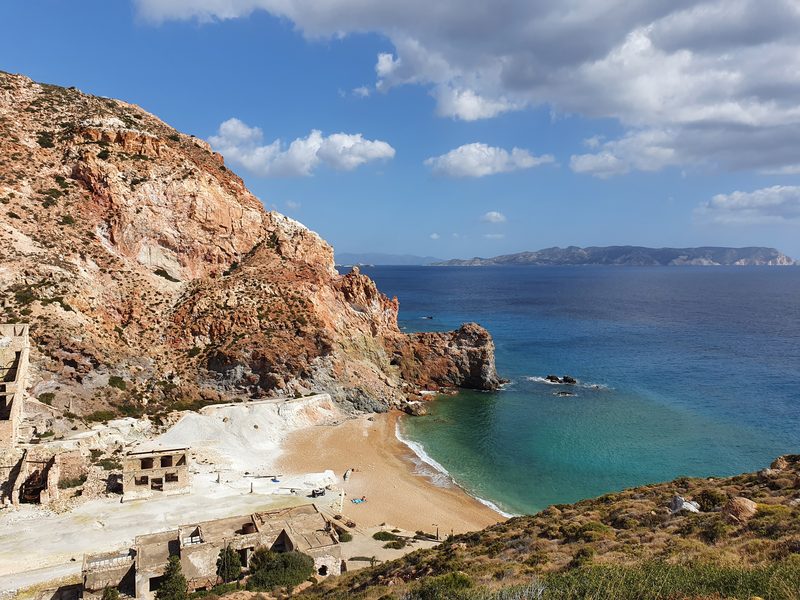
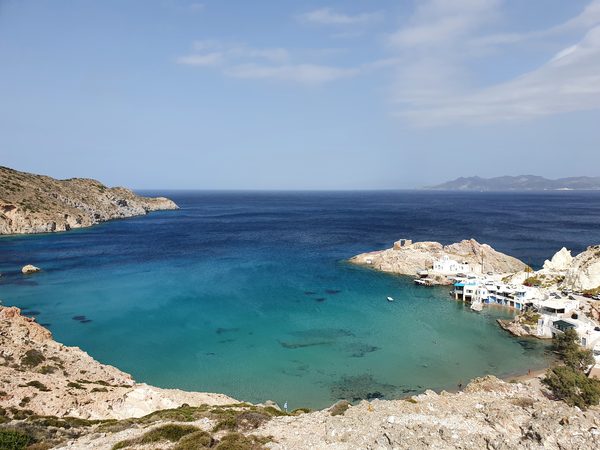
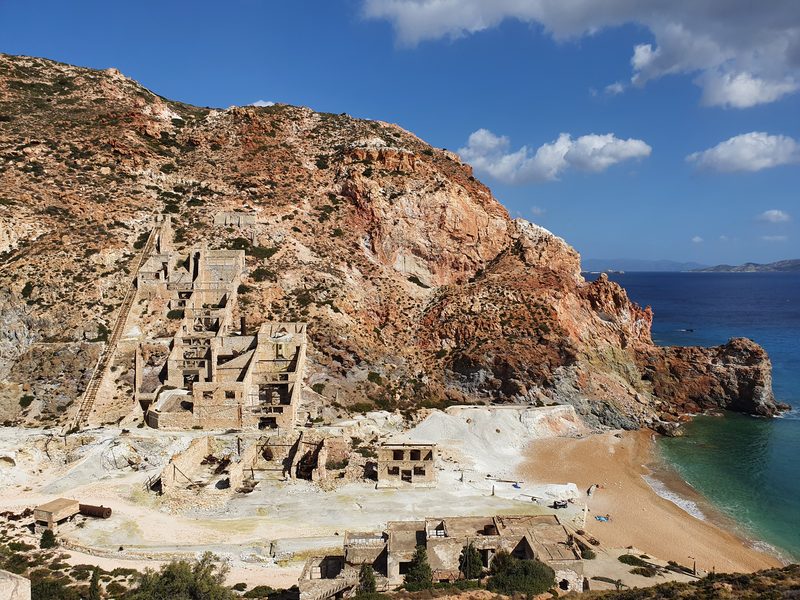
Thiorichia is the strangest place to swim on Milos and probably the most interesting. Sulphur was dug here from the 1890s to the late 1950s, with workers' housing and mine buildings clustered on the shore itself. Demand fell away as larger deposits were found abroad, the mines shut, and no resident has been recorded here since 1971.
What survives is a rusting, roofless village above a shore that reads distinctly yellow. Nothing is maintained, so treat every doorway and cave mouth as something that could come down. The swimming is good once you stop staring at the buildings, but there is no shade at all.
The track degrades as it drops to the coast, and neither a normal hire car nor an ATV will manage the last stretch. Leave the vehicle where the surface turns and walk.
Visit the mining museum in Adamas first if you can. The photographs of the men who worked this shore change what you are looking at when you get here. See the Milos museums and mining history guide.
Kastanas: Coloured Pebbles on the East Coast
- Location: East coast, near Tria Pigadia and Kolibisionas
- Access: Dirt road, reported in good condition
- Facilities: None
- Wind exposure: East-facing, so the meltemi still finds its way in. Do not count on it as a windy-day refuge; a southerly leaves it calm.
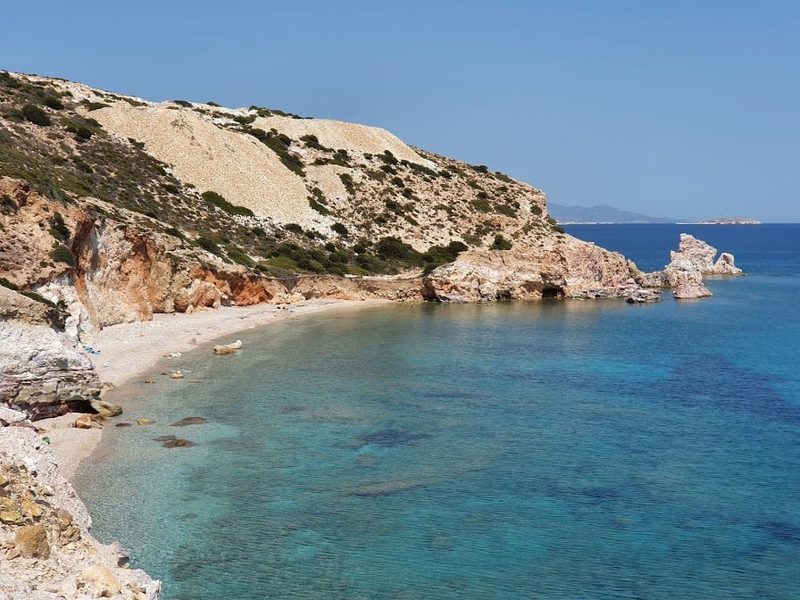
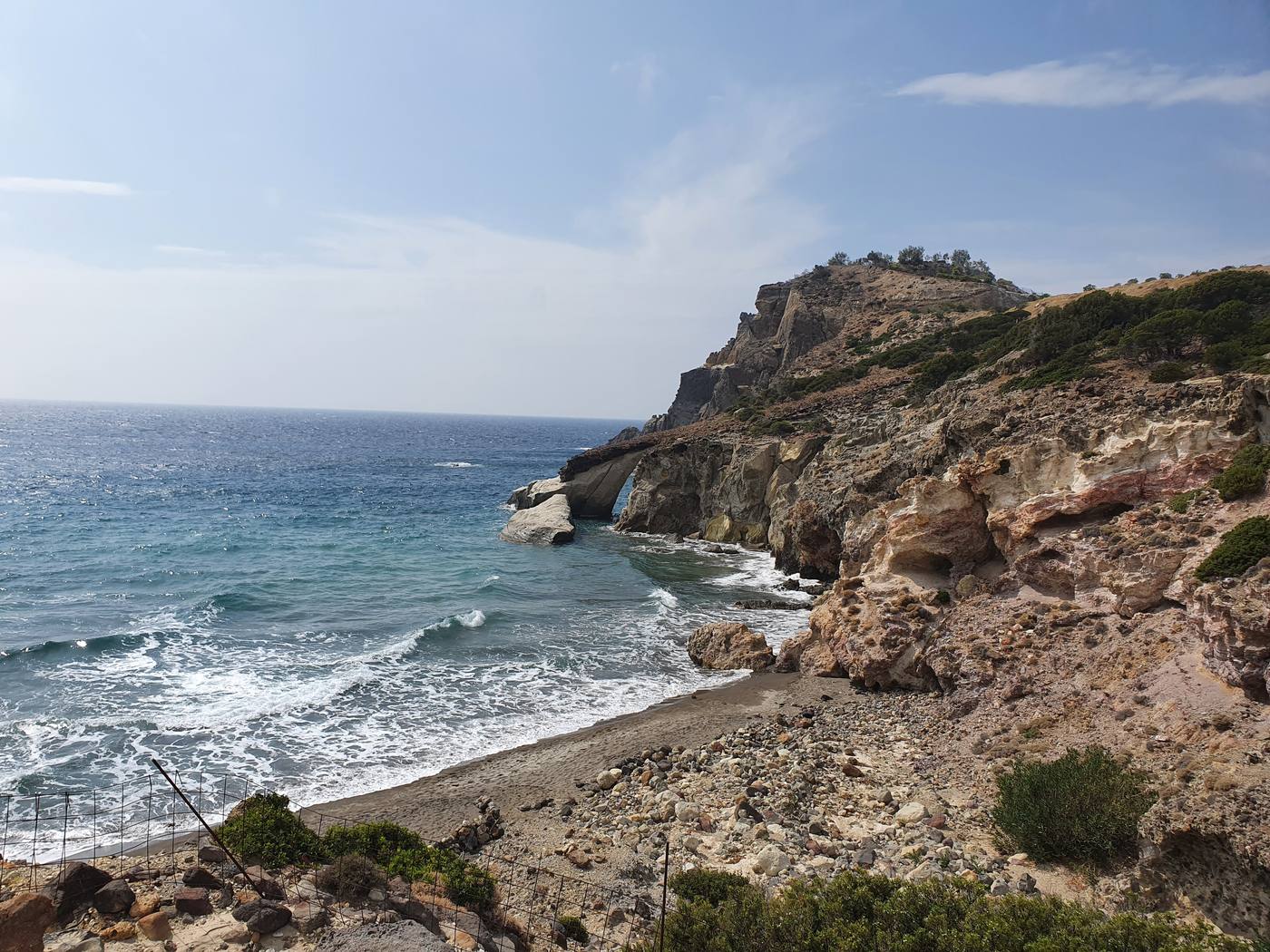
Kastanas is my favourite of these and the easiest to reach, an unusual combination here. It is not one beach but a run of tiny bays, each a few metres of coloured pebbles between rock formations that look like nothing else on the island. Of all the tracks in this article, this is the one in the best shape. The first stretch, over old mining land, is manageable in a normal car, but the final approach is steep enough that a standard hire agreement will not cover you on it, so a quad or 4WD is the sensible choice even where the surface itself looks fine.
Snorkelling is excellent in glass-clear water. Expect company of a specific kind: naturists use these bays, spearfishing divers work them, and almost everyone you meet is Greek. The bays are small, so a couple of families fills one, so walk on to the next. With high ground at its back, this coast loses the afternoon sun sooner than you expect, so come in the morning.
Gerontas: The Best Scenery on This Page
- Location: South-west coast, beside Katergo
- Access: Bumpy dirt track, then a 10–15 minute walk down
- Facilities: None
- Wind exposure: Wide open to southerlies. On a south wind the bay is unswimmable and the north coast is your answer.
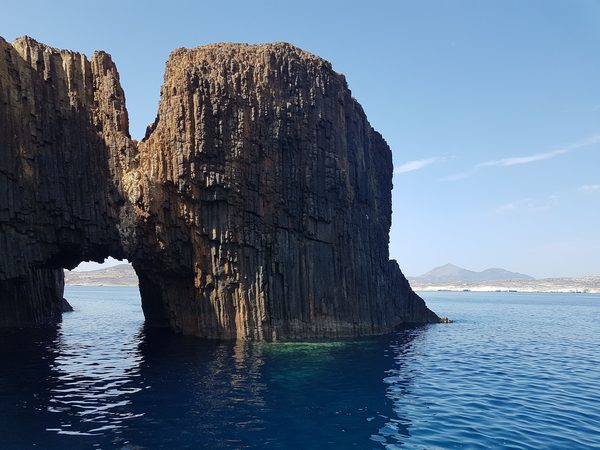
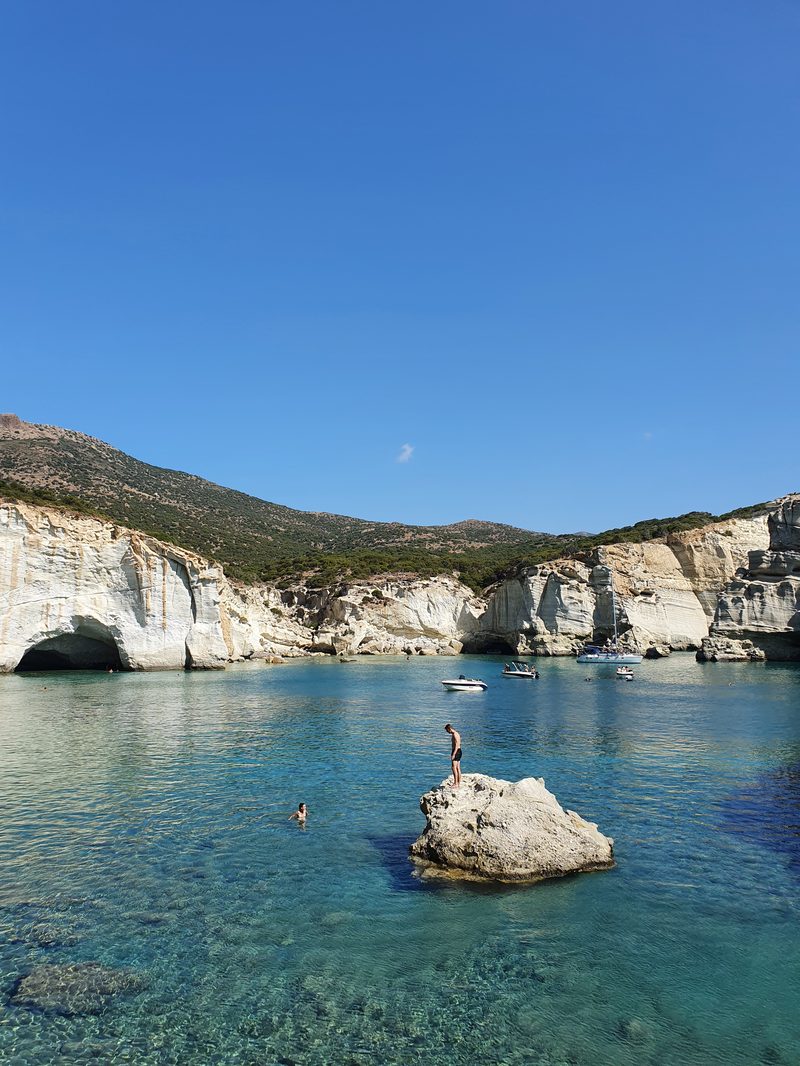
Gerontas is the one people search for by name, and the scenery justifies it: rock rising from the water in arches and stacks, folded and striped almost deliberately, over beautifully clear water. Katergo sits alongside and the two are usually visited together.
The drive is relentlessly bumpy rather than technical, and it ends at a parking spot, not at the sand. From there it is ten to fifteen minutes down a straightforward path with two or three steep sections. Shoes with grip, not flip-flops.
A southerly ruins Gerontas completely, because the coast faces the wrong way for it. Check the forecast before committing to a track this long.
Boat trips along this coast usually take Gerontas in alongside Kleftiko. The Kleftiko guide covers how that stretch is normally seen from the water.
Triades and Ammoudaraki: The Far West
- Location: West coast
- Access: Challenging rough road, 4WD only; or by boat
- Facilities: None
- Wind exposure: Fully exposed to westerlies. On a west wind this is a wasted journey; go to the east-coast beaches instead.
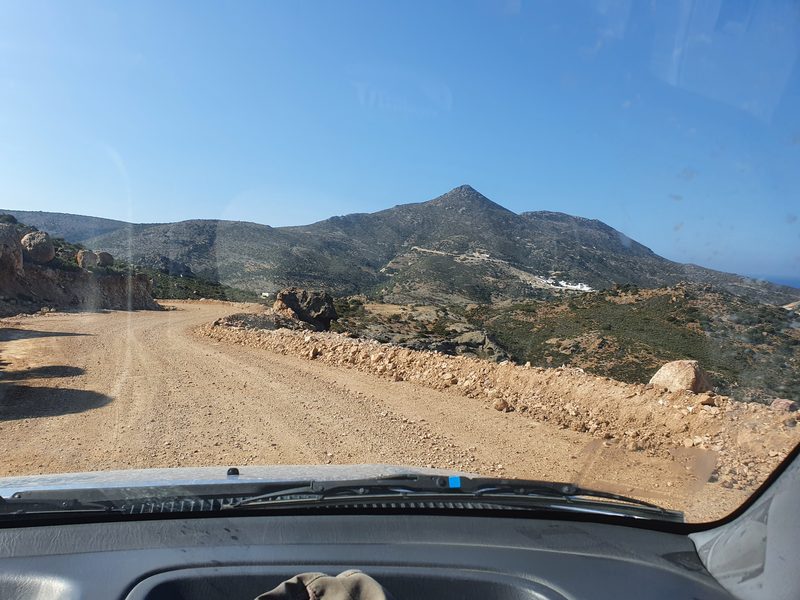
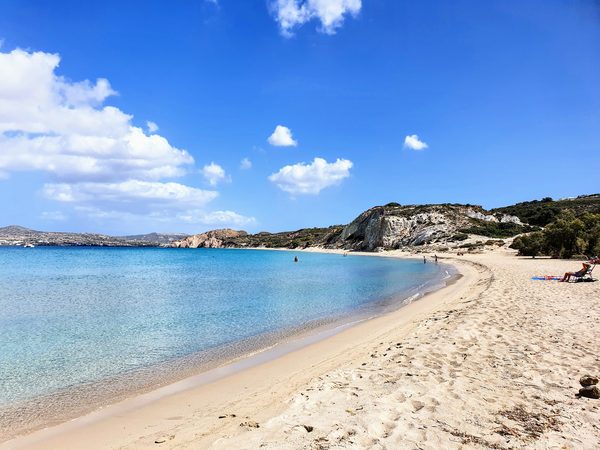
Fine pale sand, clear shallow water and, most days, nobody. Triades is what people mean by having a Cycladic shore to yourself, and the road is why it stays that way. Ammoudaraki along the coast is the same. No village, no shop, no shade: everything travels with you.
Agios Ioannis: Three Beaches and a Sunset
- Location: West coast, below the monastery of Agios Ioannis Siderianos
- Access: Long dirt road in good condition, then a steep descent; 4WD or a capable ATV
- Facilities: None
- Wind exposure: West-facing, so westerlies rule it out, and the east-coast beaches above are the swap.
Three long, empty beaches under the monastery of the same name. The main dirt road covers most of the distance easily; the final steep drop decides what you can drive. It has a reputation for naturists and free-campers, though the only people I saw were spearfishing divers. What it certainly has is the west-coast sunset, and that is the best argument for the trip.
The walking route down to Kleftiko starts roughly two kilometres past the monastery, on a stretch of road far rougher than what came before. The island's red viper carries venom that can kill a person, and this is one of the corners where locals say it turns up. Closed shoes, watch where you put your feet, stay on the path. The Milos hiking guide covers the trails and precautions in full.
Further up the same coast is Sikia, a sea cave whose roof collapsed, leaving a fig tree over the hole and light dropping onto black obsidian. It is a boat stop rather than a beach, and only smaller vessels get inside; the hiking path was closed after heavy rain when I was last on the island, but it is open again, an unmanaged natural-terrain trail with no gate or fee.
Which Ones Are Actually Worth It?
Go, even on a short trip. Kastanas. Easy access, remarkable pebbles, excellent snorkelling, and back in Adamas for lunch.
Go if you have four days or more. Gerontas for the scenery, accepting that the swim depends on the wind. Thiorichia if abandoned industry interests you: as a beach it would not justify the walk, but as a place it is the island's most memorable stop after Kleftiko.
For completists with a 4WD. Triades and Agios Ioannis are both lovely, but neither gives you anything you cannot find more easily elsewhere unless emptiness itself is the point. Agios Ioannis has the edge for the sunset.
When Is the Best Time to Go?
June gives long days and tracks at their driest. Late September is my preference for the warmest sea, better light and the popular beaches emptied, though the shorter afternoons matter on the east coast. July and August work, but the heat on shadeless shores is punishing. In winter and early spring, rain damages the tracks. Whenever you go, start early: eastern beaches lose the sun quickly and western tracks are unpleasant in the dark.
The remote beaches of Milos (Thiorichia, Kastanas, Gerontas, Triades and Agios Ioannis) have no facilities and all sit at the end of dirt roads. Kastanas is the most accessible; Thiorichia needs a walk in and Triades a 4WD. Buy everything you need at Kipos if you are heading west into the empty half of this Greek island.
Planning the rest of your island time? Start with our complete Milos travel guide.
Last updated: 2 August 2026