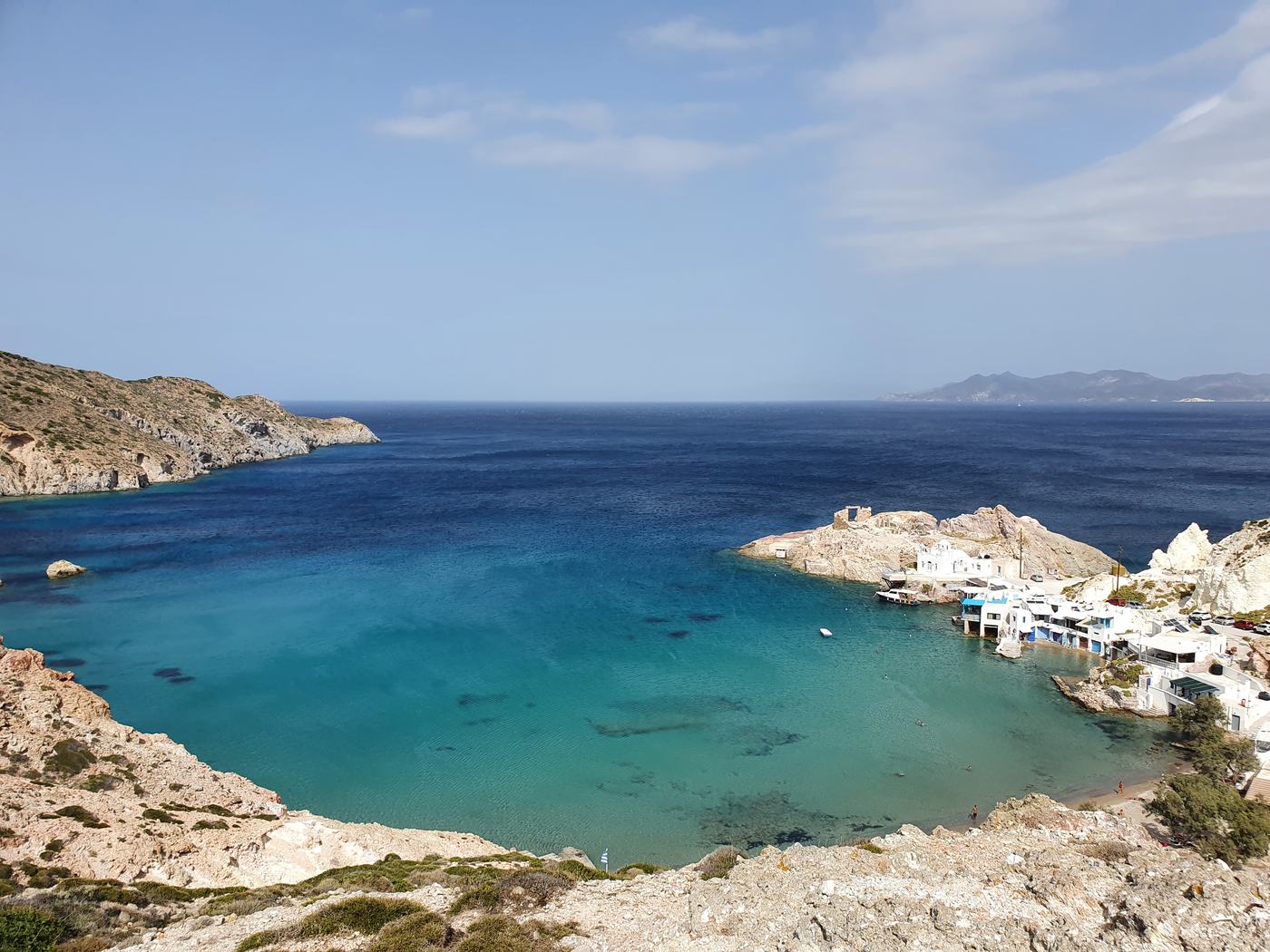
Firopotamos is a scrap of sand at the foot of a cliff on the north coast of Milos, one of the Greek Cyclades, hemmed in by a row of sirmata fishing houses with brightly painted doors and watched over by a small white church. The bay is shallow, clear and calm on most days, which makes it one of the easiest swims on the island for families.
In this guide
- Location: North coast, a short drive from Plaka
- Access: Asphalt road, then a steep walk down
- Facilities: None you can count on
- Wind exposure: Partly protected for a north-coast cove, and calm on most days, but a proper meltemi still gets in, and when it does the bay is cold, choppy and not worth the drive. The calm water that day will be on the island's south side; the Milos beaches guide explains how to pick a replacement.
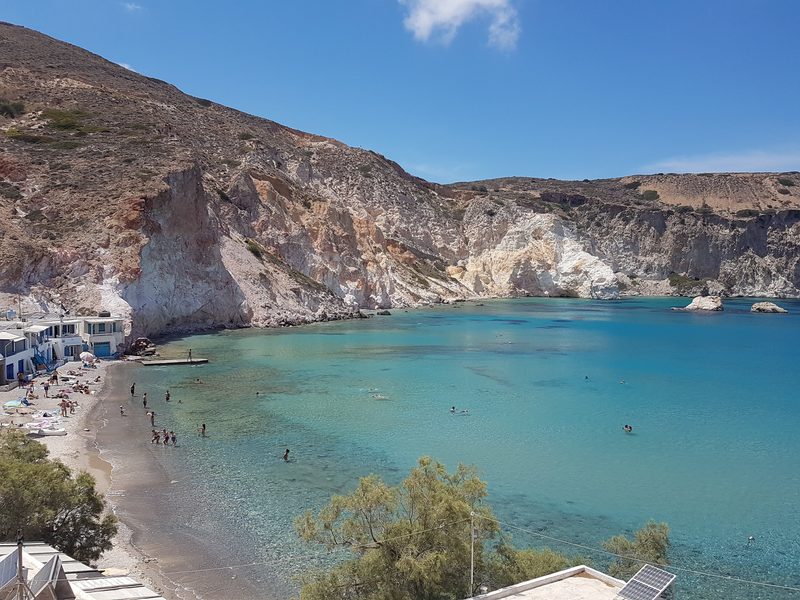
The waterfront here is a small cluster of sirmata, the same two-storey fishing boathouses that made Klima famous and are explained properly in that guide. Here they come on a smaller scale, still feeling lived in rather than staged, and with a proper swimming beach in front of them.
Of everywhere I swam on Milos, this is the cove I kept going back to, and that is with the sand strip being barely wider than a couple of parked cars.
What Is the Beach Actually Like?
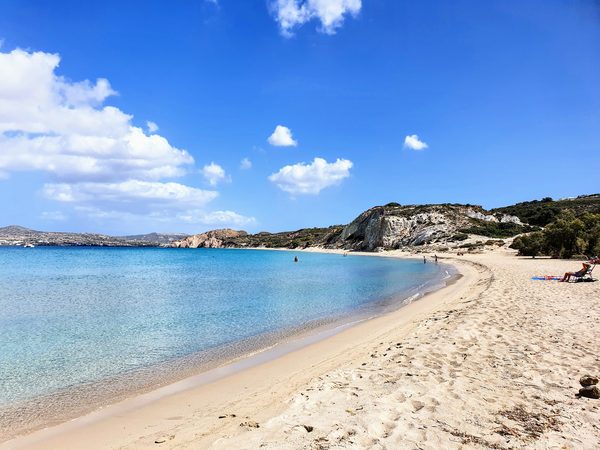
Small. Photographs flatten the scale and people arrive expecting a stretch of coast. What you get is a short apron of coarse sand and fine shingle at the head of a narrow inlet, with the sirmata terrace along one side and rock on the other.
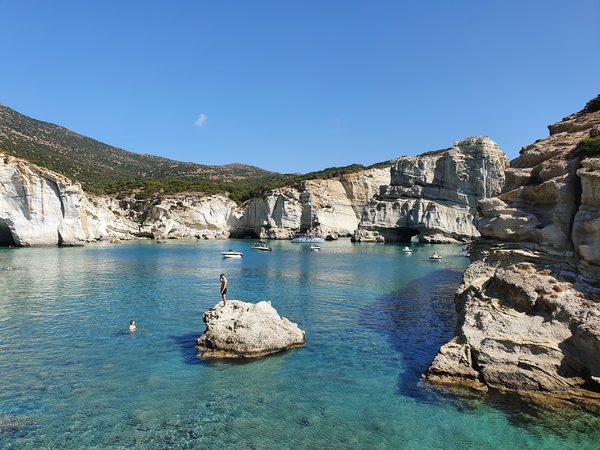
The water is the reason to come. The inlet shelves gently, so children can stand a long way out, and because the bay is enclosed the surface stays glassy on a still day. Visibility is excellent. Bring a mask, because snorkelling here is more rewarding than the size of the place suggests, and there are sea caves in the surrounding cliffs for confident swimmers on a flat day.
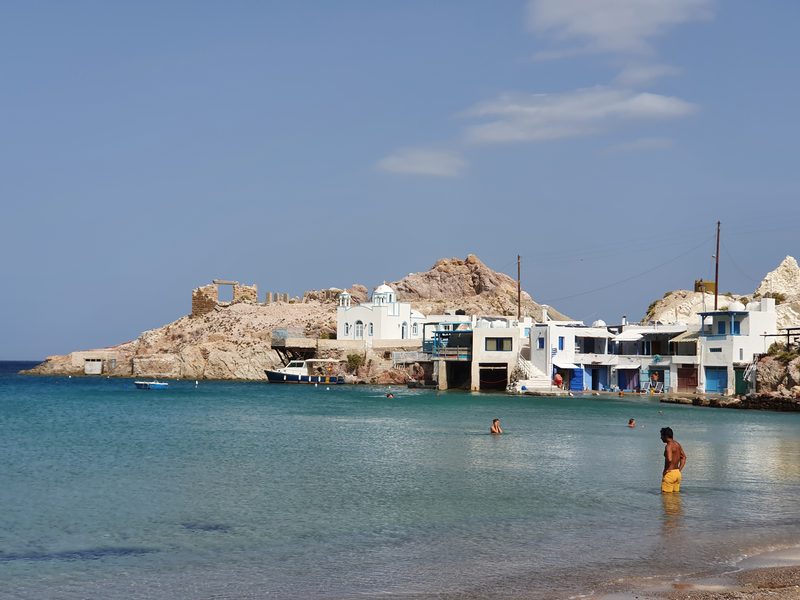
There are trees at the back of the beach, worth knowing on an island where most beaches offer no natural shade at all. It is patchy, and the shaded spots go first, but it is more than you get at Sarakiniko up the coast, where there is none whatsoever.
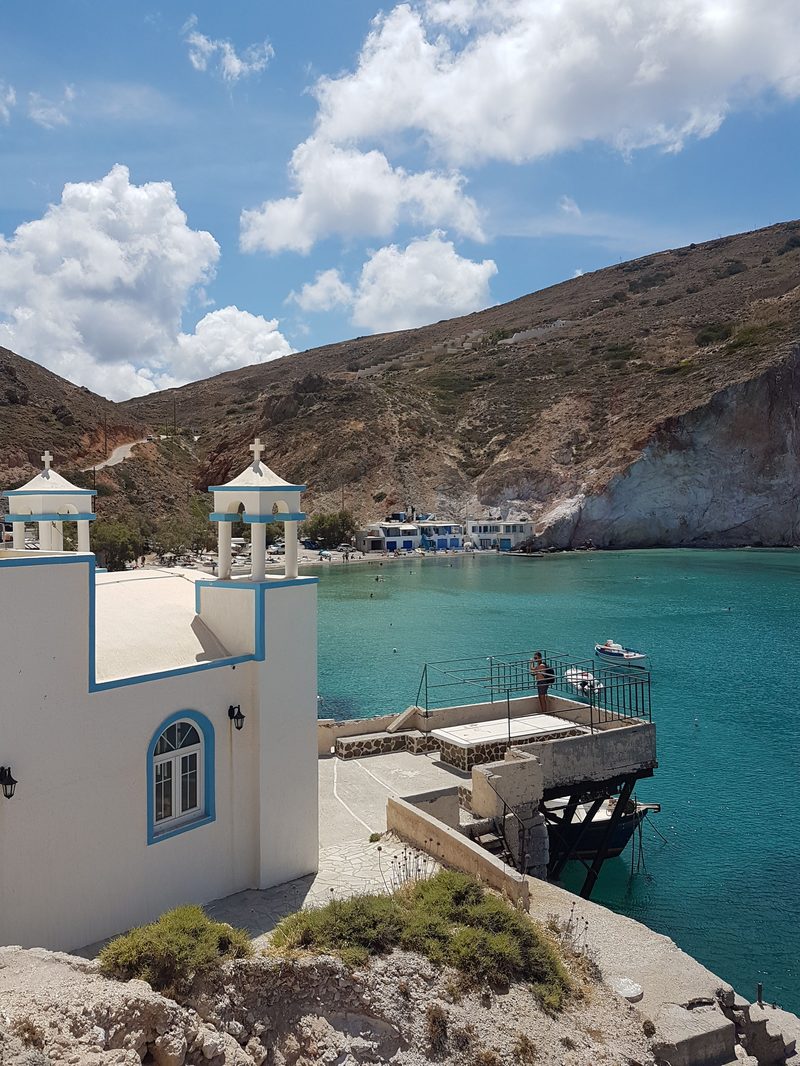
The chapel stands on the rocks above the settlement, a short walk up, and gives you the view that ends up on everybody's camera roll: white boathouses, turquoise inlet, dark volcanic rock behind.
Are There Any Facilities?
Plan for none and you will not be disappointed. A small canteen served the beach some years back, and on my most recent visit it was gone. Rules on seasonal beach kiosks in Greece get rewritten often and concessions come and go, and a small beach bar is trading here again as of 2026, selling drinks and simple food and renting loungers.
Treat it as a bonus rather than a plan, since seasonal concessions come and go. Carry your own water, more than you think, because the walk back up is in full sun. Bring food, a mask, and something to sit on too in case the canteen is not open when you arrive. There is no toilet. The nearest dependable food and cold drinks beyond the canteen are back in Plaka or down in Adamas.
How Do You Get to Firopotamos?
The turning is off the road running north from Plaka, and the surface is asphalt effectively the whole way, so any hire car manages it. Firopotamos, Plathiena and Sarakiniko all sit within a few kilometres of each other, which is what makes a north-coast morning so efficient.
Parking is the weak point, and reports of it vary: some visitors find ample free space at the village entrance, others find it scarce and circle before finding a spot, and no formal restriction or overflow area has been introduced either way. The road stops on the slope above the settlement with room for only a modest number of vehicles along the verge. By late morning in August people end up parked well back up the hill. A scooter or ATV solves it outright, and the getting around Milos guide covers which vehicle suits where.
The final approach to the water is on foot and steeper than it looks: you park at or near the village entrance and walk a short path or lane down into the settlement, a few minutes rather than metres. Carrying a cool box or a small child back up in the afternoon heat is work, and anyone with mobility problems will struggle. Treat it as a drive-or-taxi beach.
When Should You Go?
Time of day. Early. The cove is small enough that it feels full fast, and it fills from mid-morning as the rental cars work their way round the north coast. Arrive early and you get shade, a parking space and the inlet largely to yourself. Late afternoon works too, once people have moved on towards a sunset spot.
Season. June and late September are the sweet spots, with warm sea, long days and no August pressure on that small car park. July and August are hot, busy and the most likely to be blown out by the meltemi. In May the water is still sharp, though the cove is empty.
Photographers should note the boathouse doors face the low evening sun. The end of the day treats this cove well, and the crowds have usually moved on by then.
Who Is Firopotamos For?
Families with young children, snorkellers, and anyone who wants a swim in a working fishing settlement rather than at a beach club. Give it an hour or two and combine it with the rest of the north coast rather than committing a day.
Skip it if you want sunbeds, a beach bar and a taverna at your back, or if you need a lot of towel space. On a busy August afternoon it is simply too small, and bigger beaches elsewhere on the island will serve you better.
Firopotamos is a small north-coast cove on Milos, in Greece, reached by asphalt road from Plaka and a steep walk down from a limited roadside parking area. The bay is shallow, partly sheltered and good for children and snorkelling, but a strong meltemi still ruins it and there are no facilities you can depend on, so bring your own food, water and shade.
Planning the rest of your island time? Start with our complete Milos travel guide.
Last updated: 1 August 2026