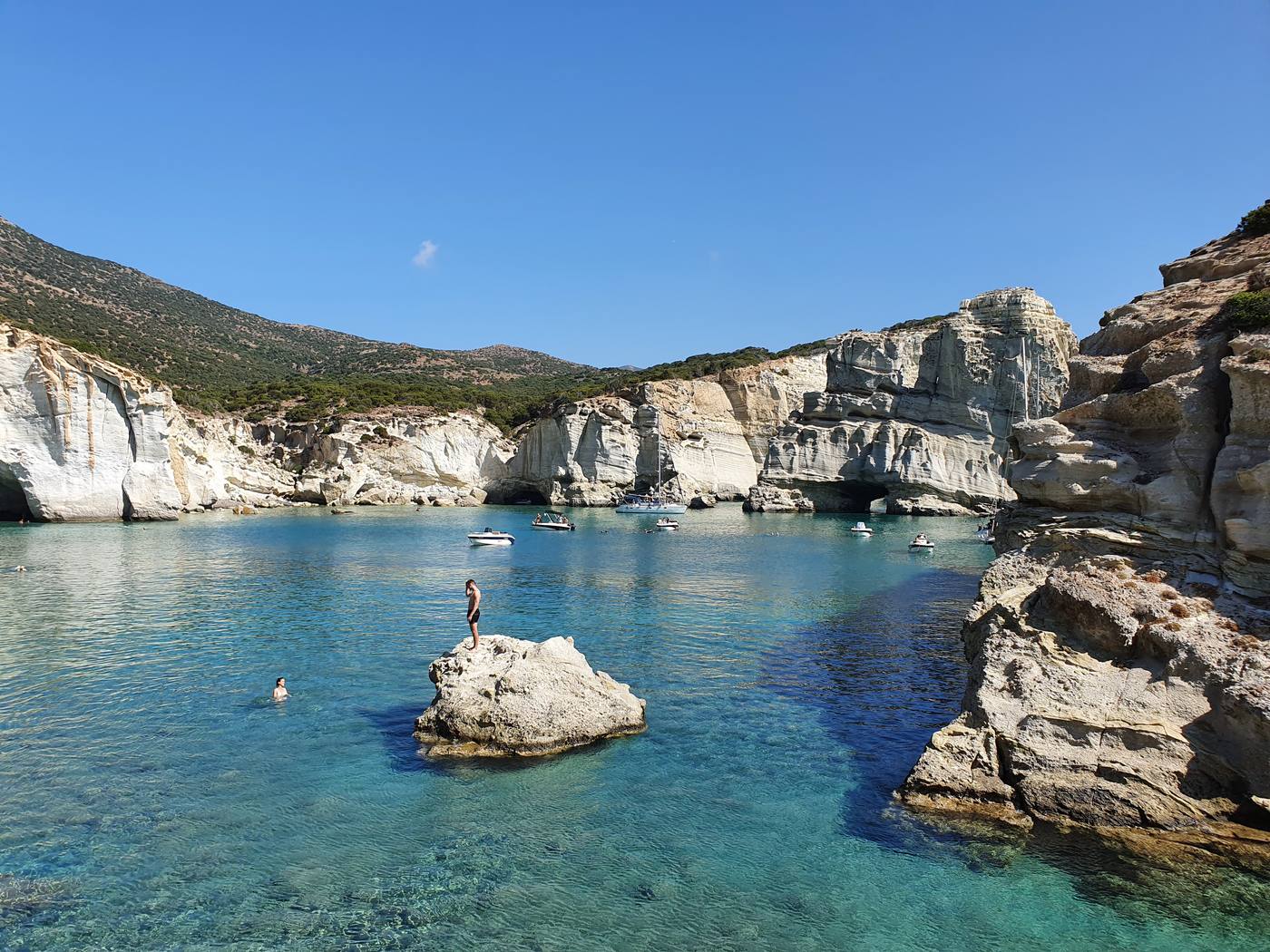
Kleftiko is the image that sells Milos. Huge chalk-white rock stacks rise straight out of turquoise Aegean water on the island's remote south-west coast. It is not really a beach, and there is no road to it. To swim there you take a boat, and the boat only sails when the wind allows.
In this guide
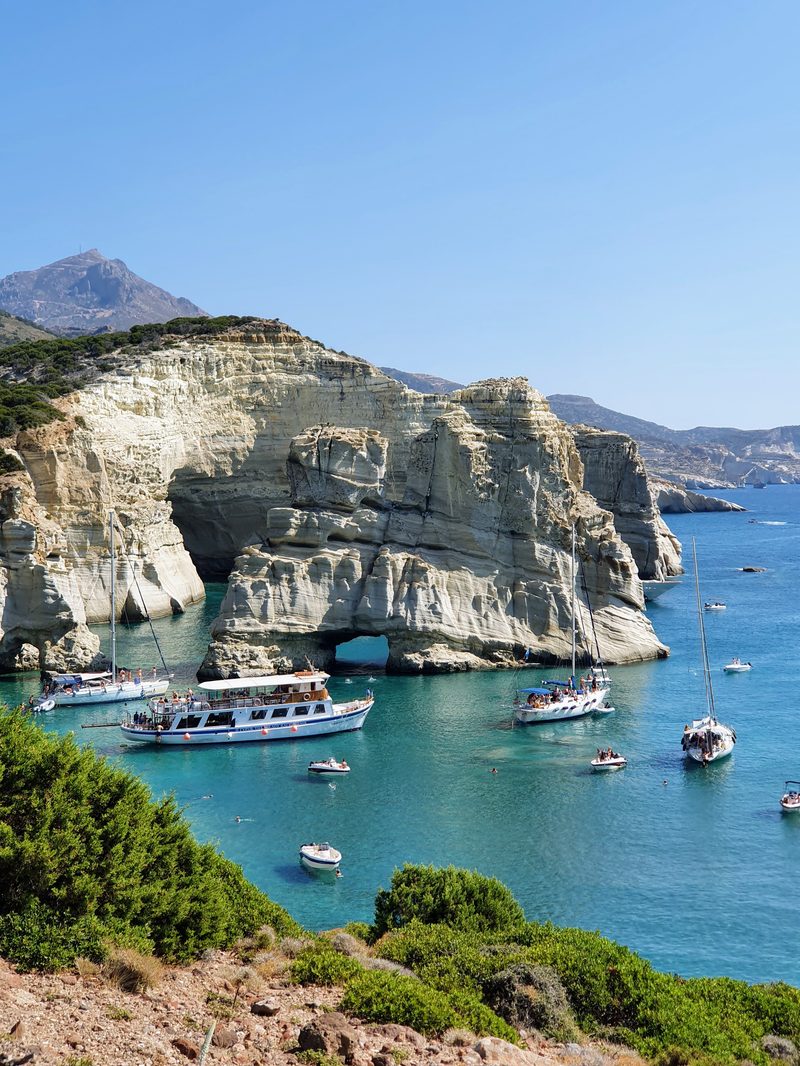
- Location: South-west coast, a decent sail from Adamas that takes up a good slice of the day
- Access: By boat only for swimming; a rough track plus a trail reaches the clifftop above
- Facilities: None at all. No canteen, no shade, no water
- Wind exposure: Sheltered from the meltemi (north wind), exposed to southerlies. A south wind muddies the water and cancels sailings, and on those days the north-coast spots around Sarakiniko and Firopotamos are the better swim.
Kleftiko sits at the far south-western end of Milos, past the point where the asphalt gives up. The name comes from kleftes, the Greek word for thieves, and it is literal: after the Venetians took Milos in the early 13th century they never put down the pirate raids, the island became a pirates' den, and these caves and inlets were where the crews hid their boats. Sarakiniko, on the opposite coast, was the other hideout.
What Is Kleftiko, Exactly?
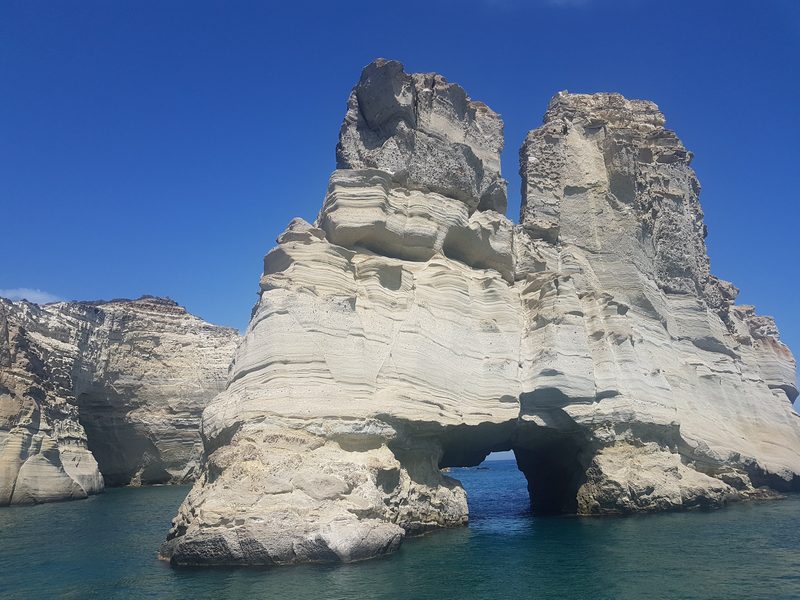
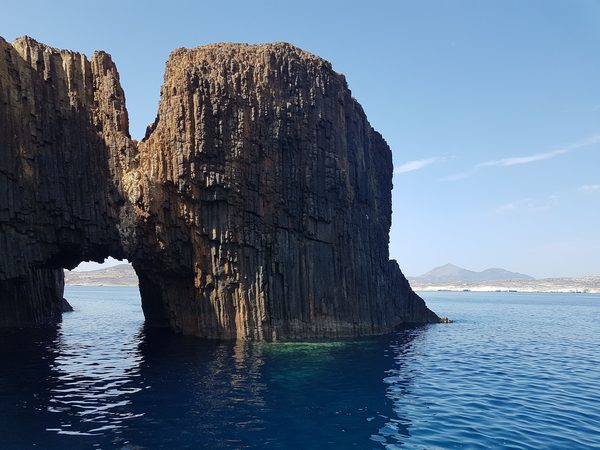
Call it a beach and you set the wrong expectation: Kleftiko is a bay. There is no strip of sand to lie on and nowhere to set up for the day. What you get instead is a cluster of pale volcanic rock formations standing in deep water, pierced by arches and hollowed into sea caves, the water between them shifting from pale green over the shallows to dark blue where the bottom drops away.
That changes what a visit is. You do not go to Kleftiko to sunbathe; you swim through it, under the arches and into the cave mouths, then get back on a boat.
The snorkelling is the best argument for going. On a calm day the water is clear enough to follow the rock walls down, and the appeal is the geology rather than the fish: swimming from bright sun into the cool shadow of an arch and out the other side. The island's diving and sea kayaking options work the same coast at a slower pace.
How Do You Get to Kleftiko?
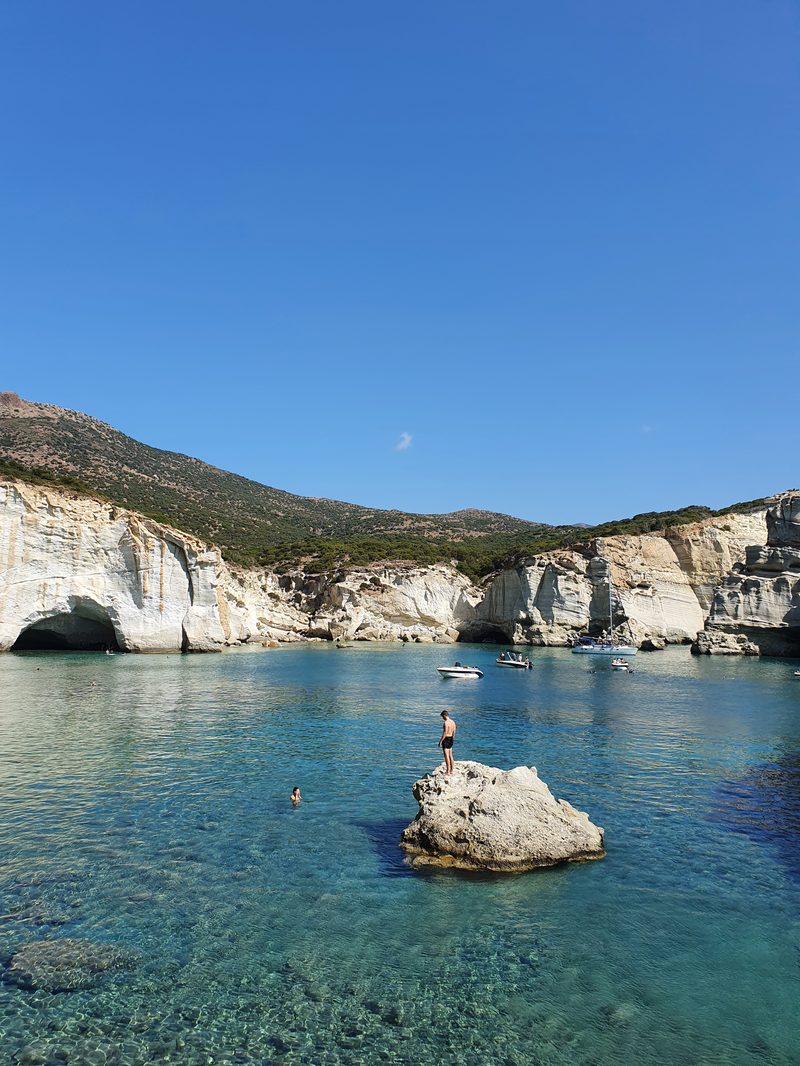
The most popular way to visit Kleftiko Bay is to take a boat trip. Most of the boat tours to Kleftiko depart from Adamas, with some seasonal, good-wind offerings from other locations.
By organised boat trip (half day to full day)
Trips leave from three points, and the departure shapes the whole day.
From Adamas come the full-day sailings, run by catamarans and larger boats working a long stretch of coastline: Kleftiko plus Sikia cave, Gerontas and the rocky islets, often the uninhabited island of Polyaigos and sometimes a short stop at Kimolos. Lunch and drinks are usually included, and the itinerary stays loose because the skipper sets it by the morning's wind. Zefiros, Kapetan Giagkos, Thalassitra and Chrysovalandou are among the established boats on this run. Ask at the waterfront kiosks and compare what each includes.
From Kipos, on the south coast, smaller boats known as Delfinia run shorter cruises that generally do Gerontas and Kleftiko and little else. Take one if a full day at sea sounds like too much.
From Agia Kyriaki, a wooden boat called Armi has run a daily service across to Kleftiko.
I would take the full-day sailing from Adamas over the short hop every time, unless you are prone to seasickness. The coastline in between is the part most visitors never see, and on a good crossing you can pick up dolphins.
The Armi, the Delfinia boats and the named Adamas boats are all still running as of 2026. Full-day sailings from Adamas typically run from morning to early evening, up to eleven hours on the longer itineraries, with around an hour swimming at Kleftiko itself plus one or two shorter stops elsewhere; the half-day trips from Kipos and Agia Kyriaki run three and a half to four and a half hours, with sixty to ninety minutes at Kleftiko. Prices move around by operator and season and are best had directly from the boat or the waterfront kiosk rather than from an old listing, so I have left them out here.
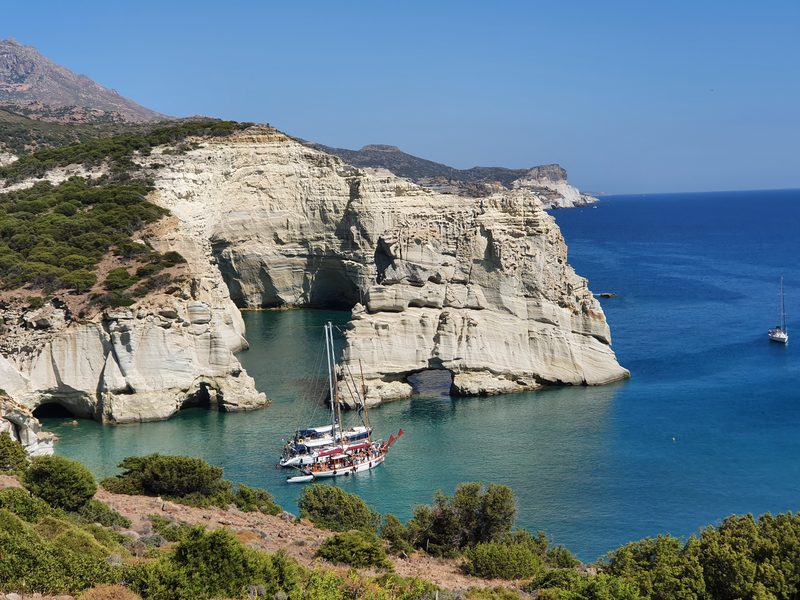
Book early in your stay. If the wind kills your sailing on day five of five, there is no second chance. Agencies in Adamas compare options face to face, but in July and August the good boats fill up in advance. Fuller rundown in the Milos boat tours guide.
Can you hike to Kleftiko Bay?
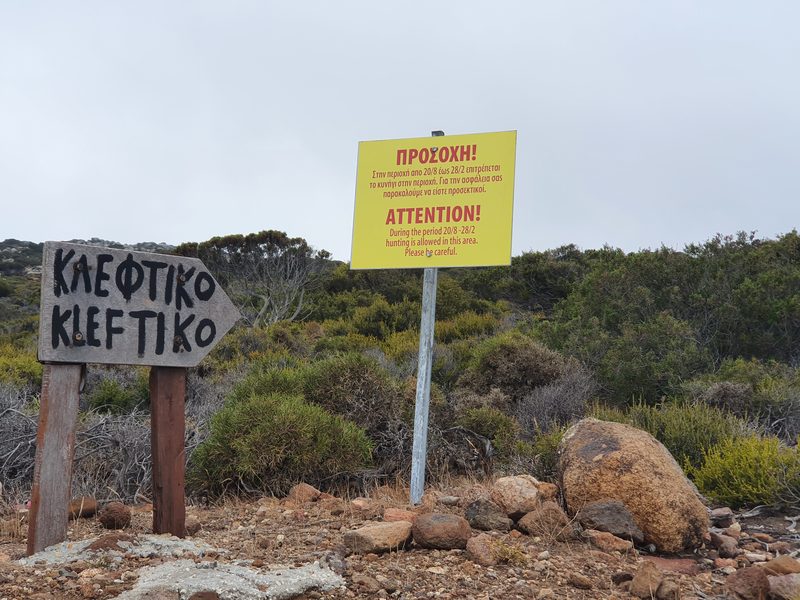
Yes you can, and I’ve made the hike myself so I know of what I speak! It’s not for the unfit though, and you need to take plenty of water with you. The rewards are the views looking down onto the bay, and also the looks on peoples faces when they realise you’ve appeared from where their boat tour Captains told them people couldn’t get down!
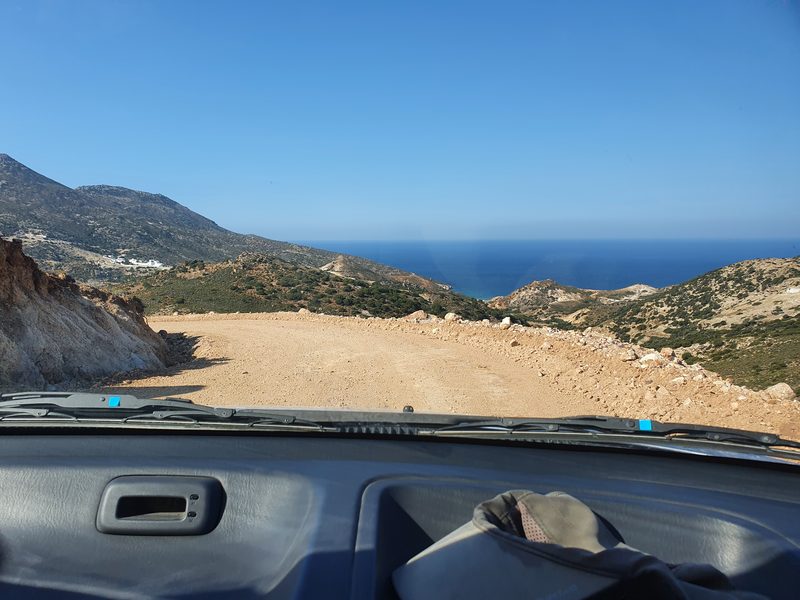
Getting to the trailhead means driving the dirt road out to the monastery of Agios Ioannis Siderianos, which is fine in most conditions. From there you continue a couple of kilometres on a surface bad enough that a standard hire car has no business there, and where your insurance will typically not cover you. Walking in from there, budget the best part of an hour each way; the path itself gives you no trouble to follow, but several stretches climb or drop steeply.
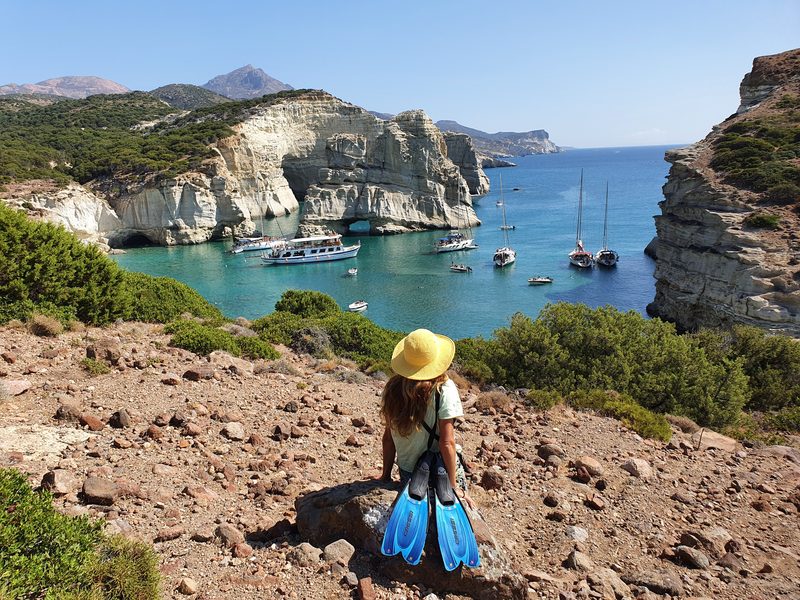
Wear closed shoes. Milos has a red viper that locals report seeing in exactly this sort of terrain. There is no shade on the walk, so carry more water than feels necessary. More routes in the Milos hiking guide.
What Is the Stop Actually Like?
Boats do not tie up at Kleftiko. They cut the engines in the bay and you go in off the side for a proper swim stop, long enough to explore and short enough that you will wish it were longer. A landslide-risk restriction has been in force since 2023 and is still active, keeping boats around 25 metres off the rock and caves, so how close you can get to swim through an arch or into a cave mouth depends on where that line falls on the day rather than on the postcard shot. On the full-day trips lunch is served on board and drinks are generally included.
Ask before booking whether masks and snorkels are provided. Some boats supply them and some do not, and this is the one stop where you will regret going without.
The part nobody photographs: in July and August you will not have the bay to yourself. Several boats work the same handful of coves in the same weather window, so the arch you have seen a hundred times online may have thirty other swimmers in it. The formations absorb a crowd better than most Milos beaches manage, but the empty-water shot is a June or late-September morning, not an August afternoon.
When Should You Go?
Morning. The sea is calmest early, the light is kinder on the white rock, and the first boats out reach the bay ahead of the fleet.
Wind before everything else. Kleftiko shelters from the meltemi, which is why it still works when the north coast is unswimmable. A southerly is the problem: it churns the water, kills the clarity and gets sailings cancelled.
Season. June and late September are the sweet spot, with warm water, sailings running and far fewer boats than the July-to-August peak.
The wind at the western end of the island is frequently doing something entirely different to the wind in Adamas harbour, which is why trips get called off on mornings that look perfect from the port. Believe the skipper, not the view from the quay.
Where Do the Photographs Come From?
Two positions, and they are not interchangeable. Water level, from the boat or mid-swim, gives the scale of the stacks and the colour of the sea. The clifftop walk gives the looking-down shot with the whole bay laid out. Morning light for either.
Who Is It For?
Confident swimmers, snorkellers and anyone whose interest in Milos is its geology. It suits non-swimmers badly and small children worse, since six hours afloat buys one swim they cannot really join. Those groups do better on the road-accessible Milos beaches, or the island's remote beaches if the appeal is emptiness rather than arches.
Kleftiko is a bay of white rock arches and sea caves on the south-west coast of Milos, in Greece, not a beach. There is no sand, no shade and no facilities. Swimming there means a boat trip: full-day sailings from Adamas, shorter Delfinia cruises from Kipos, or the wooden Armi from Agia Kyriaki. The walk in from beyond Agios Ioannis Siderianos takes under an hour each way and reaches the clifftop viewpoint only. Strong wind cancels sailings, so book early in your stay.
Planning the rest of your island time? Start with our complete Milos travel guide.
Last updated: 1 August 2026