Milos rewards travellers who want strange volcanic scenery, sea caves and a different beach every day. Paros rewards travellers who want soft sand, an airport with real connections, and a town that still has life in it at midnight. Both are Cyclades islands, both are good, and they are not remotely the same holiday.
In this guide
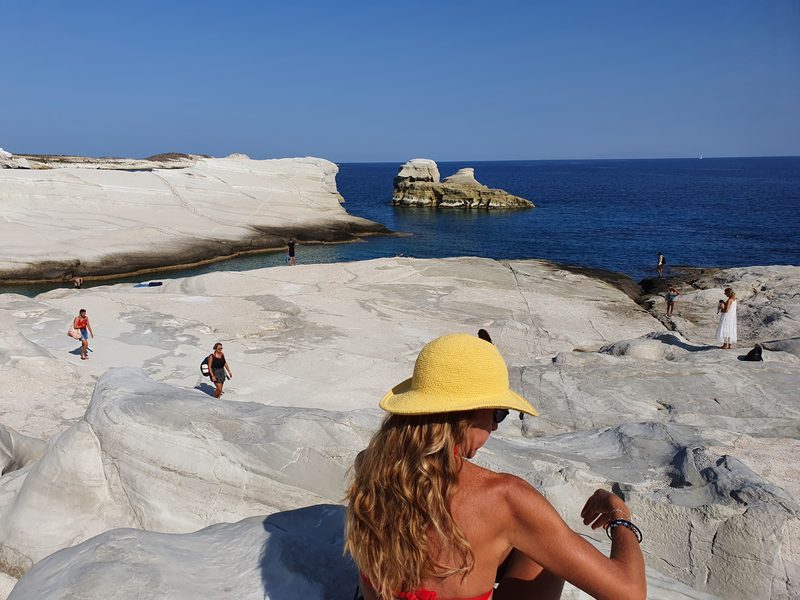
I get asked this one more than almost any other Greek island pairing, and the reason is obvious once you look at a ferry map. Milos and Paros sit close enough that people assume they are variations on a theme. They are not. Paros is a hub island in the middle of the Cyclades, a place designed by geography to be the crossroads everybody passes through. Milos sits off to the south-west of that main corridor, quieter, stranger-looking, and considerably harder to slot into a rushed itinerary.
Milos is the fifth-largest island in the Cyclades, at roughly 160 square kilometres, with a population of about 5,000 and one enormous natural bay cutting it almost in two. Paros is the third-largest, a noticeably bigger island, and carries a far heavier load of visitors, ferries and flights. That single difference in traffic explains most of what follows.
Milos or Paros at a Glance
| Milos | Paros | |
|---|---|---|
| The look of the place | Volcanic, mineral-streaked, unlike anywhere else in Greece | Classic whitewashed Cycladic, marble, bougainvillaea |
| Main base towns | Adamas (port), Plaka (capital), Pollonia | Parikia (port), Naousa (the fashionable one) |
| Beach character | Enormous variety, some wild, several only reachable by boat | Long organised sandy bays with sunbeds and watersports |
| Getting there | Ferry from Piraeus, small domestic airport, fewer inter-island links | Ferries in every direction plus an airport with more capacity |
| Evenings | Taverna dinners, a handful of bars, early nights | Bars, clubs, late Naousa, a proper going-out scene |
| Wind shelter | Excellent, because the coast faces every direction, so there is always a lee | Good, though the east coast is deliberately windy for a reason |
| Who it suits | Couples, photographers, explorers, slow travellers | Groups, families, first-timers, island-hoppers |
| Car or ATV needed? | Effectively yes | Helpful, not essential |
A comparison, not a scorecard. Neither column is the winning one. The right island depends entirely on which row matters most to you.
Which Island Looks More Remarkable?
Milos, and it is not close.
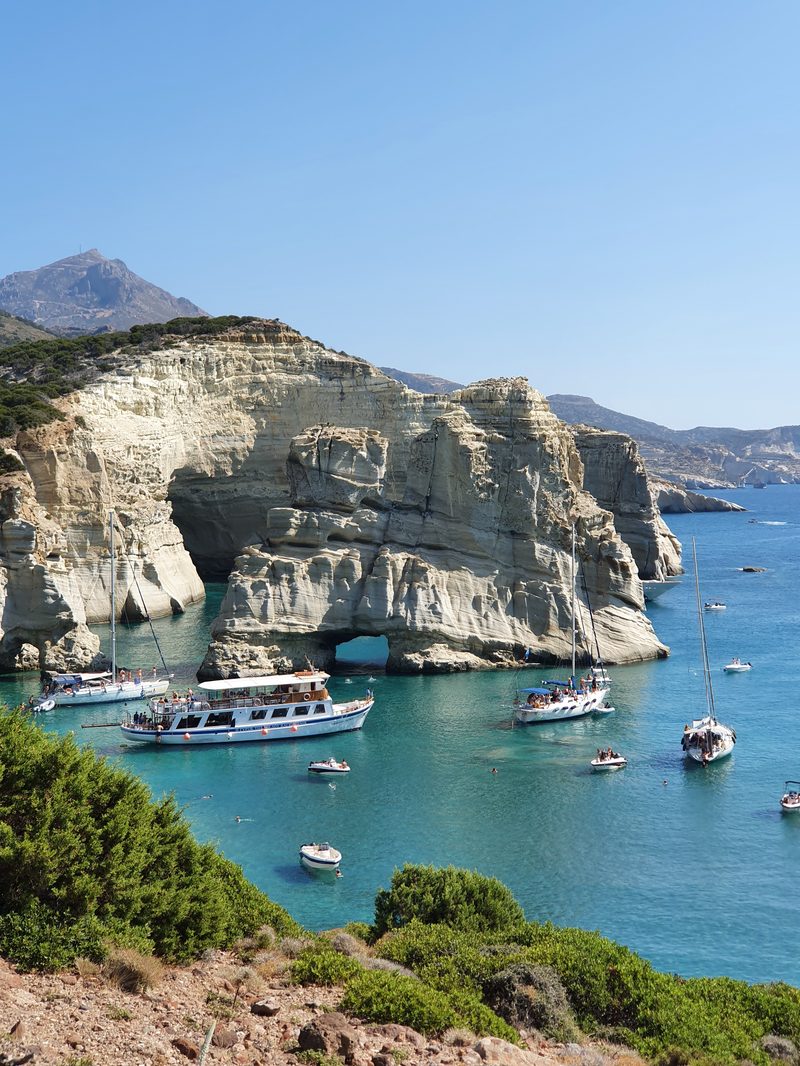
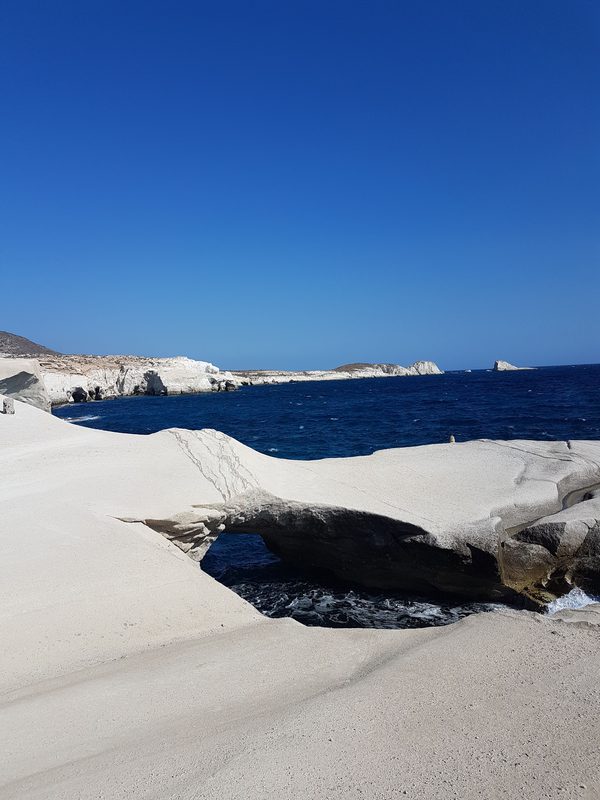
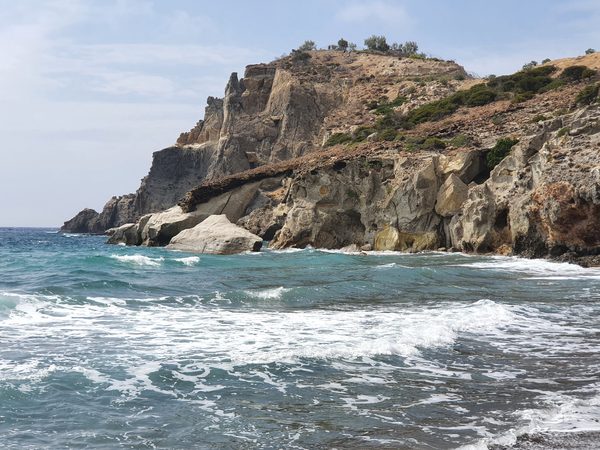
The island's geology is the whole point of visiting. Volcanic activity left mineral deposits that made Milos a mining island for thousands of years, and the same eruptions left a coastline that behaves like nowhere else in the Aegean. There are fumaroles and patches of thermal water. There are dozens of sea caves. At Sarakiniko the rock is bleached white and sculpted smooth, so the ground reads as lunar rather than Mediterranean, and at Kleftiko the sea has hollowed out formations that pirates genuinely used as cover. The whole western half of the island has no towns at all. It is mountainous, Natura 2000 protected, and you reach it in a 4WD or an ATV or not at all.
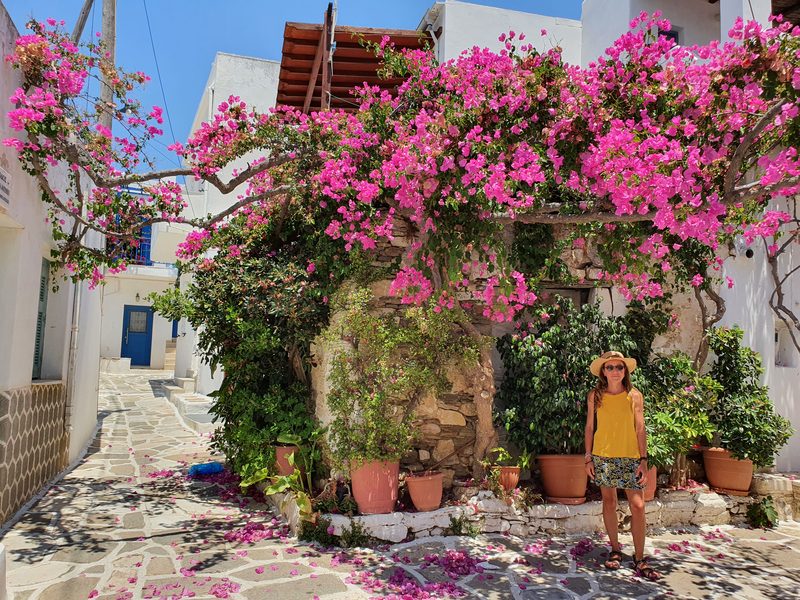
Paros gives you the postcard instead. Whitewashed cubes, blue shutters, a marble tradition that supplied antiquity's sculptors, and hillside villages like Lefkes that look exactly the way people picture a Greek island before they ever see one. It is genuinely lovely. But it is the standard-issue Cycladic beauty, executed very well, whereas Milos looks like a different planet borrowed a Greek island's paint scheme.
If your camera roll is the point of the holiday, Milos wins this before the argument starts. I have watched people spend an entire morning on one stretch of white rock and consider the day complete.
Whose Beaches Are Better?
This depends on what you mean by better, because the two islands are good in incompatible ways.
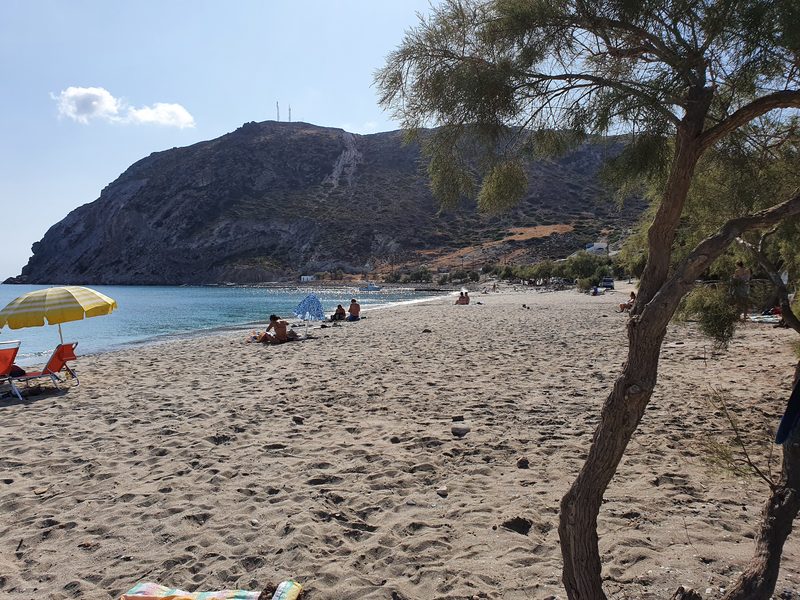
Milos has dozens of beaches, and the striking thing is how little they resemble each other. Sarakiniko is white volcanic rock with almost no sand. Firiplaka and Tsigrado are ochre and rust-coloured cliffs dropping into clear water, with Tsigrado reached by a rope-and-ladder scramble that puts a lot of people off. Paleochori sits over geothermal ground that has famously been used for cooking: Sirocco, the taverna there, still buries lobster, lamb and squid in sand reaching over 100°C, a genuine working curiosity rather than a gimmick that quietly stopped. Firopotamos and Klima have the painted fishermen's boathouses, the sirmata, right at the waterline. And Kleftiko, the most photographed of the lot, has no road at all; you arrive by boat or you do not arrive. Working through them properly is the trip. My guide to the beaches of Milos breaks down which is which.
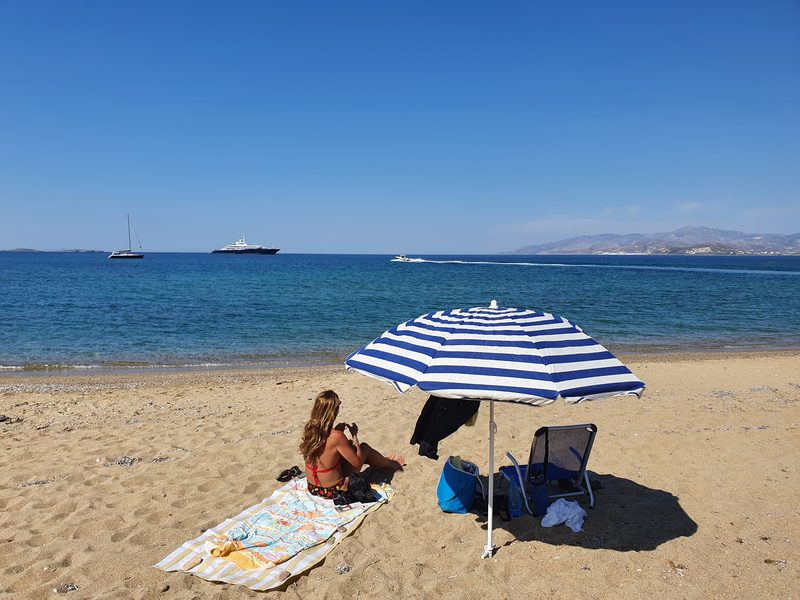
Paros does one thing and does it consistently: long, organised, golden-sand bays. Kolymbithres with its rounded granite, Santa Maria, Golden Beach on the east coast. Sunbeds, tavernas, watersports rental, easy parking, no scrambling required. Golden Beach and Nea Chrisi Akti have a serious windsurfing and kitesurfing reputation precisely because the meltemi hammers that coast in high summer, and equipped surf clubs still operate there, renting kit and running lessons.
So: if you want to lie on comfortable sand with a cold drink brought to you, Paros is the better island and I would not pretend otherwise. If you want to hunt beaches, with different rock, different colour and a different access problem each day, Milos is in another league.
On wind, which decides more Cycladic days than people expect. Milos has an advantage here that rarely gets mentioned. Because the island wraps around that huge central bay, its beaches face in every direction, so a meltemi day is rarely a lost day, because the sheltered side is a short drive away. Paros has shelter too, but its most celebrated beaches are on the exposed side, and a windy week reshapes the trip more than it would on Milos.
Which Is Easier to Get To?
Paros, comfortably, and this is the one category where the gap is embarrassing.
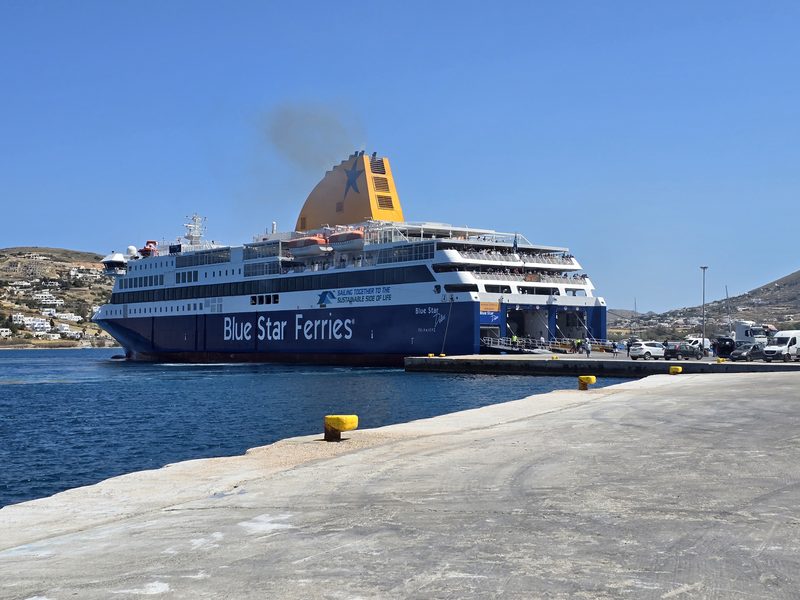
Paros is a Cycladic interchange. Ferries run to and from Piraeus constantly in season, plus direct links to Naxos, Mykonos, Santorini, Ios, Syros and most of the rest of the group. Its airport takes domestic flights from Athens and has more capacity than the Milos strip. If your itinerary involves three islands in ten days, Paros drops into it without you having to think.
Milos takes more planning. Ferries from Piraeus serve Adamas, the main port, on the western Cyclades line. A conventional crossing runs somewhere between four and seven hours, while high-speed catamaran services cut that to under three. Sky Express flies Athens to Milos on a short domestic hop, which international travellers reach via a change in Athens. But Milos is not on everybody's route the way Paros is, its onward links are thinner, and a badly chosen sailing can cost you the best part of a day. Sailings and flight frequencies also change season to season, so plan around what is actually published rather than what ran last year.
The two islands are linked directly, and the crossing is short, commonly around two hours or so depending on the vessel, sometimes considerably less on a high-speed boat. The Paros to Milos ferry guide covers that route properly, including the seasonal pattern.
Worth saying plainly: cruise ships do call at Milos, but they are the small kind and there are only a couple of dozen calls across a whole season. Nobody is emptying five thousand passengers into Adamas at eleven in the morning, which is the difference that actually shows on the ground.
Which Has the Better Evenings?
Paros, if "better" means busier. Naousa has spent the last decade becoming one of the most fashionable harbours in the Cyclades, with cocktail bars around the old fishing port, restaurants that need booking and clubs that run properly late. Parikia has its own, slightly rougher-edged bar strip. If you are travelling as a group in your twenties and the nightlife matters, this is not a close call and you should book Paros.
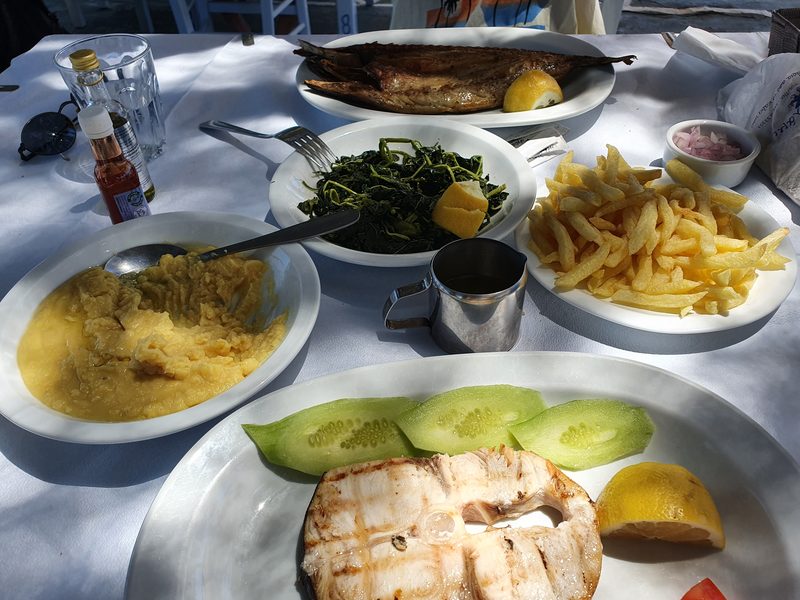
Milos is a dinner island. You eat well, and the food is one of the genuine pleasures here. You have a drink in Adamas or on the Pollonia waterfront or up in Plaka after watching the sun go down from the Venetian castle, and then it is over. There are bars, and some of them are very good, but the island does not have a going-out scene in the Paros sense and it is not trying to build one.
Greek visitors settled Milos's identity long before Instagram did: it is where you take someone, not where you go to meet someone. That reputation is accurate and it shapes the evenings.
Is One More Expensive Than the Other?
Broadly similar, and both have got dearer as Milos's international profile has risen through the 2010s and 2020s.
Milos beds are mostly mid-market. Family-run rooms and studios dominate, with a thin layer of boutique and villa options above them that gets bid up fast. Paros has more of everything, including more genuinely cheap beds and more genuinely expensive ones, so the range is wider at both ends. Neither island is Mykonos.
Two costs that differ in practice rather than on paper: on Milos you will almost certainly need a car, ATV or quad to see the island properly, which is a real line in the budget, whereas on Paros the bus network and the shorter distances make going without more viable. Against that, Paros's restaurant and bar prices in Naousa in August are a category of their own. Neither island's accommodation or hire prices are worth pinning to a fixed figure in an evergreen comparison, since both move every season. For the Milos side, see is Milos expensive, and check current listings for Paros before you budget.
Couples or Groups?
The cleanest way to decide.
Choose Milos if you are a couple, a photographer, a hiker, a diver, or a traveller who is happiest with a map, a rented vehicle and no fixed plan for the day. It suits people who like the idea of a boat trip round to Kleftiko more than the idea of a beach club. It suits second or third visits to Greece.
Choose Paros if you are a group of friends, a family with teenagers, or a first-timer who wants the classic Cyclades experience without logistical friction. It suits people who want to be able to change their minds about the beach, the restaurant or the next island at short notice.
My own bias is not a secret, but I would send a younger group to Paros without hesitation and I would think they had made a mistake choosing Milos.
And What About Naxos?
Naxos comes up constantly in the same search, so here is the short version. Naxos is the largest of the Cyclades, and it is the one with a mountainous, agricultural interior. It has real villages that farm, a working economy that does not depend entirely on visitors, and the longest run of west-coast sand in the group, at Agios Prokopios and Plaka.
Against Paros, Naxos is quieter, greener, better for families and food, and slightly less well connected, though it is still on the main ferry corridor with its own airport. Against Milos, it is the opposite proposition: Naxos is about interior and mountains, Milos is about coastline and geology.
If you are picking one of the three: Milos for landscape, Paros for connections and social life, Naxos for a longer, slower stay with a car and children. If you are picking two, Paros and Naxos are the easy pairing because they are a short hop apart. Milos with either of them is perfectly doable but wants a bit more attention to the timetable.
Do You Actually Have to Choose?
Yes, and it is a good combination precisely because they are so unalike. The crossing between them is short, which means you can front-load the social, easy half of the holiday on Paros and finish somewhere quieter, or the reverse. Do not try to see Milos in a day trip from Paros. The island is too spread out, and the best of it is too far from the port for that to be anything but frustrating.
If you are still deciding on Milos itself, is Milos worth visiting makes the case in full, and the Milos travel guide covers where to stay, how to get around and what to see. And if the real comparison in your head is with the other famous volcanic island, Milos versus Santorini is its own article, because that is a different argument entirely.
The best months for both islands are June and September. July and August are high season, hotter, busier and windier, and prices follow the crowds.
Milos is the fifth-largest of the Cyclades islands of Greece at about 160 square kilometres, with a main port at Adamas and a capital at Plaka. Paros is marginally larger and far better connected, with an airport and ferries in every direction. Choose Milos for volcanic landscapes, beach variety, and independence. Choose Paros for easy logistics, sandy bays and nightlife. The direct ferry between them takes roughly two hours, so visiting both on one trip is straightforward. Check current schedules and prices before you book.
Planning the rest of your island time? Start with our complete Milos travel guide.
Heading to Santorini? See our guide to the best day trips from Santorini.
Heading to Mykonos? See our guide to the best day trips from Mykonos.
Heading to Athens? See our guide to the best day trips from Athens.
Last updated: 2 August 2026