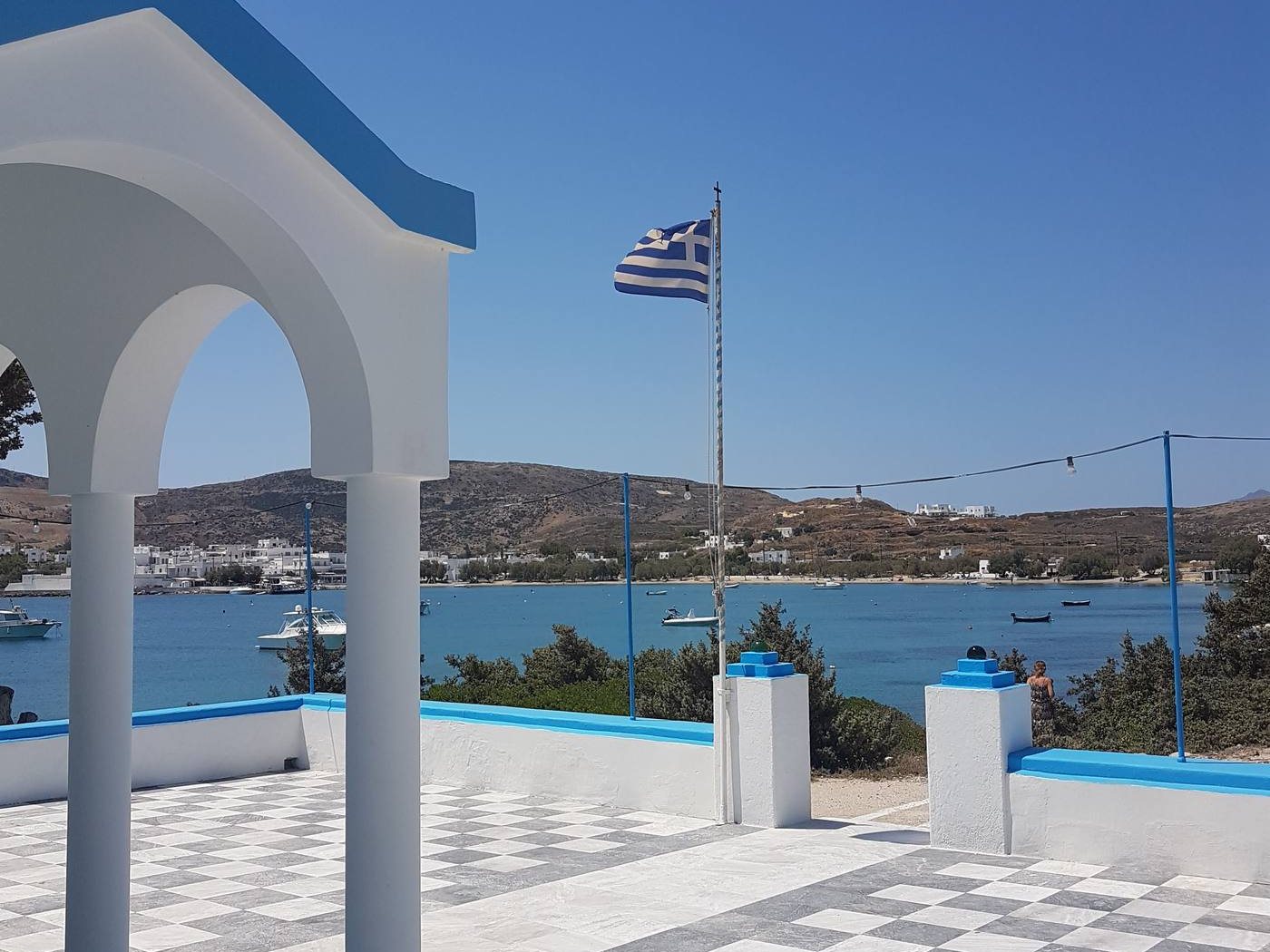
Two or three days on the Greek island of Milos gets you the headline sights and not much else. Four or five is where the island starts making sense, and five lets you add Kimolos without rushing. Below are day-by-day plans for one, two, three, four and five days, each built around the one thing that decides a Milos day: which way the wind is blowing.
In this guide
Milos is bigger and more scattered than its reputation suggests. The beaches that fill the photographs sit on opposite coasts, the road quality drops off once you leave the main spine, and the boat trip most people come for runs to a coastline you cannot reach by car at all. Get the order wrong and you spend your holiday driving past the same three junctions.
What follows is a sequencing guide rather than a catalogue. Each place gets one line and a link to the full article, because the detail belongs on those pages. What you get here is the running order, the pacing, and what to do when the plan falls apart.
How Many Days in Milos Is Enough?
Three nights is my floor. Below that, the ferry in and the ferry out eat so much of your time that you are paying for the journey rather than the island.
Four to five days is the answer I actually give people. Four covers both coasts properly, the boat trip, and the villages, with a spare afternoon for the weather to misbehave. Five adds Kimolos without cannibalising a beach day. It is Milos's smaller neighbour, a short local-ferry hop away.
Beyond five days you stop ticking things off, and Milos rewards that better than most Cycladic islands. There are enough beaches to fill a fortnight and enough hiking paths to fill another one.
I have been to Milos in early June and in late September, and both times the trip I thought was too long turned out to be about a day too short.
The short version by trip length:
| Days | What you realistically get | Who it suits |
|---|---|---|
| 1 | Sarakiniko and a Plaka sunset | Cruise callers, ferry-hoppers |
| 2 | The above plus one boat trip | A stopover between islands |
| 3 | Both coasts, the boat trip, the villages | A first visit with limited leave |
| 4 | All of the above, unhurried, with a weather buffer | Most people |
| 5 | The full island plus Kimolos | Anyone who wants to stop checking the clock |
What Decides Your Milos Days Before You Plan Anything
Two variables run through every itinerary below, and neither is optional.
The wind. The meltemi blows from the north through much of the summer, and Milos is unusually well set up for it: the north coast and the south coast are twenty-five minutes apart by road. When the north is being sandblasted, the south is calm, and the reverse holds when the wind swings south. That happens more often than the meltemi's reputation lets on. Every beach day in these plans has a stated alternative for that reason.
How you get around. Buses connect the main settlements and the biggest beaches but leave the remote south-west entirely alone, and they are built around the school and shopping day rather than yours. The core network runs Adamas–Triovasalos–Plaka–Tripiti and Adamas–Pollonia year round, with extra summer-only services fanning out to Paleochori, Achivadolimni, Sarakiniko and Provatas; those beach links thin out or stop once the season ends. Read getting around Milos before you book anything; the choice between the bus, a hire car and an ATV reshapes what fits into a day. The one-day and two-day plans below assume wheels of some kind. Without them, cut roughly a third out of each.
The third variable is where you sleep. Adamas is the port and the practical default; Pollonia in the north-east is quieter and puts you next to the Kimolos ferry; Plaka and the hill villages sit above both. The where to stay guide works through the trade-offs properly, and I have flagged the base that suits each itinerary below.
Milos in One Day: The Ruthless Version
One day means choosing two things and accepting that you will miss the rest. Base yourself in Adamas, because everything below radiates from it.
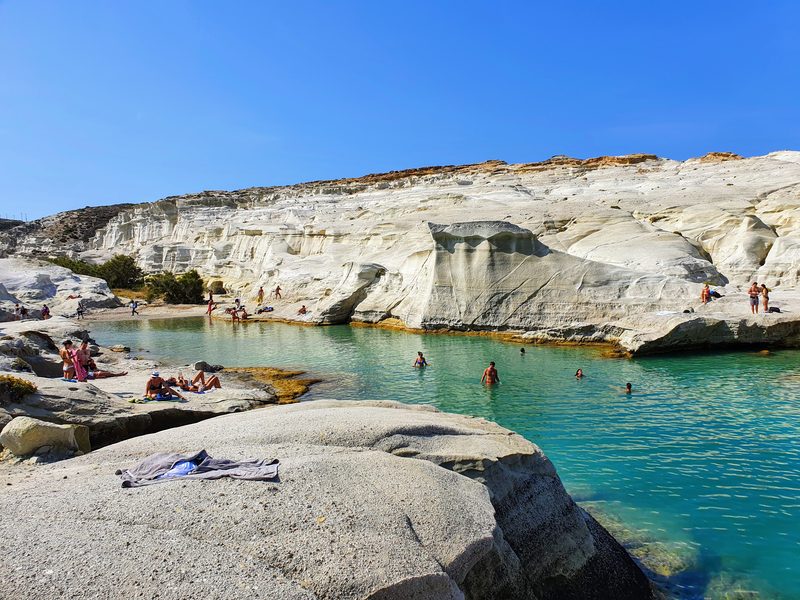
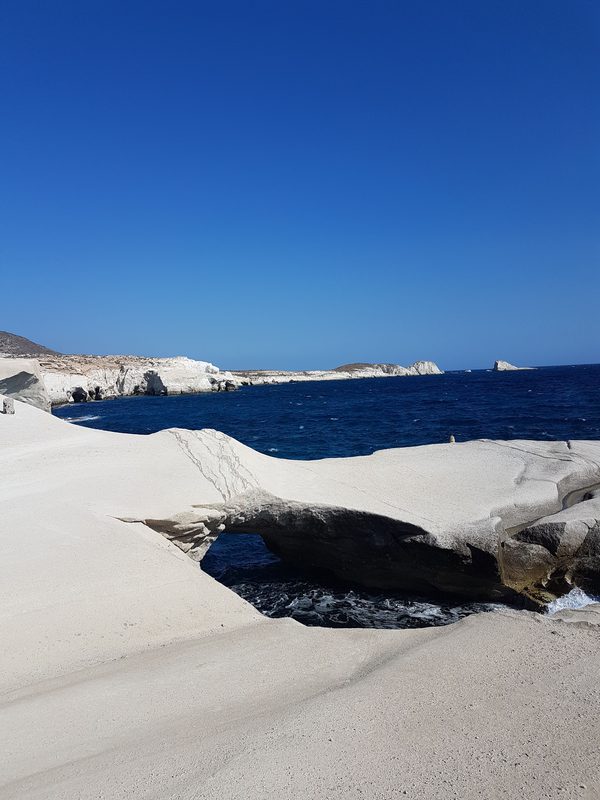
Morning. Go straight to Sarakiniko, the white volcanic moonscape on the north coast that put Milos on everybody's screen. Be there by 09:00. It is a small area, the rock throws heat back at you by mid-morning, and the coach groups land later; an hour early here is worth three hours anywhere else on the island.
Late morning. Drive a short way east to Papafragas, where the sea cuts into the rock in narrow roofed channels. It is a brief stop, and the camera gets more out of it than a swimmer will.
Afternoon. Cross to the south coast for a proper swim. Paleochori, where the seabed is warm enough in places to notice, is the easiest to reach and has food on the sand. This is also your wind insurance: if the meltemi has ruined the morning, the afternoon still works.
Evening. Up to Plaka for sunset from the castle rock, then dinner in the lanes below. Allow longer than you think for parking. The village funnels every car into the same two streets, and on a July evening you will walk the last ten minutes anyway.
Given one day I would drop Papafragas before I dropped the Plaka sunset. The view over the gulf is the one image of Milos that a photograph does not really deliver.
If the wind is wrong: a strong northerly makes Sarakiniko dramatic rather than swimmable. Look, photograph, and put the swim on the south coast instead.
Milos in Two Days: Add the Sea
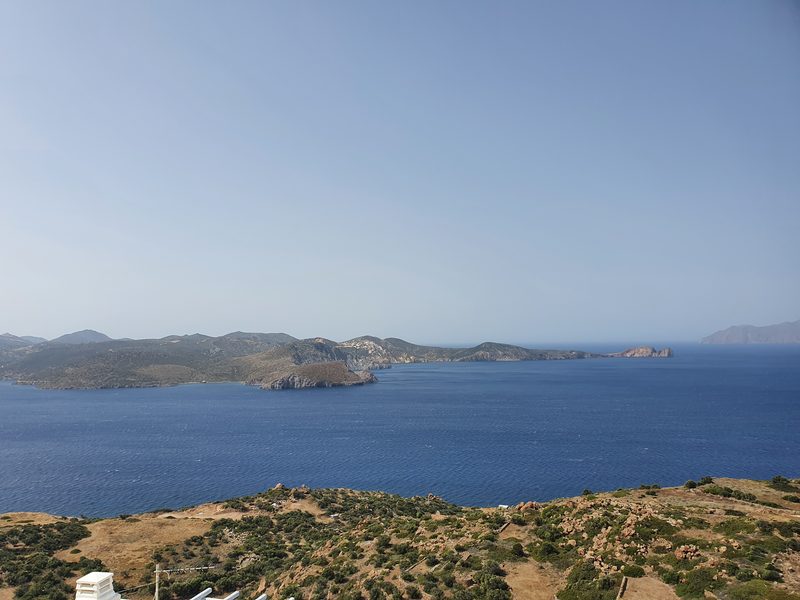
Two days is the shortest trip where you can see the coast that makes Milos worth the journey. Day one runs exactly as above. Day two goes to the water.
All day. Take a boat trip to Kleftiko. These sea-carved white rock formations on the south-west coast are reachable only by sea. Half-day speedboat and RIB trips typically leave Adamas around mid-morning or mid-afternoon; full-day sailing trips out of Adamas circle a good part of the island with several swim stops and usually include lunch, and cost noticeably more than the half-day option. Book this the day you arrive, not the morning of; prices vary enough by boat and season that it is worth checking current rates directly rather than trusting an old figure.
Evening. Eat in Adamas near the port so an early ferry the next day is painless. The Adamas restaurant guide has the specifics.
The pacing point: do not try to squeeze a beach afternoon around a boat trip. The full-day tours come back late enough that dinner is the only thing left in you, and the half-day options still swallow the good light.
If the wind is wrong: this is the day that gets cancelled. Kleftiko sailings get pulled on strong wind from any quarter. A hard meltemi and a southerly both cancel it, sometimes at 07:00 on the morning itself. With only two days you have no slack, which is the argument for three. Your fallback is the south coast run: Paleochori, then Firiplaka and Tsigrado, the pair of south-coast beaches where one is easy and the other needs a rope descent.
Milos in Three Days: Both Coasts Properly
Three days is where the island stops feeling like a checklist. Keep days one and two, then give day three to the south and the interior.
Morning. Head south by ATV or car to Firiplaka, the long striped-cliff beach that takes the crowd, and drop into Tsigrado next door if you fancy the climb.
Afternoon. Work west to Provatas, the shallow, family-friendly bay, or push on to the remote south-west beaches if you are on a quad and comfortable with dirt track. Judge that on the day: the tracks are rough, unsigned in places, and hire agreements often exclude them.
Late afternoon. Come back via Trypiti and the catacombs, the early Christian burial galleries cut into the hillside, with the Roman theatre and the spot where the Venus de Milo was found a short walk on. The catacombs close earlier than you would expect: daily 08:30–15:40, last entry 15:10, closed Tuesdays, admission 10 EUR (5 EUR discounted), so build this stop into the afternoon rather than the evening.
Evening. Drop down to Klima, the row of coloured fishermen's boathouses at the water's edge, and time it for the last of the light. It sits just below Trypiti and the road down is single-track.
If the wind is wrong: a southerly, which is much less common, flips this day north. Swap in Firopotamos and Plathiena, two sheltered north-coast coves, and keep Trypiti and Klima where they are.
Milos in Four Days: The Version I Recommend
Four days buys you a day that is allowed to go wrong, which is exactly what the shorter plans lack. Keep days one to three, and treat day four as the north-east and the buffer.
Morning. Move your base or your car north-east to Pollonia, the low-key fishing village facing Kimolos, and swim off the beach in front of it.
Late morning. Backtrack a little for the sheltered north-coast coves, Firopotamos with its chapel and boathouses and Plathiena below Plaka. The alternative is the mining museums, which explain why an island this small has industrial-scale scars across it.
Afternoon. Something on the water that is not a tour boat: the sea kayaking and diving operators get you along coastline the big boats pass at speed.
Evening. Dinner in Pollonia, which does the best waterside eating on the island for my money. The Pollonia restaurant guide covers who is worth a booking.
The buffer logic. If your Kleftiko trip was blown out on day two, this is where it goes instead. If it ran, day four is yours. That single spare day is the difference between a holiday and a schedule, and it is the main reason I push people from three days to four.
Milos in Five Days: Add Kimolos
The fifth day goes across the strait. The ferry from Pollonia to Kimolos takes under half an hour on the small local boat, and it runs frequently enough in season to make a day trip genuinely relaxed rather than a race for the last sailing.
Morning. Cross early and walk up to Chorio, the hillside village above the port where nearly everyone on Kimolos lives. It is the sort of Cycladic village Milos itself no longer quite has.
Afternoon. One Kimolos beach and a long lunch. Do not attempt three.
Evening. Back on the last boat, or stay the night. The Kimolos guide and the where to stay and eat notes make the case for a night. A lot of people arrive for six hours and spend the ferry home working out how to come back. The crossing runs daily year round, with several sailings a day in season, at a flat 2.40 EUR one-way for a foot passenger (vehicles are also carried, from 9.60 EUR); check the exact first and last sailing at the port on the day, since the timetable is not one to plan a tight connection against from memory.
Kimolos is the quietest place I have been in the Cyclades that still has tavernas open in late September. If you like islands for the reasons I do, budget more than a day for it.
If the wind is wrong: the Pollonia crossing is short but genuinely exposed, and it is suspended in strong wind. Check the evening before, and if it is off, spend the day on the south coast and try again tomorrow, which only works if you have five days rather than four. Another route in is a sailing tour that calls at Kimolos, which is worth knowing about if your dates are tight.
What Do You Do When the Meltemi Blows?
This is the single most useful table on the page. The rule is simple: the wind comes from the north, so go south.
| If the plan was | And the wind is | Go here instead |
|---|---|---|
| Sarakiniko swim | Strong northerly | Photograph it early, swim at Paleochori |
| Firopotamos / Plathiena | Strong northerly | Firiplaka or Provatas |
| Kleftiko boat trip | Strong north or west | South-coast beach run by road |
| Kimolos day trip | Strong northerly | South coast, retry tomorrow |
| South-coast beach day | Southerly | Firopotamos, Plathiena, Pollonia |
Wind conditions change fast and Cyclades forecasts are only trustworthy close to the day. Check the night before, not the week before.
When Should You Take This Trip?
June. Warm sea, long days, everything open, and the meltemi has usually not settled into its rhythm yet. My preferred month.
July and August. The busiest and the windiest. Every plan above still works, but book beds, boats and restaurants well ahead, and start each day earlier than feels reasonable.
September. The sea still carries its summer warmth and the crowd thins after the first week. The risk is that boat trips and some tavernas start winding down towards the end of the month.
April, May and October. Quieter, cheaper, and the swimming is a question of tolerance rather than temperature. Several beach canteens and boat operators do not run at all, and Kleftiko sailings taper off through October with no fixed closing date, since it depends on that year's weather more than the calendar, so do not bank on a late-October crossing. The Pollonia–Kimolos boat keeps running daily year round, just at reduced frequency outside the summer months. The when to visit guide has the seasonal detail, and is Milos expensive covers what the shoulder months save you.
Which Itinerary Should You Actually Book?
If you are island-hopping and Milos is one stop of four, take three nights and use the three-day plan. If Milos is the trip, take five. The two-day version exists because ferry schedules force it on people, not because I would choose it.
Whichever you pick, the two bookings that matter are your bed and your boat. Everything else on this page can be rearranged on the morning, which is rather the point of it.
For what to fit around the edges, the things to do in Milos roundup covers the sights these plans skip, the beaches guide ranks the lot properly, and the Milos travel guide is the place to start if you are still deciding whether to come at all. If you are choosing between islands, Milos versus Santorini and Milos or Paros make the comparison.
Milos deserves four to five days, three nights at an absolute minimum, and five if you want Kimolos in the plan. Sarakiniko is best before 09:00, Kleftiko is reachable only by boat, and every beach day needs a south-coast alternative for when the meltemi, the Aegean's summer wind, arrives.
Planning the rest of your island time? Start with our complete Milos travel guide.
Heading to Santorini? See our guide to the best day trips from Santorini.
Last updated: 2 August 2026