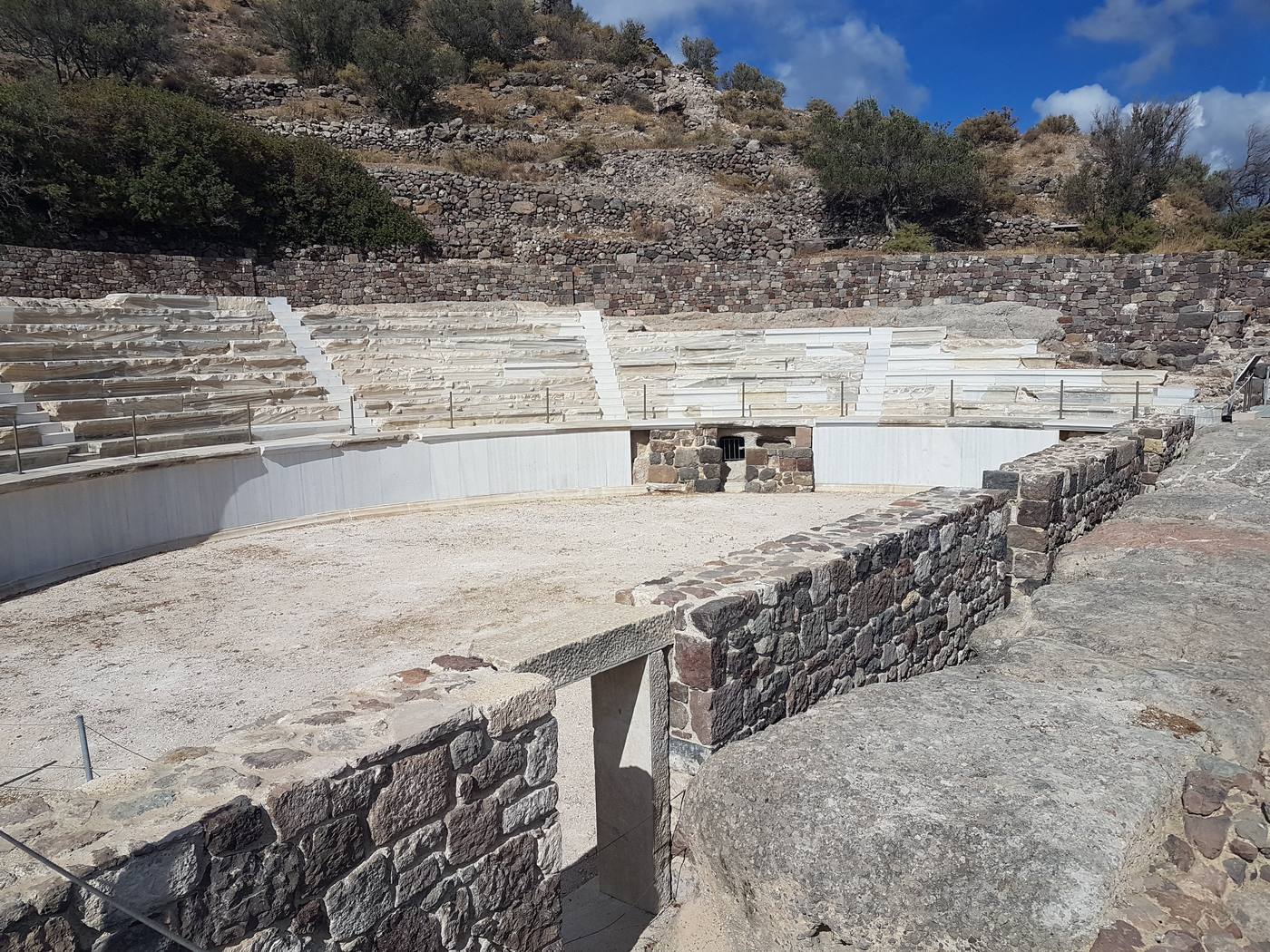
The Milos catacombs are the largest early-Christian burial complex in Greece, cut into a soft hillside below the village of Trypiti. Three of the island's best sights sit on that one slope: the catacombs, the restored ancient theatre, and the field where the Venus de Milo was dug up in 1820. You can walk between all of them in under half an hour.
In this guide
Trypiti sits on the ridge just south of Plaka, close enough that the two run together on foot. The name comes from the Greek word for hole, which is what the rock beneath is full of. It is soft volcanic tuff, and people have been cutting into it for over two thousand years. That geology explains all three sights: it made the burial galleries possible, gave the theatre its bowl, and left the ancient city shallow enough for a farmer to hit with a spade. That city, founded here after Fylakopi was abandoned around 1100 BC, had walls, a market, a gymnasium and an aqueduct, and most of it is still under the fields.
The hillside is my favourite two hours on Milos, and almost nobody treats it as one visit. Most drive to the catacombs, look, and leave without walking the 400 metres to the theatre.
What Are the Catacombs of Milos?
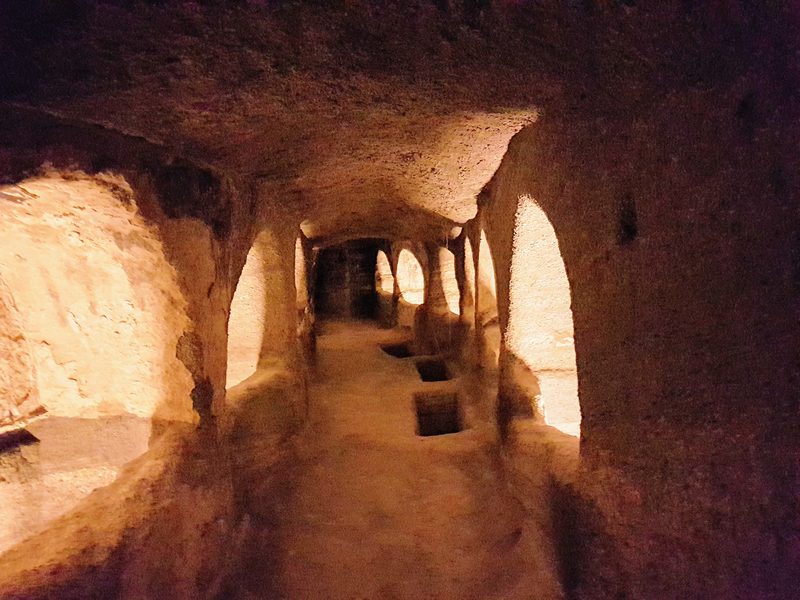
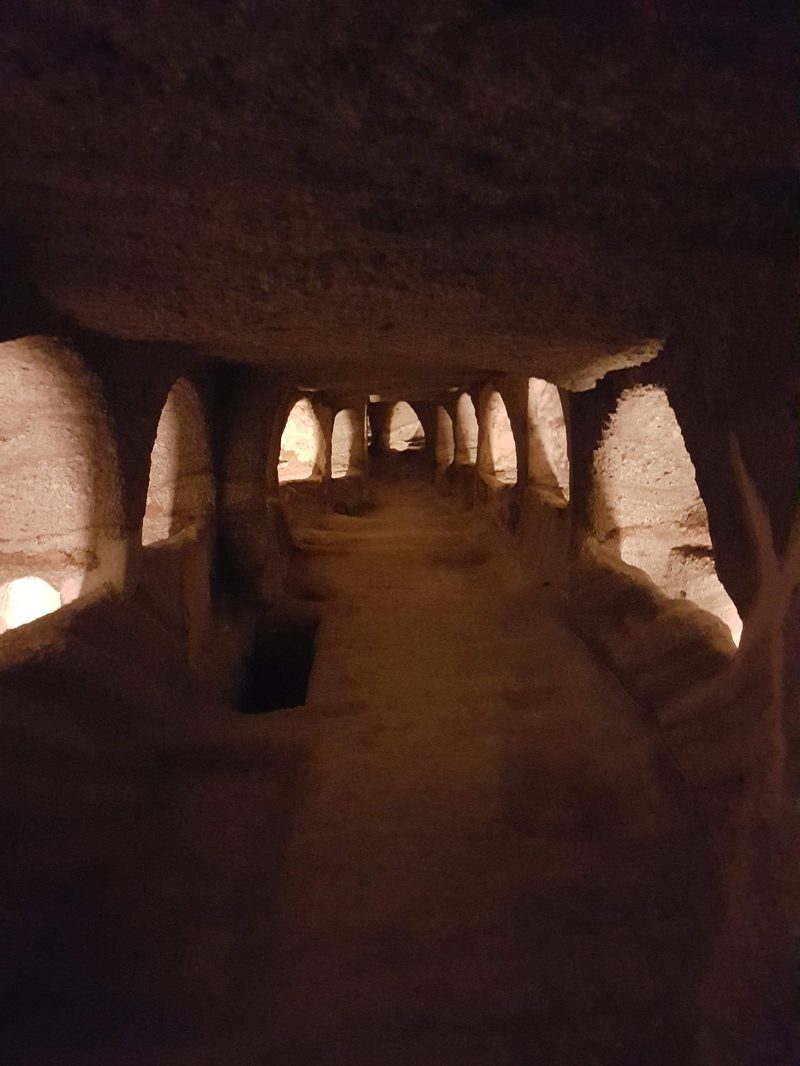
A Christian cemetery cut into the rock in the 1st century AD, when the faith on the island was new and small. Burial niches were carved into the gallery walls, sometimes stacked, sometimes shared, and the complex kept growing for four centuries; around 2,000 people are thought to have been buried here. The corridors total about 184 metres and stand two to two and a half metres high. Landslides closed the site in the 5th century AD and it lay forgotten until 1840. What you see today are the empty niches, not the burials.
Nothing else in Greece comes close for size. A second, grander claim ranks Milos third in importance among early-Christian catacombs behind Rome and the Mount of Olives in Jerusalem. That is a traditional ranking of long standing rather than settled modern consensus, so read it as the island telling its own story.
What Is Visiting the Catacombs Actually Like?
Manage your expectations on scale. The entrance fee includes a short guided tour, around fifteen minutes, of a single chamber reached by roughly 110 steps down, and nobody wanders the full 184 metres. The open section is lit, floored and cool, which on a June afternoon is a relief. Look for the inscriptions while you are in there. Names, invocations and scratched symbols survive in patches, and they are what makes the visit land.
Visits run in groups, so arriving behind a coach means waiting your turn in the sun. Going early solves the queue and the heat together.
Entry, hours and tickets: open daily except Tuesdays, 08:30 to 15:40 with last entry at 15:10. General admission is 10 EUR, discounted 5 EUR. The site's own rules on flash photography and tripods were not published anywhere I could find, so ask at the ticket kiosk rather than assuming either way.
Is the Ancient Theatre Worth the Walk?
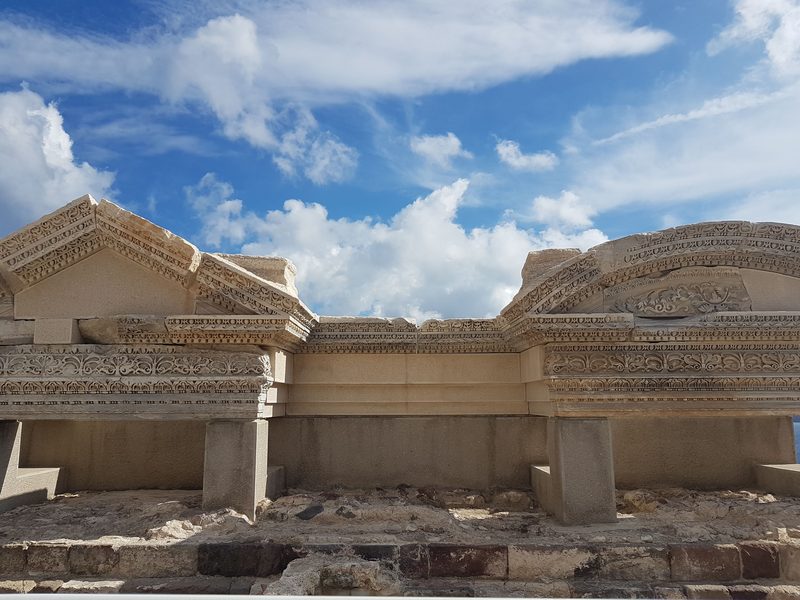
Yes, and it is the part of the hillside people skip. Built in the 3rd century BC and rebuilt by the Romans in the 1st to 2nd century AD, it held over 7,000 in antiquity. What survives is a far smaller marble-seated bowl, but the setting does the work: it faces straight out over the bay, and the sea fills the space where the stage building stood.
Excavated in the 18th century and later presented to King Otto, it hosted performances from around 1930 until roughly 2000, when it was judged unsafe; after restoration, occasional events have returned. The seating is smooth sloping marble and slippery. Access remains free and unticketed by day, which is why it feels so unlike the catacombs. You arrive, sit down, and nobody is there. In July and August 2026 it is hosting a modern staging of the Demeter and Persephone myth as part of the Milos Festival, seating around 700, so a summer evening here may not be as empty as a September morning.
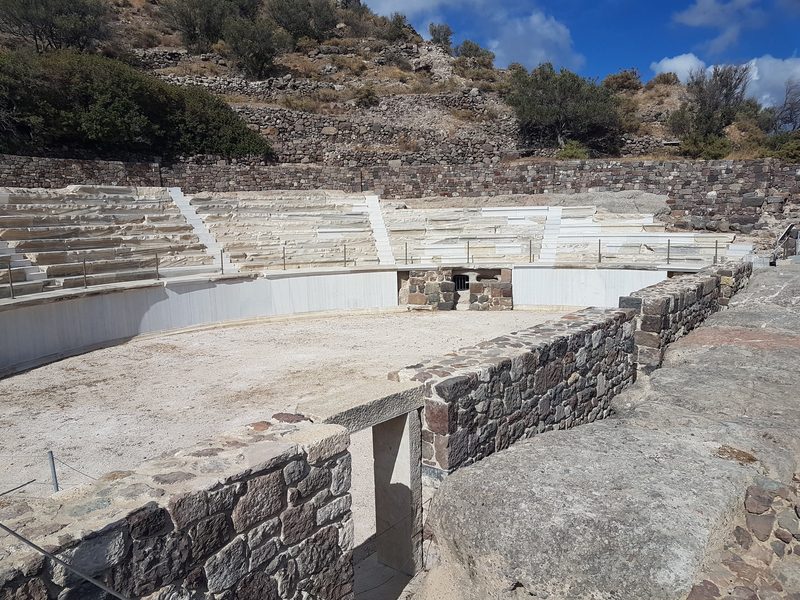
I have had the theatre entirely to myself at nine in the morning in late September, with a coach party queuing at the catacombs 400 metres up the path.
Where Was the Venus de Milo Found?
On the footpath between the catacombs and the theatre, in a terraced field a few metres off the trail. A local farmer, George Kentrotas, turned the statue up there in 1820 under Ottoman rule; within a year it had left for the Louvre, where it remains. A replica went up on the spot in 2022, facing the sea, with a plaque.
Treat it as a two-minute stop, because there is nothing beyond the copy and the view, and the field is unremarkable, which is arguably the point. The statue's story and the competing accounts of how it left Greece are in the Milos museums and mining history guide.
What Is There in Trypiti Village Itself?
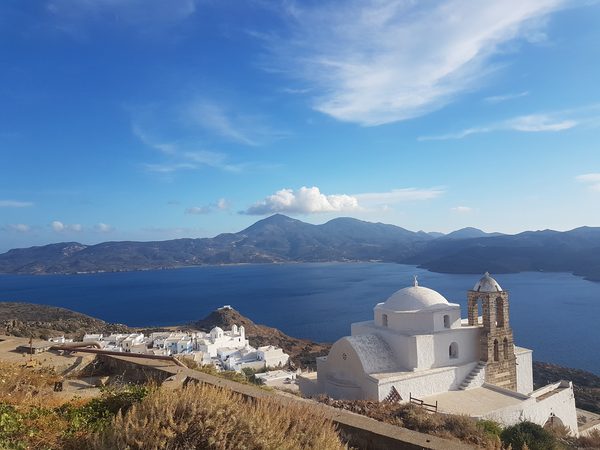
Not a great deal, and that is a fair reason to like it. Trypiti is a small hilltop village of white houses and narrow lanes with long views over the Aegean, drawing a fraction of Plaka's evening crowd. Worth finding: the church of Agios Nikolaos, whose odd architecture stops people mid-lane, the chapel of Panagia Tourliani, and Profitis Ilias on the high point above.
The restored windmills on the ridge are the landmark you see from the road; several are now accommodation. A few cafes and tavernas have terraces angled at the sunset, calmer and cheaper than the capital's. Barriello, run by a local family, is the one I would point you to with confidence, farm-sourced food and its own booking line; the rest of the village's handful of tables I have not individually rechecked, so ask locally rather than assuming a name from an old list is still trading.
Trypiti is also the top of the steep road and stepped path down to Klima and its sirmata boathouses, an easy descent with the climb back the hard part. That route and the longer Plaka–Trypiti–Klima loop are in the Milos hiking guide.
How Do You Get There and How Long Do You Need?
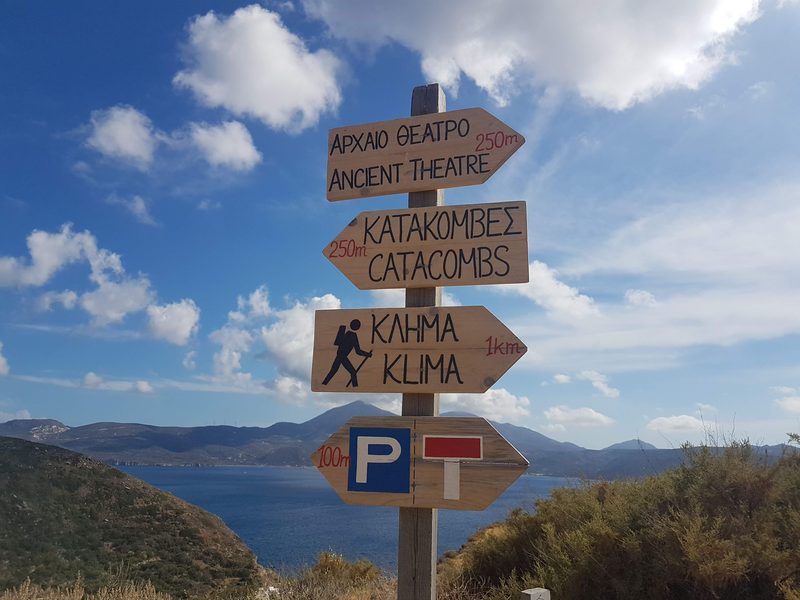
Trypiti is roughly 5 km from Adamas and 1 km from Plaka, the island capital, and everything here is signposted off the same road.
By car or ATV. A short drive from Adamas, with parking near the site. In August assume the spaces go early, and the village lanes are no fallback.
By bus. The Adamas–Plaka route stops at Trypiti, a short downhill walk from the catacombs, but services swing hard with the season: a couple of departures a day in winter, ramping up to frequent buses at the height of summer. Check the current week's timetable at milosbuses.com rather than assuming a fixed frequency.
On foot from Plaka. Fifteen to twenty minutes along the ridge, mostly level, and it skips the parking entirely.
Allow two hours for the hillside, or three if you carry on down to Klima.
When Should You Go?
Early morning, nearly every time: cooler, empty, and before the coach groups start. Spring (April–May) and late September to October are the comfortable months, since the linking walk has no shade and midsummer afternoons on it are punishing. Winter brings reduced or suspended catacomb opening, though the theatre and village stay accessible.
What Should You Know Before Going?
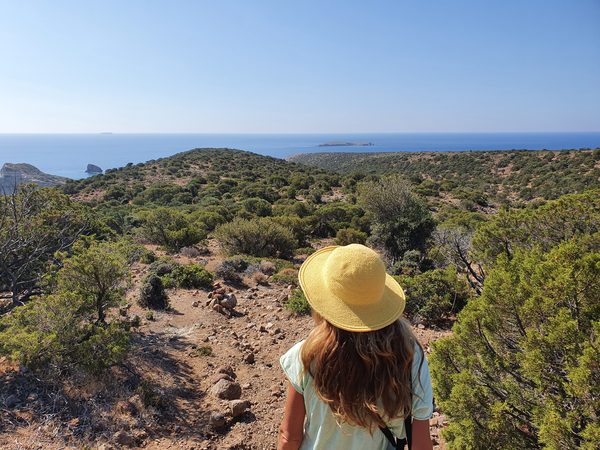
- Shade is the constraint. The linking path is bare, stony and fully exposed. Carry water and a hat.
- Footwear. Trainers are fine, but slick soles are poor on marble seating and the stepped descent to Klima.
- Accessibility is limited. Both the catacombs and the theatre are down sloping, uneven paths, and not realistic with a wheelchair or pushchair.
- Do not come for the scale. A brief guided walk in one lit corridor disappoints anyone expecting a long underground exploration.
What Else Is Nearby?
Plaka along the ridge and Klima down the hill make a full day between them; the wider list is in the things to do in Milos guide.
The Milos catacombs sit below Trypiti, 5 km from Adamas and 1 km from Plaka. Cut in the 1st century AD, they are the largest in Greece, but only a short guided section of the 184 metres of corridor is open. The Roman theatre and the 1820 Venus de Milo find-spot are within 400 metres on the same path. Go early, because there is no shade between them.
Planning the rest of your island time? Start with our complete Milos travel guide.
Last updated: 1 August 2026