Paleochori beach is one of the longest stretches of sand on Milos, one of the Greek Cyclades, and the one where the island's volcanic plumbing comes closest to the surface. Rust, ochre and grey-white cliffs rise behind the sand, in places the ground is warm underfoot for reasons that have nothing to do with the sun, and the water offshore is a clear, deep blue. It sits on the south coast, which makes it the beach to head for when the meltemi is blowing.
In this guide
- Location: South coast of Milos, a short drive from Adamas
- Access: Asphalt road the whole way, parking above the beach
- Facilities: Sunbeds and umbrellas, tavernas and cafes, watersports
- Wind exposure: Sheltered from the meltemi (north wind), fully exposed to a southerly. When the wind comes from the south, cross to the north coast instead. The north/south shelter logic is explained in full in the Milos beaches guide.
You will also see the name written Paliochori, and both spellings turn up on road signs. This is not a quiet beach and does not pretend to be. Sooner or later most Milos holidays route through it, because it is easy to reach, it has real facilities, and it delivers something no other beach on the island quite does.
What Makes Paleochori a Geothermal Beach?
Milos is a volcano that stopped erupting and never quite cooled down. At Paleochori that shows up in three ways.
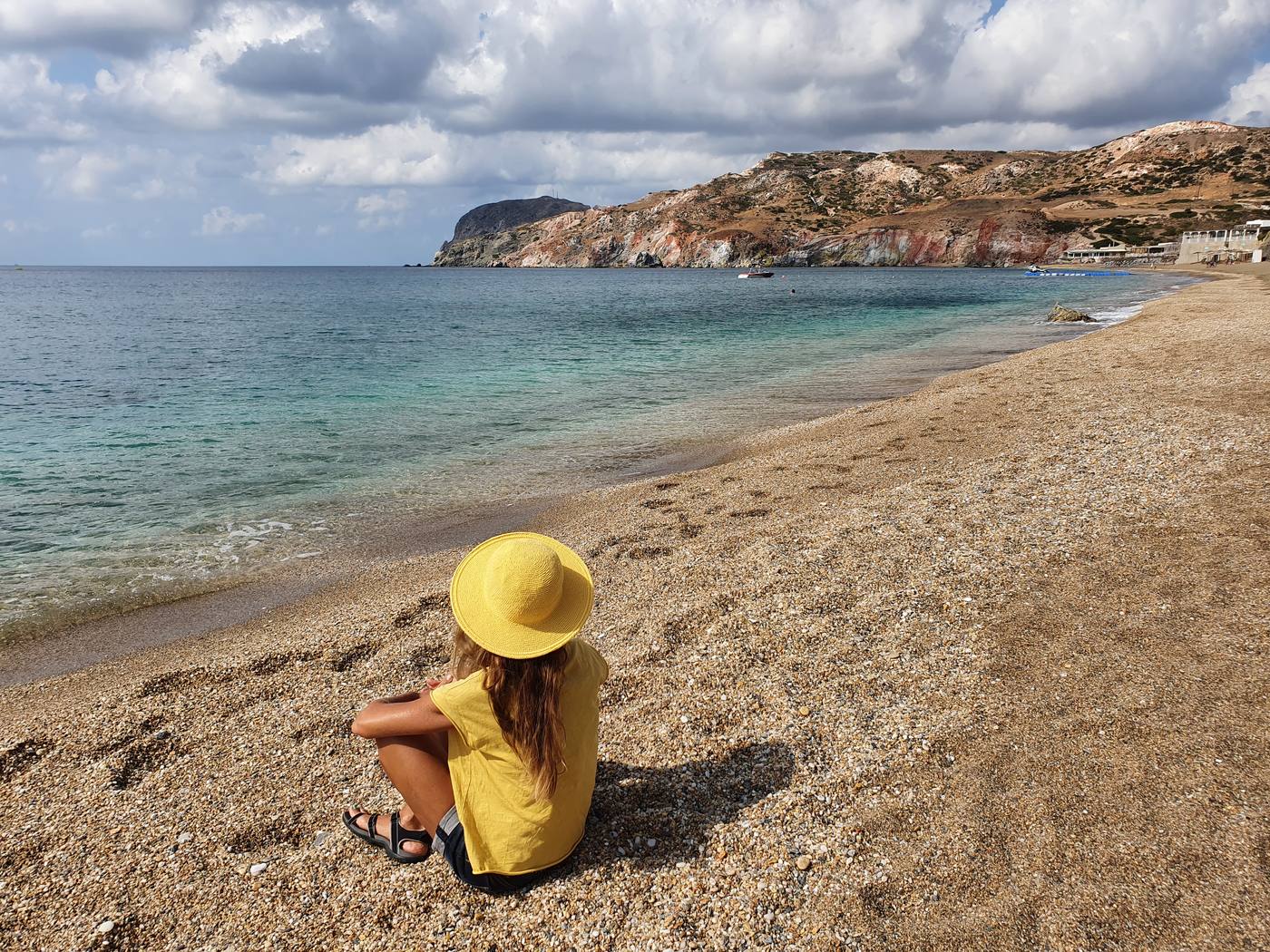
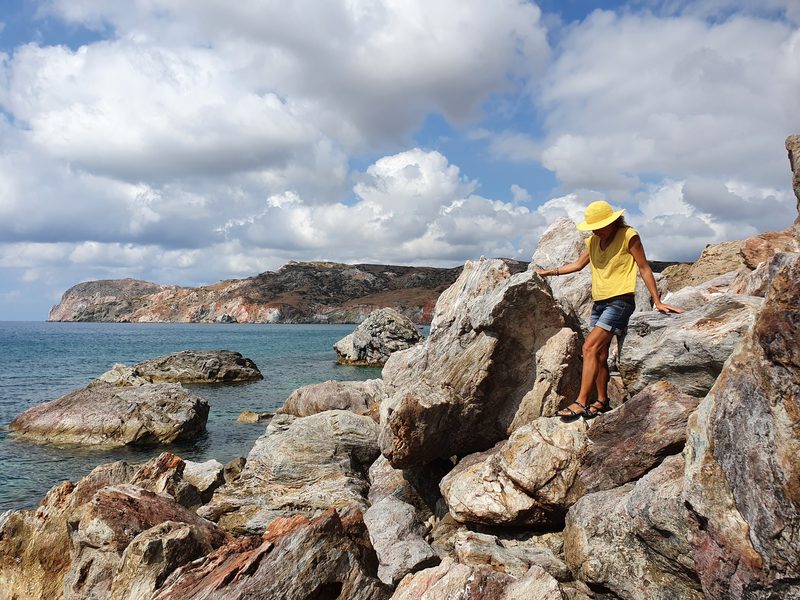
The first is colour. The cliffs behind the beach are streaked orange, yellow, red and chalky white, the residue of hot fluids working through the rock over a very long time. Against the blue of the water it looks almost artificial, and it photographs far better in late afternoon than at noon.
The second is heat. Walk the shoreline and you will find pockets where the sand is warm well beyond what the sun accounts for, warm enough that you shuffle sideways and put your towel down somewhere else. It is not dangerous, but it is real, and it catches most first-timers out.
The coloured rocks running down to the shore are the visible half of the same story. The island's volcanic heat sits close to the surface here, and the beach's famous cooking tradition depends on it.
Finding a warm patch of sand for yourself is half the fun of an afternoon here, so bring patience and shuffle around a bit before you commit the towel.
Is There Really a Taverna That Cooks in the Sand?
Paleochori's best-known story is the food. The geothermal heat under the beach has long been used for cooking, with dishes buried in the hot sand and left to come up slowly rather than going near a hob. It sounds like a gimmick and is in fact a genuine local method, born of the ground being free and hot.
Sirocco is the taverna that does it, with volcanic cooking as a standing part of its menu: lobster, lamb and squid buried in sand that reaches over 100°C and left to cook slowly. The service is still running.
Beyond that, Paleochori has a stronger eating scene than most Milos beaches, with more than one taverna and cafe on the sand. Sirocco is the one with the long-standing reputation as among the better places to eat anywhere on the island, and it takes bookings through its own site; for the other tavernas on the beach, ask locally rather than assuming a name from an old guide, since I could not verify each one still trades. Book ahead in high summer for an evening table. The Milos restaurants guide covers the island's eating options properly.
What Is the Beach Itself Like?
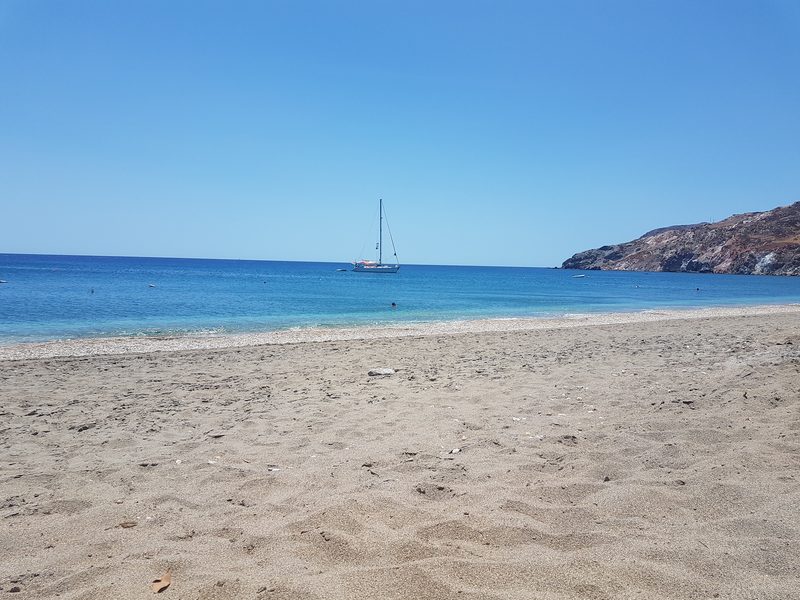
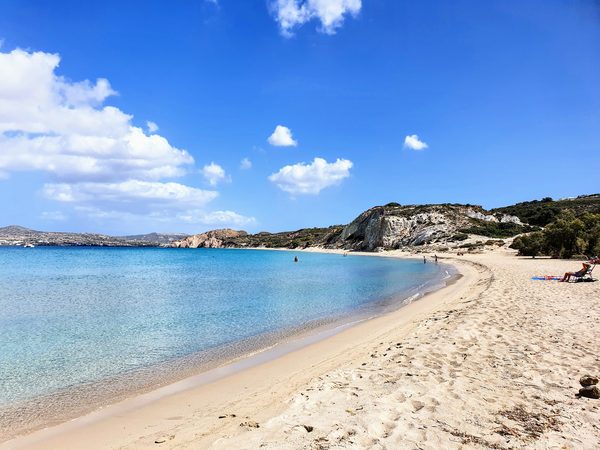
Long, sandy and split into sections by rocky outcrops, which is the key to using it well.
The central section is the organised one: rows of sunbeds and umbrellas in front of the tavernas, watersports off the sand, and the biggest crowd. Families settle here, because the shelving is gentle and the water stays shallow a decent way out.
The far end is a different beach in all but name. Cross the rocks and the crowds simply do not follow. There is no shade whatsoever, so take an umbrella or accept that you are leaving by early afternoon.
Swimming is good throughout, clear water over a mostly sandy bottom. The snorkelling around the rocky divisions between sections beats the open middle of the bay, though expect rock, weed and small fish rather than anything dramatic. Sunbed and umbrella prices vary a good deal by position on the beach, with the sets nearest the water costing noticeably more than the ones further back, so treat any figure you see quoted online as a starting point rather than the price you will actually pay.
What About Agia Kyriaki Next Door?
Agia Kyriaki sits along the same south coast and is the natural pairing with Paleochori: same weather, completely different mood.
It is a long sandy beach in a protected bay, shallow a long way out, and on every visit I have made it has been calmer than its neighbour. Trees along the back give real shade, which is rare on Milos, so count on competition for it at peak season. The tavernas here run their own loungers and umbrellas on the sand.
Walk or swim away from the main beach and you reach a run of small secluded coves almost nobody bothers with. Boat trips to Kleftiko also depart from here rather than only from Adamas, covered in the Milos boat tours guide.
If I had to pick one for a lazy day with a book, it would be Agia Kyriaki. Paleochori is the better spectacle; Agia Kyriaki is the better swim.
How Do You Get to Paleochori?
By car or ATV, on asphalt the whole way from Adamas, roughly 10km and 10 to 20 minutes depending on the route, and it is an easy drive. Parking is limited and goes early on August mornings, with roadside parking common once the main area fills, so arrive on the early side or expect to walk in from further back.
A bus reaches the south-coast beaches in season, but the timetable is thin and dictates your whole day. Both options are set out in the getting around Milos guide.
When Should You Go?
June: Long warm days, the beach busy but not oppressive, and the sea still cool enough to be refreshing.
July and August: Peak crowds, peak heat, front sunbeds gone by mid-morning. This is when the walk to the far left end earns its keep.
Late September: My preferred time. The sea is at its warmest, the beach is emptying out, and the light on those cliffs is at its best.
Outside the season: Facilities close. The beach is still worth a look for the colours, but bring everything with you.
What Else Is Nearby?
The south coast strings together neatly. Firiplaka and Tsigrado sit along the same coastline and share the same wind protection, and Provatas is the gentlest of the group if you have small children. Two south-coast beaches in a day is easy; three is rushing it.
Paleochori is on the south coast of Milos, Greece, reached by asphalt road from Adamas, with sunbeds, tavernas and watersports on a long sandy beach backed by coloured volcanic cliffs. In patches the volcanic ground keeps the sand warm underfoot. It is sheltered when the meltemi blows from the north and unusable in a strong southerly, when you should go north instead.
Planning the rest of your island time? Start with our complete Milos travel guide.
Last updated: 31 July 2026