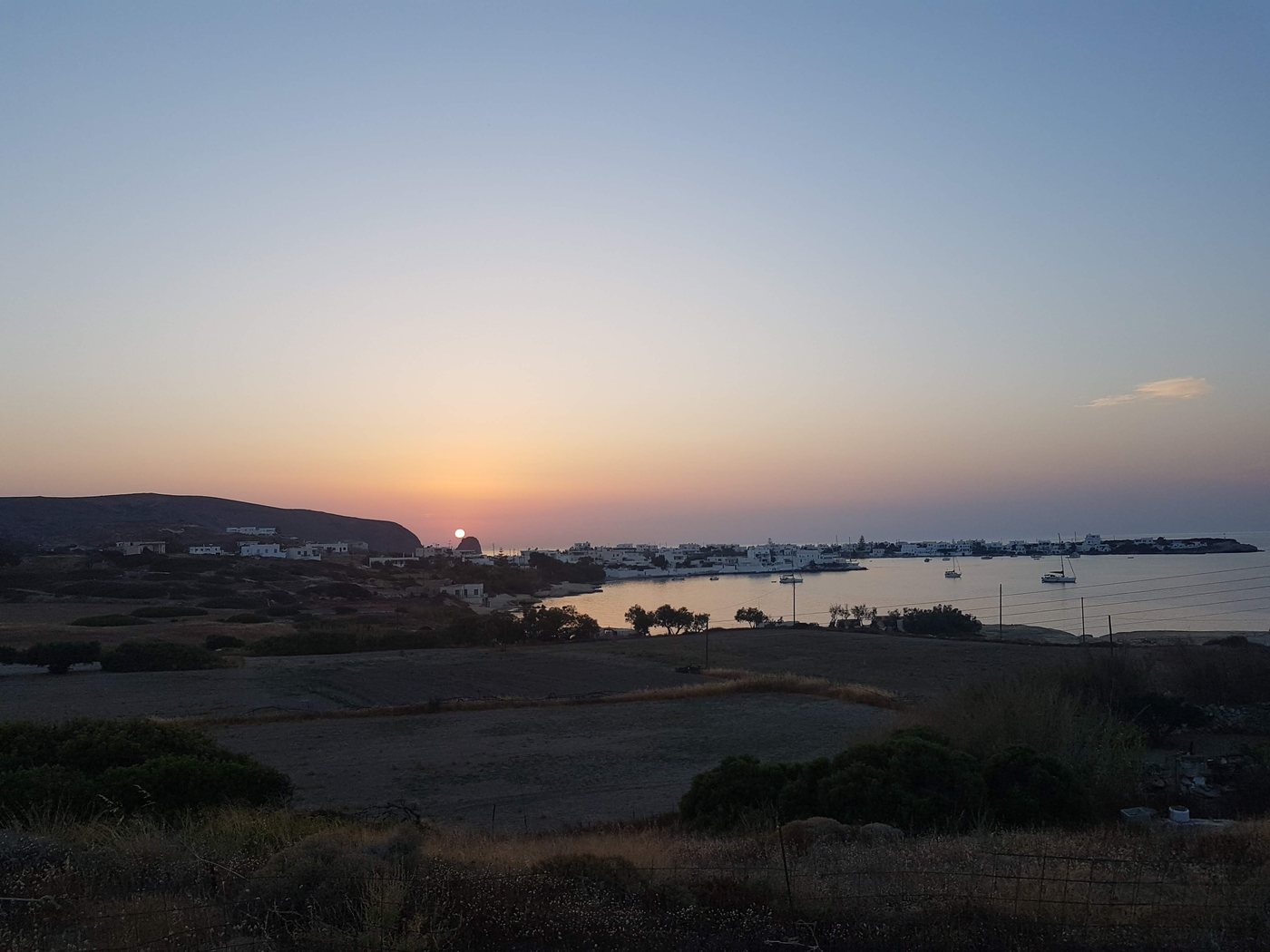
Milos points most of its best scenery west, which makes it one of the easier Cycladic islands to photograph at the end of the day. The Plaka kastro is the famous seat, but the boathouse row at Klima, the west-coast beaches and the volcanic south all take late light differently. Here is where to stand, and when to be standing there.
In this guide
Every spot below has its own page covering parking and access, so what follows is only the part photographers care about: which way the sun falls, how long the light lasts, and how early to arrive.
Milos wraps around a great central bay, with the open Aegean to the west and the ridge at Plaka commanding the north-west corner. The classic view, sun dropping into open sea with layered headlands in front of it, comes from that ridge and almost nowhere else.
When Does the Sun Actually Set on Milos?
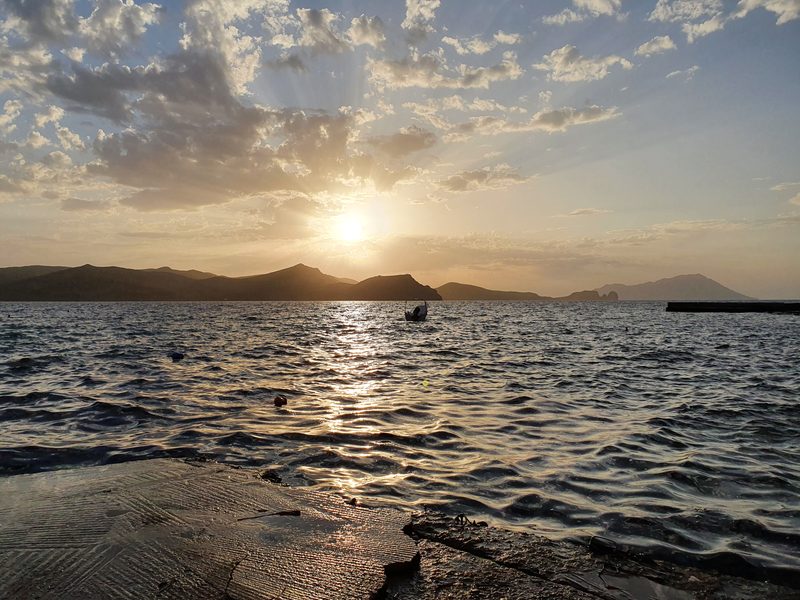
Here is the shape of the year, mid-month, local time, for 2026:
| Month | Sunset | Civil twilight ends |
|---|---|---|
| January | 17:29 | 17:57 |
| February | 18:02 | 18:28 |
| March | 18:29 | 19:01 |
| April | 19:56 | 20:23 |
| May | 20:22 | 20:51 |
| June | 20:42 | 21:13 |
| July | 20:41 | 21:11 |
| August | 20:14 | 20:41 |
| September | 19:30 | 19:56 |
| October | 18:46 | 19:12 |
| November | 17:13 | 17:40 |
| December | 17:07 | 17:36 |
The jump between March and April is real but exaggerated on paper: Greece's clocks go forward in late March, so part of that leap is the seasonal lengthening of the day and part of it is the clock itself moving. Civil twilight end is the more useful figure for planning, since the sky still holds usable colour and shape for several minutes after the sun itself has gone.
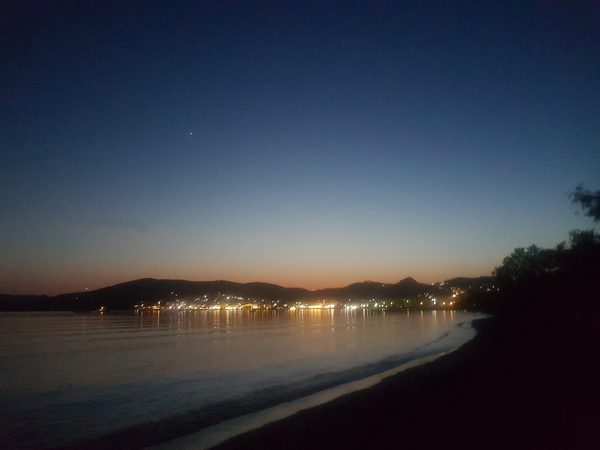
Two rules hold whatever the month. Golden hour here is short: the island sits low with no mountain range to soften the drop, so warm light collapses once the sun touches the horizon. And the best colour arrives after the sun has gone, because the pale chalky rock holds the pink of the afterglow for fifteen or twenty minutes.
I have lost count of the times I have watched most of a crowd leave the second the sun disappears, then had the best five minutes of the evening to myself.
The Plaka Kastro: The Classic, and the Queue for It
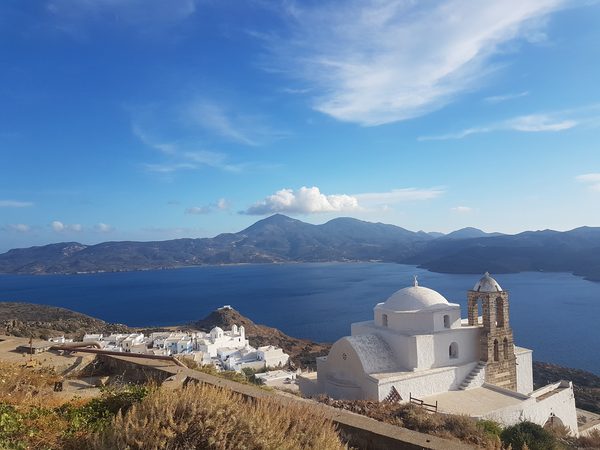
The Venetian fortified settlement above Plaka earns its reputation. You stand at the top of the north-west ridge with an uninterrupted arc of sea, and on a clear evening the neighbouring islands stack up in flat blue-grey layers in front of the sun. The climb and the village are covered on the Plaka guide.
Arrive 60 to 75 minutes before sunset in July and August, 40 in shoulder season. Ledges with a clean foreground fill from the outside in; turn up 20 minutes before and you will be shooting over other people's heads.
Shoot the climb, not only the summit. The best frame here is the small white church of Panagia Thalassitra on the way up. Side-lit half an hour before sunset it separates cleanly from the sky; later it becomes a silhouette, which works too but is a different picture.
Lens reality. A phone handles the wide village-and-sea view fine, but the compressed layered-islands shot wants 85 to 200mm.
The downside: this is a fortified settlement, not a viewing platform, and the footing is uneven crumbling stone. Bring a real torch and closed shoes.
Klima: The Boathouse Row at Golden Hour
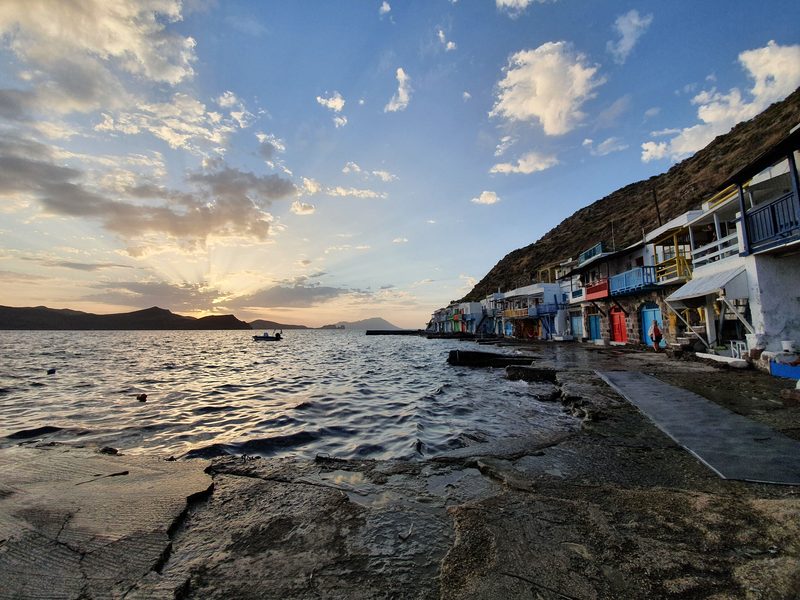
Klima is the fishing village below Trypiti, one row of sirmata with brightly painted doors and balconies above. Access and parking are on the Klima guide.
It belongs here because of orientation. For most of the day those painted doors sit in flat shade, and lunchtime photographs of them look as lifeless as the light was. Come the last hour of daylight, the low sun finally reaches the terrace head-on and every colour on the row wakes up at once, cliff included.
Timing: best from roughly 90 minutes before sunset until about 20 minutes before. Klima sits low with a headland to its west, so the sun leaves the village well before it leaves the kastro above. Do not plan to shoot both on one evening.
Composition: everybody takes the head-on row shot. The stronger frame is from the far end at a shallow angle, so the doors repeat into a colour sequence. Get low; waterline height beats standing height. Astakas is the waterfront taverna to know here, one of only two restaurants in Klima, and it is worth booking ahead for a sunset table in season.
Sarakiniko: Better at Dawn, and Best Under a Full Moon
Sarakiniko is the island's most photographed landscape and the one people get wrong on timing. The white formations face broadly north, so at sunset the sun sits behind and to the side of you rather than lighting the scene, and you get a flat grey rendering of a place that ought to glow. Access and swimming are on the Sarakiniko guide.
Go at sunrise instead. Early light rakes across the ridges from the east, which is what those wind-carved curves need: raking light reveals form, frontal light kills it. The place is close to empty then, which never happens later.
The full-moon evening. The Sarakiniko guide covers what a moonlit visit is like; the photographic notes are these: bring a tripod, expect exposures of several seconds, and never work that unlit, channel-cut rock without a headtorch.
Plathiena: A Sunset Swim on the West Coast
Plathiena is the sandy bay directly below Plaka and the easiest sunset on the island to reach, asphalt the whole way. That holds in settled evening weather only; a meltemi rules it out. Access is on the Plathiena guide.
It offers what the kastro cannot: a foreground you can put a person in. Sand, shallow water, low sun straight down the bay. This is the swimming-into-the-light frame, a silhouetted figure waist-deep with the sun path running towards the camera. Underexpose deliberately and let the person go black. Arrive an hour before sunset for the swim, because the headland to the west takes direct sun off the bay before the horizon does.
The West Coast: Agios Ioannis and the Remote Beaches
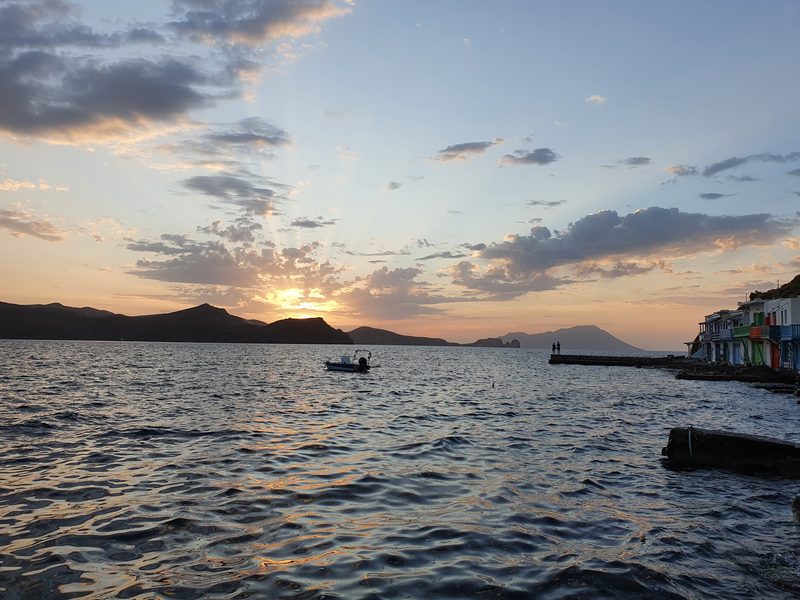
The far west is where you go for a sunset with nobody in it. Agios Ioannis, near the Siderianos monastery, looks straight out at open sea and sees almost no evening traffic, and the other remote west-coast beaches do the same. All are on the remote beaches guide, including the vehicle question, which matters enormously here.
The photographic case is simple: unbroken horizon, no buildings, no crowd, foreground rock that goes deep orange in the last twenty minutes. The practical case is harder, because getting out here means long dirt roads, and driving them back in the dark is slow, dusty and unforgiving of a hire car that was never insured for it.
I would only do a west-coast sunset on a night with no early ferry the next morning, and only in a vehicle I trusted.
Kleftiko: An Afternoon Subject, Not a Sunset One
Kleftiko is the most-searched photographic subject on Milos and it is not a sunset location, because the bay is reached by boat and boats are back in port before the light turns. Trip options are on the Kleftiko guide and the boat tours guide.
The good news is that white rock over turquoise water forgives most timings. Morning brings the calmest sea and the cleanest light on the formations, and the swim-stop hours in the middle of the day still deliver. Whatever the hour, wait until a swimmer or kayak is between the pillars before you shoot, because the arches need something for scale. Morning departures give the calmest sea, which matters more for the light than which specific boat or company you pick.
Where Should You Eat After?
Klima and the villages above it face the light, covered in the Plaka-area restaurants guide. Adamas sits on the sunset-facing shore of the bay, in the Adamas restaurants guide. Pollonia faces the wrong way but has the best after-dark waterfront on Milos. Book ahead in summer; sunset tables go first.
What Should You Know Before Going?
Wind decides more than cloud. A hard meltemi from the north strips the haze and gives a clear, slightly clinical sunset; a light southerly gives the soft layered one. Save the exposed positions for the calm nights.
Some cloud helps. A clear sky gives a plain orange gradient; scattered high cloud produces the afterglow.
Carry a torch. Nothing at Klima's waterfront, Plathiena or Sarakiniko is lit, and a phone torch drains the battery you need for photographs.
Shoulder season wins. Late September puts sunset around dinner time, keeps the sea warm enough for a Plathiena swim, and leaves room on the kastro.
With one evening, take the kastro at Plaka. With two, add Klima at golden hour. With three and the right moon, spend the last at Sarakiniko after dark. More planning context is in the Milos travel guide and the Milos itinerary.
The Plaka kastro and Klima's boathouse row are the two reliable golden-hour positions on the Cycladic island of Milos; allow 40 to 75 minutes to claim a spot at the kastro. Sarakiniko faces north and photographs better at sunrise, or under a full moon. Kleftiko is an afternoon subject, reached only by boat. Take a torch to all of them.
Planning the rest of your island time? Start with our complete Milos travel guide.
Last updated: 31 July 2026