Milos island hopping works best when you resist the temptation to add islands. Milos sits in the western Cyclades with easy links to Kimolos, Sifnos, Folegandros and Santorini, plus regular boats east to Paros, Naxos and Mykonos. This guide covers which pairings actually make sense, how many nights each island earns, and which direction to travel.
In this guide
Most people plan a Greek island trip the wrong way round. They choose the islands first, then try to force a ferry schedule to fit, which produces itineraries with a wasted day in the middle and a final connection that only exists twice a week.
For timetables and ticket booking, visit Ferryscanner.
Work backwards instead, from two fixed points, where you land in Greece and where you fly home from, then let the ferry map fill in the middle. Milos is a good anchor for this because it has an airport of its own, roughly 5 km south of Adamas port, with connecting flights from Athens taking about 45 minutes. That means you can start or end a trip on Milos without doubling back to Piraeus, which is the biggest single saving of time available to a Cyclades itinerary. Full arrival detail is in the how to get to Milos guide.
After a lot of trips through these islands, my rule is simple: I would rather spend four nights somewhere and know it than spend two nights each on two islands and remember neither.
Where Does Milos Sit in the Ferry Map?
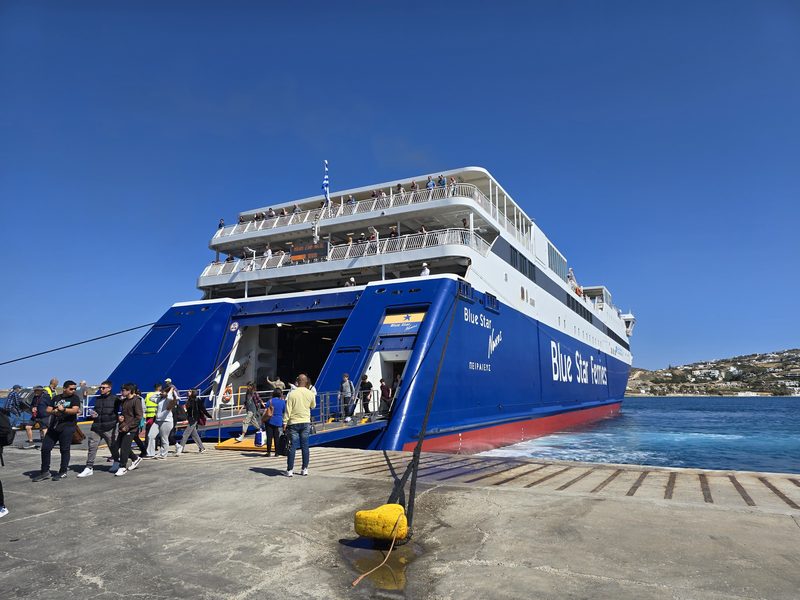
Milos is in the western Cyclades, on the line that runs down from Piraeus through Kythnos, Serifos and Sifnos. That western chain is quieter, greener in spring and considerably less crowded than the central Cyclades. It is also less well connected. The boats are fewer, and a missed sailing can cost you a day rather than an afternoon.
Head east instead and Milos links to the hub islands of Paros and Naxos, and onward to Mykonos, Ios and Santorini. Those routes give you options: multiple sailings a day in high season, competing operators, and an easy exit by air. A handful of weekly boats reach further afield to Crete and the Dodecanese, but those suit people with time rather than people building a two-week holiday.
So the strategic question is not "which islands are nice", because most of them are. It is whether you want the quiet western thread or the busy eastern one. Trying to do both in the same fortnight is how people end up on ferries more than beaches.
Which Islands Pair Best With Milos?
Kimolos: Effectively Free With Milos
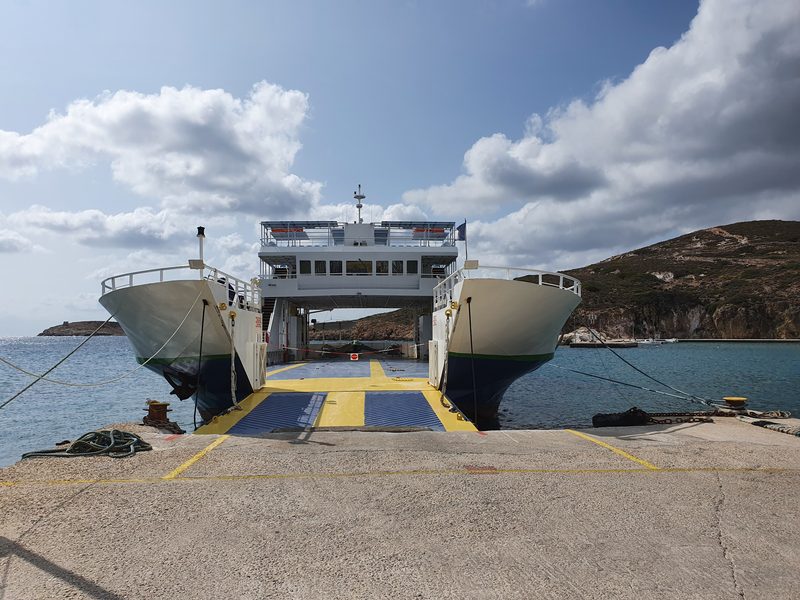
Kimolos sits a few hundred metres off the north-east tip of Milos, and the small local boat between Pollonia and Psathi crosses in under half an hour with several runs a day in season. That is close enough that Kimolos costs you no travel day at all. You can take it as an outing from a Milos base, described in the Milos to Kimolos day trip guide, or give it one or two nights of its own and let the island empty out around you after the last afternoon boat leaves. Two nights is the sweet spot: enough for the Chorio, a couple of the beaches and one long, slow dinner. Treat it as part of Milos rather than an extra island. The Kimolos island guide covers what is actually there.
Sifnos: The Natural Next Island
If you only add one proper second island, make it Sifnos. It is the next stop north on the same western chain, the crossing is short, and it is a genuine change of character rather than more of the same. Sifnos is a walking-and-eating island with a serious food culture, and its inland villages reward exactly the kind of aimless afternoon Milos never quite offers. Pair them and the trip gets two different Greeces for one crossing. Three nights is fair, four if you intend to walk. Connections run in both directions on the Milos to Sifnos ferry route, so it fits either before or after Milos depending on where you fly.
Folegandros and Santorini: The Westward Thread
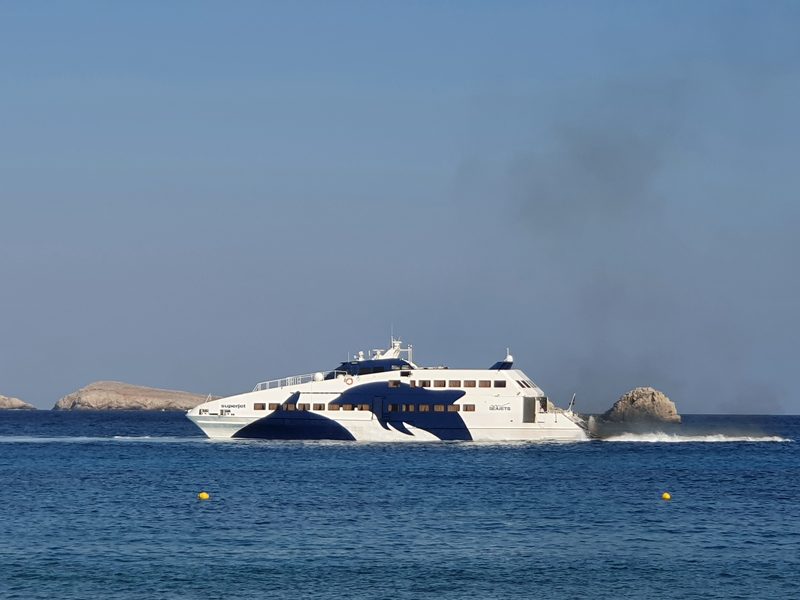
This is the pairing that produces the best ten-day trip in the region. Folegandros is a small, steep island whose Chora sits on a cliff edge, and it works beautifully as a two- or three-night pause between the low-key west and the noise of Santorini. From Milos you reach it on the Milos to Folegandros ferry, and from there Santorini is a short hop onward. The logic is directional: you travel from quiet to loud, finishing on the island with the international airport, so your last morning is a taxi rather than a boat. Doing it the other way round means Santorini's crowds define your first impression of Greece and you end up backtracking. The Milos to Santorini ferry route also runs direct if you want to skip the middle, and Milos versus Santorini is worth reading before you decide how many nights each deserves.
Paros and Naxos: The Hub Connection
Paros is the switchboard of the Cyclades. Almost everything connects there, which makes it the practical choice when you want to combine Milos with islands that have no direct link of their own. Naxos is the larger and more self-contained of the two, with mountain villages, an agricultural interior and the best long sandy beaches in the group. It rewards three or four nights rather than a stopover. Paros needs only two if you are using it as a junction. Routes run in both cases, on the Paros to Milos ferry and the Naxos to Milos ferry, and Milos or Paros compares the two directly if you are choosing between them rather than combining them.
Mykonos: A Deliberate Change of Pace
Mykonos is the opposite of Milos in almost every way, and that is either the point or the problem. If your group contains people who want beach clubs, late nights and shopping, putting Mykonos at one end of the trip gives everyone what they want without diluting the rest of it. It also has an airport with plenty of international flights, which makes it a sensible exit point. What it does not do is blend. A night or two of Mykonos in the middle of a quiet western itinerary tends to make everything either side feel flat. Take it as bookend, not filler, via the Mykonos to Milos ferry.
The Ones Most People Miss
Serifos and Kythnos sit between Milos and Piraeus, so a stop on either costs almost nothing in extra sailing time; see the Milos to Serifos and Kythnos ferry page for how they slot in. Syros is the administrative capital of the Cyclades, a working town with neoclassical architecture and an opera house, and nobody's idea of a beach holiday, which is why it makes a good final night before Piraeus on the Milos to Syros ferry route. Ios is usually dismissed as a party island, though the beaches are good outside August, and the Ios to Milos ferry makes it an easy insert on a Santorini-bound run.
What Do the Sample Routes Look Like?
One week: Athens, Milos, Sifnos, Athens. One night in Athens to land and reset, four on Milos, then north to Sifnos for two before sailing back to Piraeus. Two islands, one loop, no flights beyond your international ones. If a week is all you have, this is the version that still feels like a holiday. A day-by-day breakdown of the Milos half sits in the Milos itinerary guide.
Ten days: Milos, Folegandros, Santorini, fly out. Fly Athens to Milos on arrival day, five nights on Milos including Kimolos, two on Folegandros, two on Santorini, then home from Santorini airport. You never repeat a leg and you never see Piraeus twice.
Two weeks: the eastward crossing. Piraeus to Milos on the Athens to Milos ferry, five nights, then Folegandros or Ios, then Santorini, then Naxos, and out from either Naxos or Mykonos. Four islands in fourteen nights is the upper limit I would set. Five is possible on paper and is usually regretted in practice.
What Are the Rules of Thumb?
- Fewer islands, longer stays. Every hop costs you the back half of one day and the front half of the next. Three islands in a fortnight beats five almost every time.
- Never book a connection that does not exist yet. Operators do not all load their schedules onto booking sites at the same time, and a leg that looks non-existent in midwinter may simply not be filed yet rather than genuinely gone. Book flights and the first island; wait on the middle legs and search again closer to your dates.
- Build in a buffer night. The meltemi, the north wind that dominates July and August, cancels small fast craft more often than large conventional ships. Never plan to sail into your departure airport on the morning of the flight. Arrive the night before instead.
- Start far, finish near. Put your furthest or least-connected island first, while you have flexibility, and your airport island last.
- Travel one direction. Backtracking through the same port is the most common way to lose two days of a Cyclades trip.
I have watched several people spend the last afternoon of a holiday on the phone rearranging a cancelled crossing. The buffer night is the cheapest insurance in Greek travel.
When Should You Go?
June and September are the two months that make island hopping easy: full schedules, warm sea, and the meltemi at its most reasonable. July and August give you the most sailings but the highest cancellation risk on small boats, plus peak accommodation prices. May and early October are lovely on the islands themselves and awkward on the water, because the high-speed boats that carry so much of the summer schedule to Sifnos and Folegandros scale right back, leaving the conventional ferries to do more of the work. Winter reduces the western Cyclades to a slow conventional service that also serves Kimolos directly. More on timing in the when to visit Milos guide, and the wider picture in the Milos travel guide.
One last practical note: an itinerary with no slack in it is an itinerary that breaks, so pad every ferry day and treat an on-time boat as the bonus. The Pollonia–Psathi boat itself is a small, local operation rather than one of the big Cycladic lines, and it runs year-round as the lifeline connection between the two islands, so do not assume it shares the booking-site presence or the fare structure of the main ferry companies.
Milos island hopping works best with two or three Greek islands, not five. Kimolos is under half an hour from Pollonia and costs no travel day; Sifnos is the natural second island; Folegandros to Santorini is the best westward thread, finishing at an international airport. Fly into Milos or sail from Piraeus, travel one direction, and keep a buffer night before your flight home.
Planning the rest of your island time? Start with our complete Milos travel guide.
Heading to Santorini? See our guide to the best day trips from Santorini.
Heading to Mykonos? See our guide to the best day trips from Mykonos.
Heading to Athens? See our guide to the best day trips from Athens.
Last updated: 2 August 2026