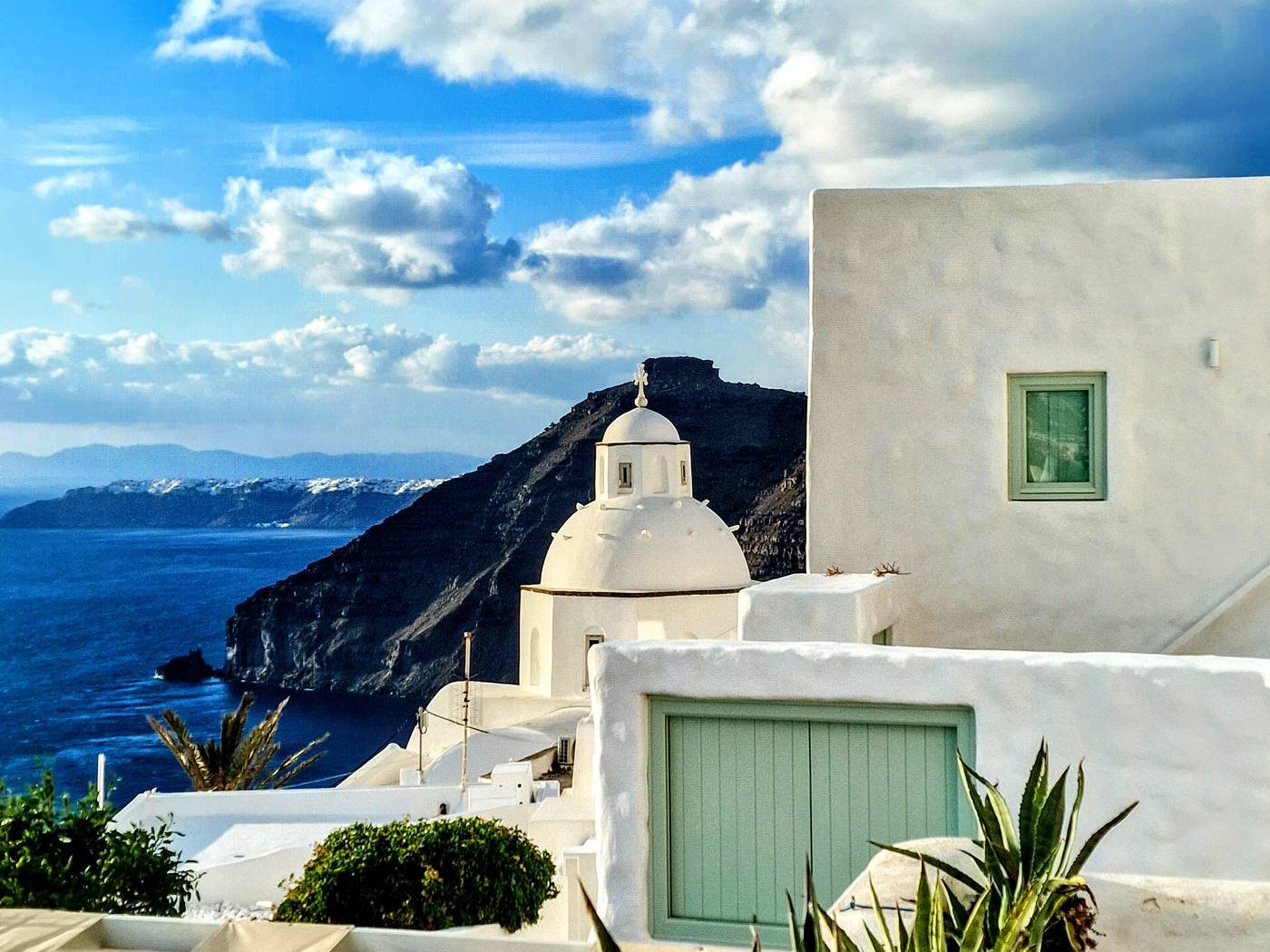
Milos and Santorini are the classic two-island pairing in the southern Cyclades, and the ferry between them takes roughly two hours on the fastest boats, closer to three when the sailing calls somewhere on the way. The crossing itself is the easy part. What shapes your day is Athinios, Santorini's cargo-dock of a port, and a service that runs on the summer calendar rather than all year.
In this guide

Due to the fact the Santorini has a small international airport with connections to many European destinations, Milos has become more accessible. This means it is entirely possible to fly in to Santorini, stay a few nights, take a ferry to Milos, have some time there, and then take the Milos to Santorini ferry back before the flight home. It is also why Milos versus Santorini usually resolves to "both" rather than "one".
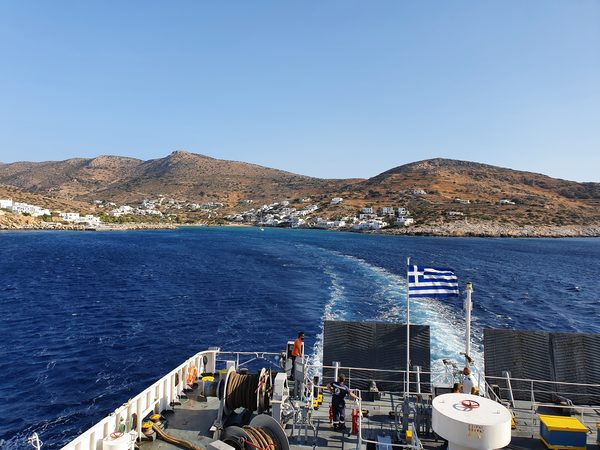
A bit of a sea-sickness warning though. The water between them is open and south-facing, running past Folegandros and Sikinos, and it can get lively. This is not the sheltered inner-Cyclades hop that a two-hour figure suggests. On Meltemi days it could be the longest two hours of your life!
How Long Does the Milos to Santorini Ferry Take?
Budget roughly two hours on the fastest boats, and closer to three when the sailing calls somewhere on the way. Those figures are for the high-speed catamarans; a conventional car ferry on this route is a different proposition again, closer to four and a half hours. The spread on the fast boats is not lazy hedging: an intermediate port means an approach, a ramp, an unload and the manoeuvring back out, and that is what separates two similar-looking departures on the same board.
Conventional car ferries do serve the route, running under an operator such as Fast Ferries, and take closer to four and a half hours end to end, so treat a big-ship sailing as a half-day rather than a transfer. Seajets runs the high-speed side. Sailings on this stretch typically thread through some combination of Kimolos, Folegandros, Sikinos and Ios, and the exact calling pattern shifts from one sailing to the next.
For ferry schedules from Piraeus, check Ferryscanner.
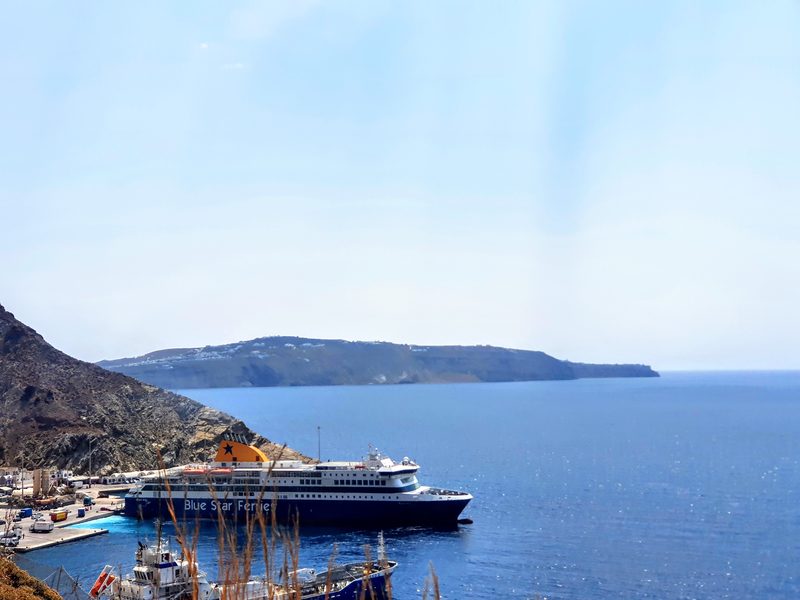
On vehicles, do not assume a fast catamaran means no car deck. Some of the Seajets high-speed boats that work the wider Cyclades network do carry vehicles, while others on this specific corridor are passenger-only. The safe approach is to check the vessel assigned to your sailing rather than judge by boat type; the conventional ferry always takes cars.
The direction makes no difference to the duration. It makes a considerable difference to your afternoon, for reasons that have nothing to do with the sea.
Why Does Athinios Shape This Route?
The Milos end asks nothing of you. Every boat uses Adamas, which I cover properly in the Adamas guide. Santorini is the end that needs planning.
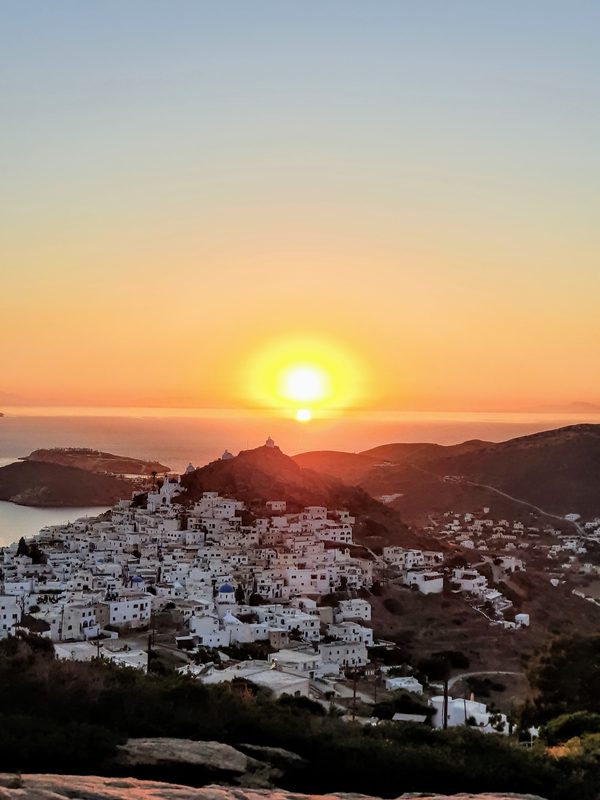
Boats there use Athinios, a working ferry dock at the foot of the caldera cliff with nothing on it worth lingering for. Its real feature is the way out: a switchback road up the cliff face that every arriving passenger has to climb before the holiday starts, and every departing one has to come back down. Treat that transfer as a leg of the journey with its own budget of time rather than a five-minute afterthought at either end, and give the outbound version more room than you think it needs, because missing a fast boat in the Cyclades usually costs you a day rather than an hour.
Three ways up from the port: the KTEL bus, which runs year-round and more often in summer, loosely timed around ferry arrivals; a taxi, which can be genuinely hard to find at the port in high season without booking ahead; or a private transfer arranged through your accommodation. There is no direct bus to Oia, so that means changing at Fira, which stretches what should be a short hop into the best part of an hour.
If your Santorini accommodation offers a port transfer, take it and stop thinking about it. This is the one piece of the trip where paying to remove a decision is money well spent.
Which Direction Should You Sail?
Both work. What differs is the scheduling logic.
Milos first, Santorini second is the stronger default. You arrive on Milos off a straightforward Athens crossing, spend the early days on the beaches, then finish on the island with the bigger airport. Santorini has far more air capacity, so ending there means a wider choice of flights home and a shorter chain of things that can go wrong.
Santorini first, Milos second suits anyone flying into Santorini directly from abroad, and gets the busier island out of the way while you are fresh. The cost is finishing on an island with a small airport and few flights, so build in a night in Athens rather than connecting the same day. The Athens to Milos ferry guide covers that end of the chain.
Either way, take the morning sailing where one exists. An early boat gives you a usable arrival day; an evening boat gives you a room and a dark drive.
Does the Ferry Run All Year?
Something sails most of the year, but the shape changes a great deal with the calendar. Roughly February through November carries a full service; deep winter, December and January, drops to a much thinner pattern rather than disappearing outright. So it is not, strictly, a summer-only route, but treat any winter sailing as provisional rather than guaranteed, since Greek operators finalise winter timetables late and will pull a sailing for bad weather or thin demand without much notice. Know that the fallback is a connection via Piraeus, which is a full day.
If you look months ahead and find nothing, that is often the publishing calendar rather than the route. The Athens to Milos ferry guide explains how the schedule-release lag works and when to look again.
Wind is the other variable. The southern Cyclades catch the meltemi hard in July and August, and when sailings are pulled it is the smaller high-speed craft that go first. There is nothing to be gained by rerouting in advance, but do not stack a same-day international flight behind this crossing.
Can You Do Milos as a Day Trip From Santorini?
Sometimes, in peak season, and it is a long day rather than a good one.
Start with the clock rather than the itinerary. Whatever hour the first boat lands at Adamas, the last one back sets your deadline, and out of the gap between them you must still pay for two crossings, the climb down to Athinios and back up again, and enough slack that a late return does not strand you. Count all of that and the hours genuinely ashore come to a short afternoon.
A short afternoon buys you Adamas and its nearest sights, meaning Sarakiniko, a swim and a proper lunch. It does not reach the coast most people come to Milos for, and it does not touch Kleftiko, which is a full day's boat trip in its own right.
Milos wants three nights. Two get you the headline beaches; three is when you start finding the ones nobody photographs. With a single spare day on Santorini, spend it closer to home and give Milos its own visit later.
What Catches People Out on This Crossing?
- Book July and August early. Demand on this leg is heavy and the capacity per sailing is limited, so the useful departures go first.
- Take seasickness tablets before boarding. This stretch is more exposed than the crossings further north, and a small fast boat pitches hard into a running swell.
- Read your rental agreement before you plan on bringing the car. Plenty of Greek hire contracts rule out ferry transport altogether; where a company does permit it, the vehicle fare on top of two passenger tickets rarely leaves you ahead. Hiring fresh at each end is the simpler arithmetic, and your bags stay with you rather than on a car deck.
- Assume delays. An hour or two of slack is standard planning, not pessimism, on any Greek ferry.
For how this leg sits inside a longer route through the Cyclades, see Milos island hopping; for every way onto the island, how to get to Milos.
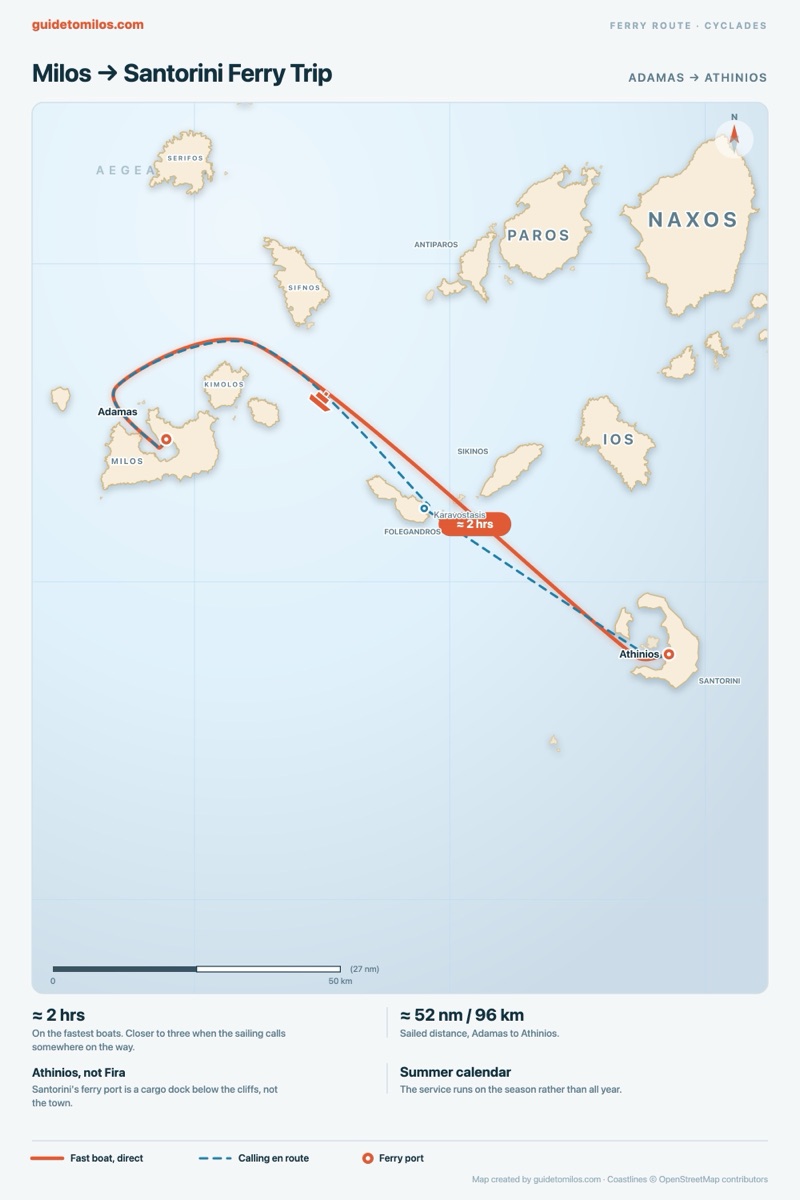
The Milos to Santorini ferry crosses this corner of the Aegean in roughly two hours on the fastest boats, closer to three when the sailing calls somewhere on the way, and closer to four and a half on a conventional car ferry. It runs in both directions on a schedule that carries a full service for most of the year and thins sharply over deep winter. Boats dock at Adamas on Milos and at Athinios on Santorini, where the climb up the caldera road still stands between you and Fira. A same-day return is rarely worth it. Give Milos two or three nights.
Planning the rest of your island time? Start with our complete Milos travel guide.
Heading to Santorini? See our guide to the best day trips from Santorini.
Heading to Athens? See our guide to the best day trips from Athens.
Last updated: 7 September 2026