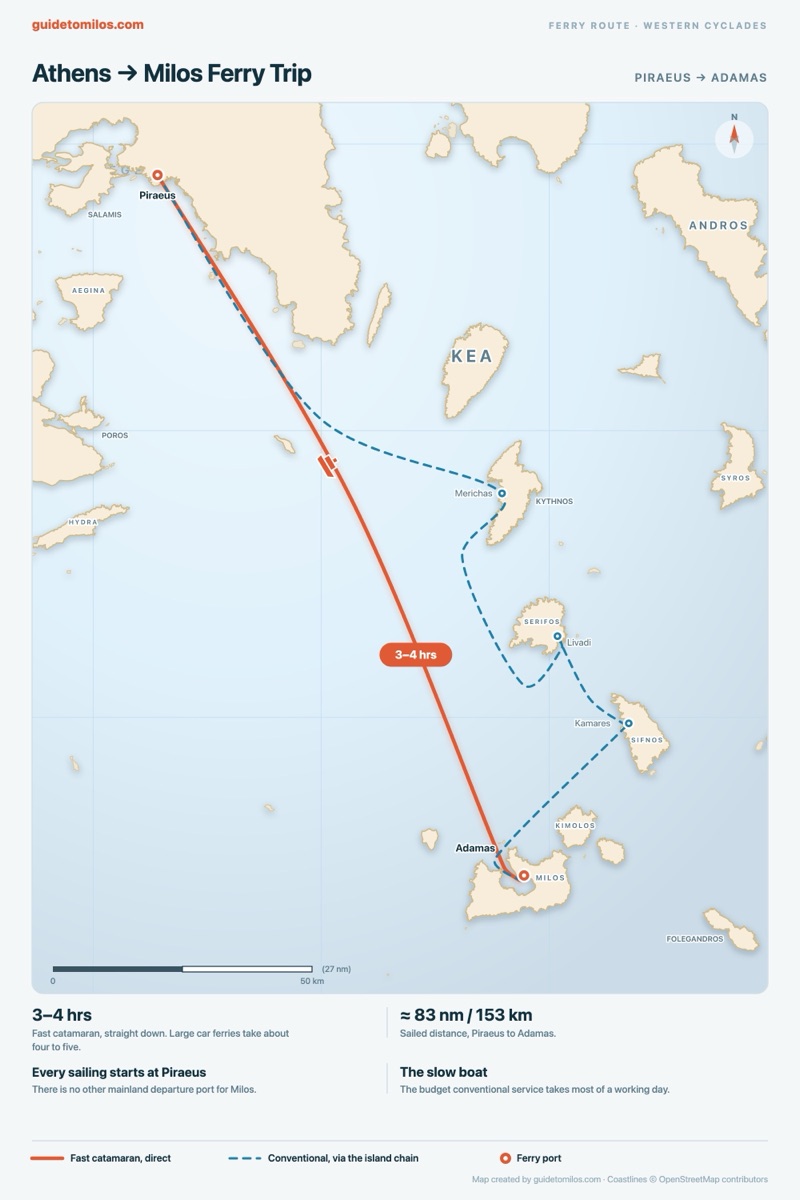
Every ferry from Athens to Milos, in Greece's western Cyclades, sails from Piraeus, the port town on the city's south-west edge. Fast catamarans cross in roughly three to four hours, the large car ferries in about four to five, and the budget slow boat takes most of a working day. All of them dock at Adamas, the Milos island's main port.
In this guide
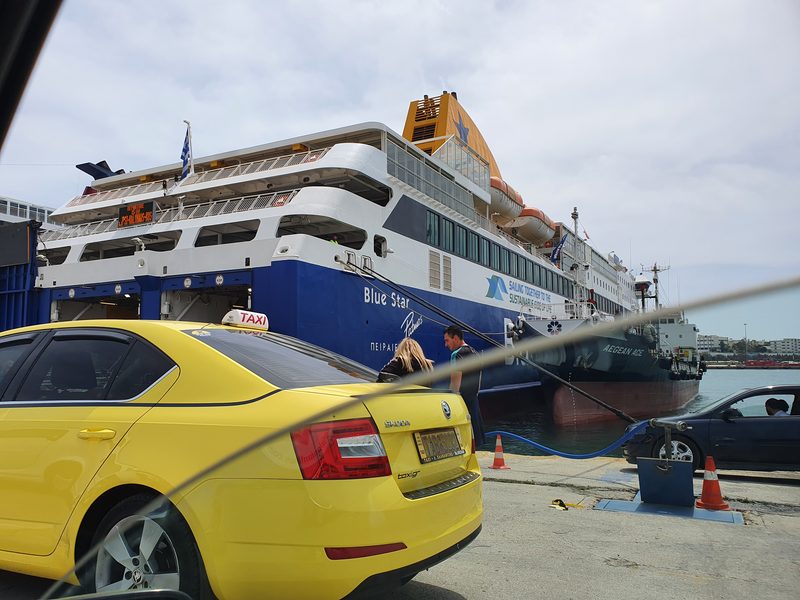
Where do Athens to Milos Ferries Depart?
When people look for a ferry from Athens to Milos, it’s useful to know they depart from Piraeus, the biggest ferry and cruise port in Greece. It’s about 10 km from Syntagma Square in Central Athens to Piraeus, and the journey can be made by metro, bus, or taxi. My recommendation is to pre-book a transfer via Welcome Pickups, who will get you and all your luggage directly to the gate in Piraeus that your ferry to Milos will depart from.
How Much is an Athens to Milos Ferry Ticket?
Schedules and ferry ticket prices on the route from Athens to Milos vary from season to season and year to year. As a very rough guide, you should allow for at least 80 Euros per passenger ticket. All Athens-Milos ferry crossing times and prices can be confirmed at Greek ferry ticket booking sites like Ferryscanner.
Find out which ferries run today at Ferryscanner.
How Long Does the Ferry From Athens to Milos Take?
Anywhere from three to eight hours, depending on which vessel you are on. Three broad types of ferry operate on this route:
Fast catamarans (roughly 3 to 4 hours). The quickest way to the island by sea, the most expensive tier, and the one most affected by weather. Some carry vehicles and some are foot-passenger only, so check before booking if you have a car.
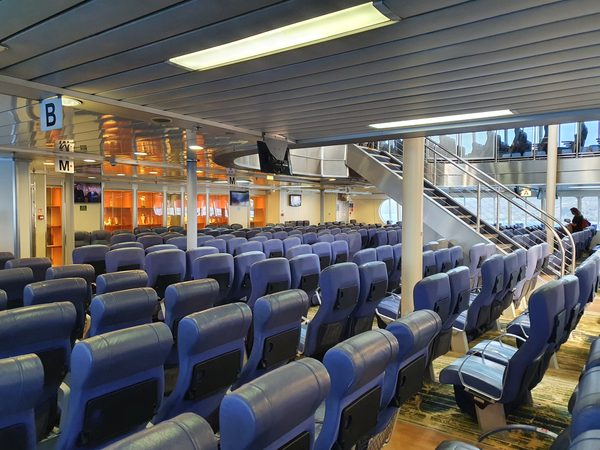
Large conventional car ferries (roughly 4 to 5 hours). Indoor lounges, outside decks, a cafeteria, and enough bulk to shrug off a moderate swell. Cheaper than the catamarans and far more pleasant to spend an afternoon on.
The slow ferry (roughly 7 to 8 hours). A long, cheap island-hopping sailing that calls at several ports and carries on past Milos to Kimolos. The cheapest ticket by a distance and the one that keeps running through winter, at the cost of a whole day of your holiday.
Blue Star Ferries is the mainstay on the conventional side, and Seajets runs the high-speed catamarans. Both are long-standing names on this line and either is a safe bet to search for when you book. Seajets typically only operate in the tourist season roughly April until October.
I take the big conventional ship almost every time. The extra hour costs me nothing I miss, and arriving rested rather than braced is worth more than it sounds.
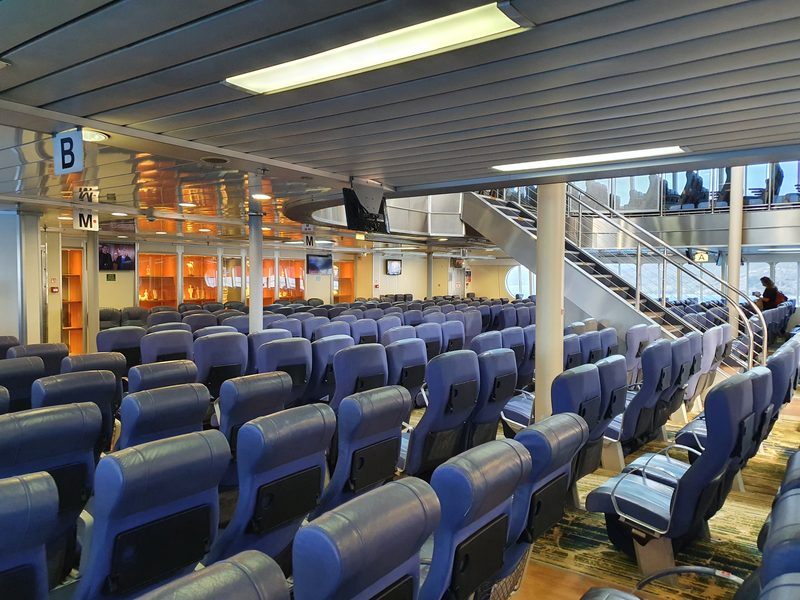
Fast Ferry or Conventional Ferry: Which Should You Book?
Take the catamaran if your trip is short and a saved afternoon buys you something. Take the conventional ship if you are travelling with children, heavy luggage, a vehicle, or anyone who goes quiet when the sea gets up.
The case against the fast boats is the ride. The smaller ones slam through a chop, the seating is fixed and airline-style, and you cannot step out on deck for air. When the meltemi blows hard in July and August, the smaller high-speed boats are also the more weather-sensitive of the two. If anything is pulled from the day's departures, it tends to be them rather than the big ships.
One booking habit worth knowing: the operators do not all load their summer schedules onto booking sites at the same time, and which type files first has shifted around from year to year. If a search early in the year turns up only one class of boat, that is more likely a filing gap than a route that has stopped running. Search again closer to your dates rather than assuming the thin picture is final.
What About Flying Instead?
Milos has a small airport about 5 km south of Adamas. Sky Express flies the route with small turboprop aircraft, the standard aircraft type for a runway this size, and the flight itself takes well under an hour in the air. There are only a handful of flights a day.
Flying is faster on paper and often not much faster door to door, once you add the trek out to Athens airport, check-in, and the transfer into Adamas, where the airport bus can be thin outside peak season. Seats are limited enough that late bookings get expensive, so book months out. The complete guide to getting to Milos covers the full ferry-versus-flight decision.
When Do the Ferries Actually Run?
Frequency swings hard with the calendar. From roughly June to September there are usually several departures a day across the operators. In April, May and October the board thins to one or two. In deep winter it drops to a handful a week, mostly the slow ferry, and a bad forecast can wipe out a day entirely.
Most sailings will stop at other western Cyclades islandports on the way, which is why two boats of similar speed post very different crossing times. Read the itinerary, not just the departure hour.
What Should You Know Before You Sail?
- Reach Piraeus earlier than feels necessary. The port is big enough that finding your boat takes real time, especially on a first visit. Give yourself a comfortable margin over whatever the ticket says.
- A deck ticket is not a seat. On the conventional ships a basic fare buys passage, not a chair, so board promptly and claim somewhere before the lounges fill. High-speed craft allocate seats as standard.
- Bring your own food. Every boat has a bar or cafeteria, priced accordingly. A bakery stop near the metro station costs a fraction.
- Take seasickness pills before you sail, not after. The big ships are steady in most conditions; the small fast ones are not.
- Think twice about bringing a hire car. Some Greek rental firms prohibit taking their vehicles on ferries, and you pay a separate vehicle ticket either way. Hiring on arrival is almost always cheaper, as the getting around Milos guide explains.
- Build in slack. Greek ferries run late often enough that an hour or two should be assumed. Never book a same-day flight out of Athens off an afternoon arrival.
Where Does the Ferry Arrive on Milos?
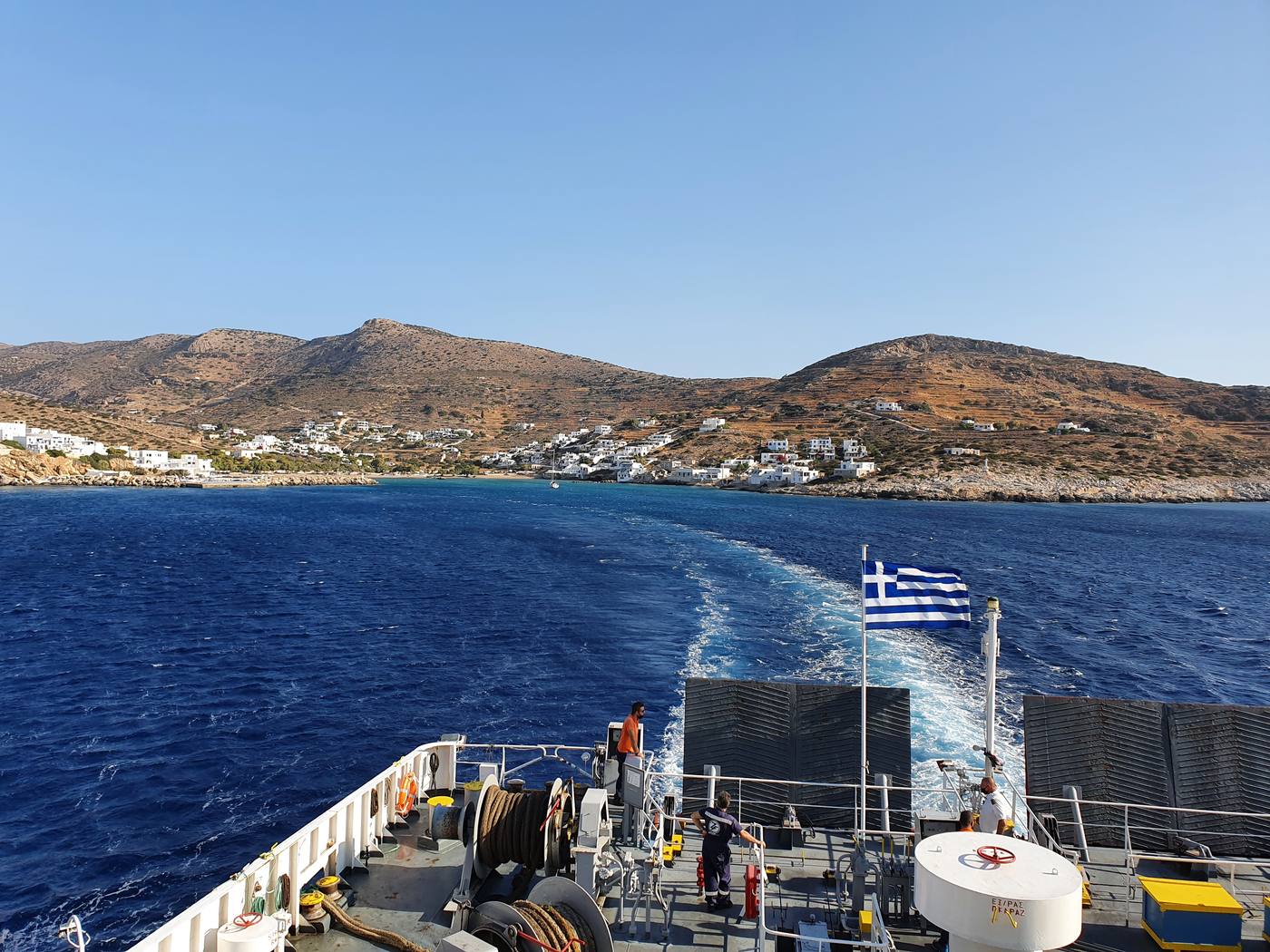
Every ferry from Piraeus docks at Adamas, on the sheltered inner shore of the island's huge natural bay. It is the working port and the most practical base: hotels, the bus terminal, car and ATV hire desks, supermarkets and a waterfront of tavernas all sit within a few minutes of the ramp, and the Kleftiko boat trips leave from here.
Arrivals are chaotic in the good-natured Greek way, with hotel staff holding signs, hire-car reps calling names and buses idling. If you land after dark in high season without a transfer booked, use the taxi rank rather than assuming a bus. More on the town in the Adamas guide.
Can You Carry On to Other Islands?
Easily, and that is much of the argument for arriving by sea. Milos connects to most of the Cyclades in season, including Santorini and Paros. Fix the onward legs before your Piraeus date, though. The western chain has fewer sailings than the central Cyclades, and one missing connection reshapes an itinerary.
Ferries from Athens to Milos leave from Piraeus, Greece's main passenger port, about 30 minutes from the city centre by metro. Fast catamarans take roughly 3 to 4 hours, large conventional ferries 4 to 5, and the budget slow ferry 7 to 8. All dock at Adamas. Sailings are frequent from June to September, sparse in winter, and often delayed, so leave an hour or two of margin.
Planning the rest of your island time? Start with our complete Milos travel guide.
Heading to Santorini? See our guide to the best day trips from Santorini.
Heading to Athens? See our guide to the best day trips from Athens.
Last updated: 7 September 2026