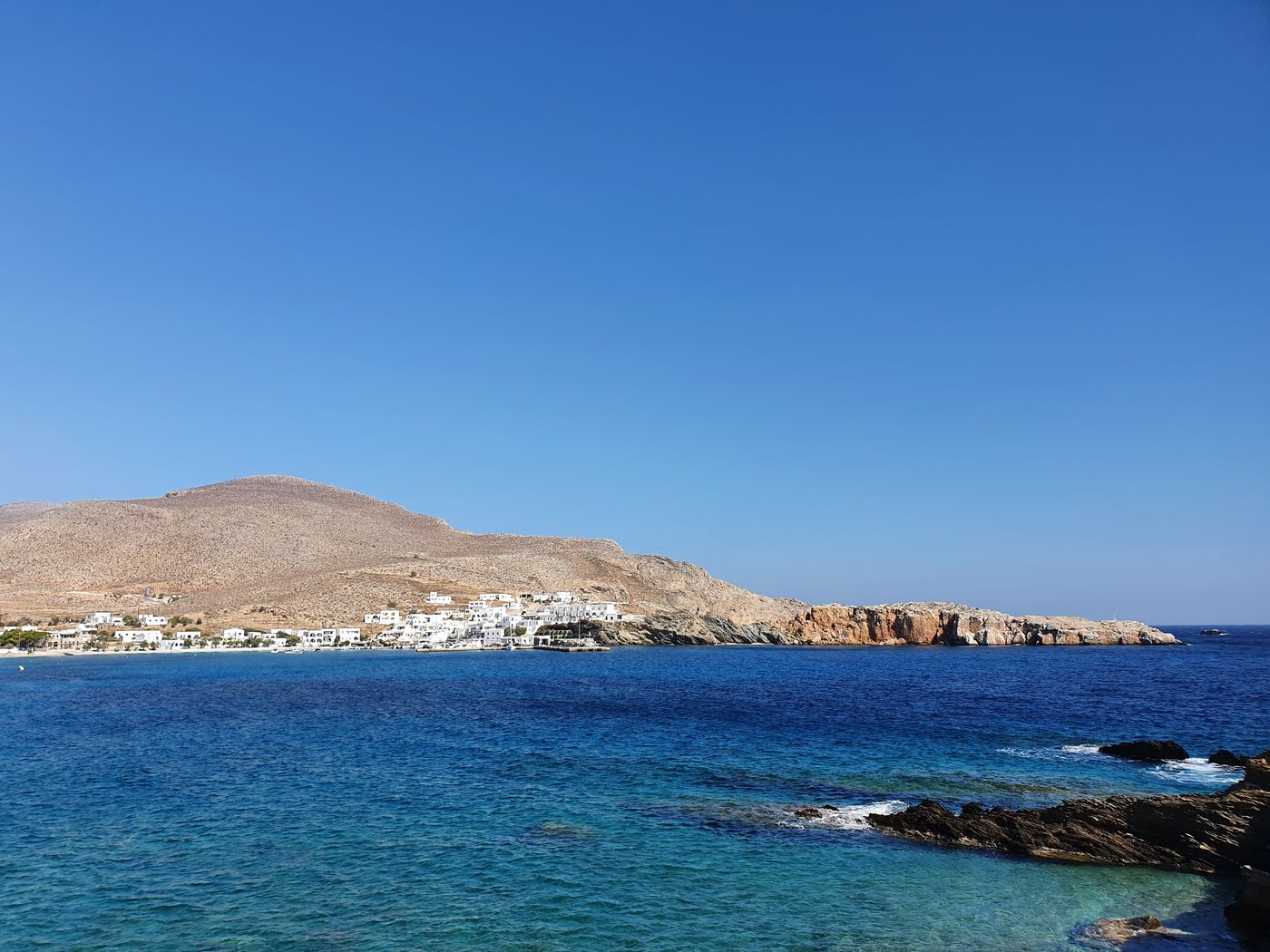
The Milos to Folegandros ferry is a short crossing between two Greek islands that have both mostly resisted the full Cyclades circus. It is a route taken almost entirely by people planning their own island-hopping rather than following a package, and Folegandros is by far the quieter of the two.
In this guide
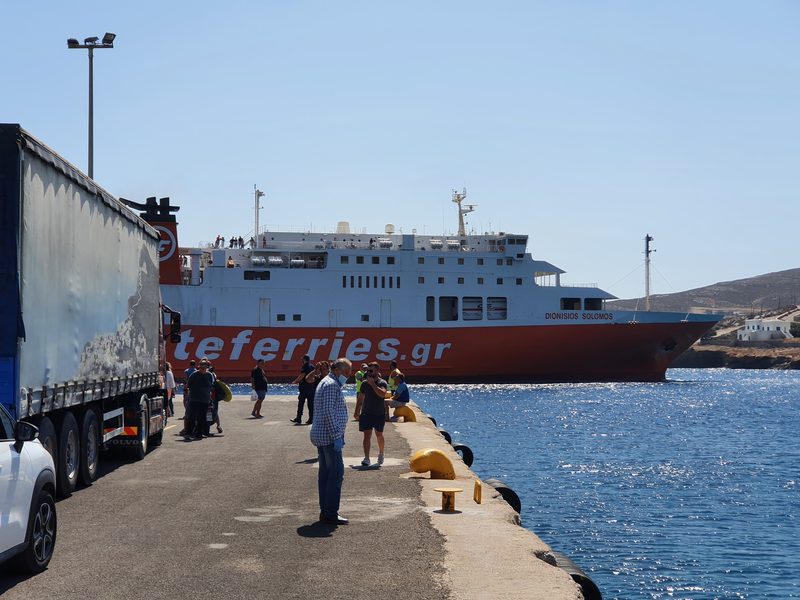
Look at the departure boards in Adamas in August and most of the names are the ones everyone recognises. Folegandros is not one of them though. It is a small island with a cliff-top Chora, a handful of beaches you mostly walk to, and nowhere near the bed count of its neighbours. That is exactly why people book this crossing: they have already chosen Milos over Santorini, and Folegandros is the logical second choice in the same spirit.
The route sits on the western Cyclades line, the chain that also strings together Sifnos, Serifos and Kythnos. Folegandros is the southern end of that chain and the point where it brushes up against the busy Santorini–Ios corridor. Understanding that geography explains almost everything about how the boats behave.
Who Books This Crossing, and Why?
This is not a route people stumble onto. Nobody flies into Greece intending to connect Milos and Folegandros without having thought about it first, and the boats reflect that. You get a mix of independent travellers with a plan, Greeks visiting family, and a certain number of walkers with boots hanging off their packs.
What that means in practice is a calmer boarding than you get on the Santorini-bound sailings.
Compare ferry times and prices at Ferryscanner.
Given the choice, I would always rather carry on along a line than double back to Piraeus and start again, and this hop is exactly the kind of leg that makes island-hopping worth the name.
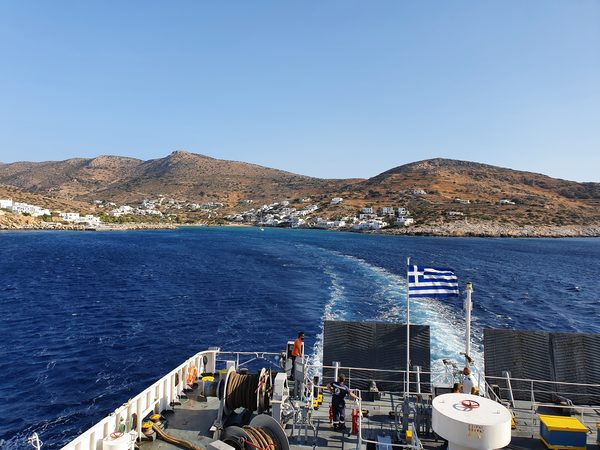
The crossing itself is short by Cyclades standards. This is one of the quicker sea legs you can build into an itinerary, rather than a half-day commitment: a high-speed catamaran covers it in well under an hour, and even the slower conventional ferry is done in under three.
What Waits for You at Karavostasis?
Folegandros gives you a proper contrast with the Milos end of the trip. Where Adamas is a working port town with everything a traveller needs close at hand, Karavostasis is a small harbour with a beach, a scattering of rooms and not much else. It is a landing point rather than a destination.
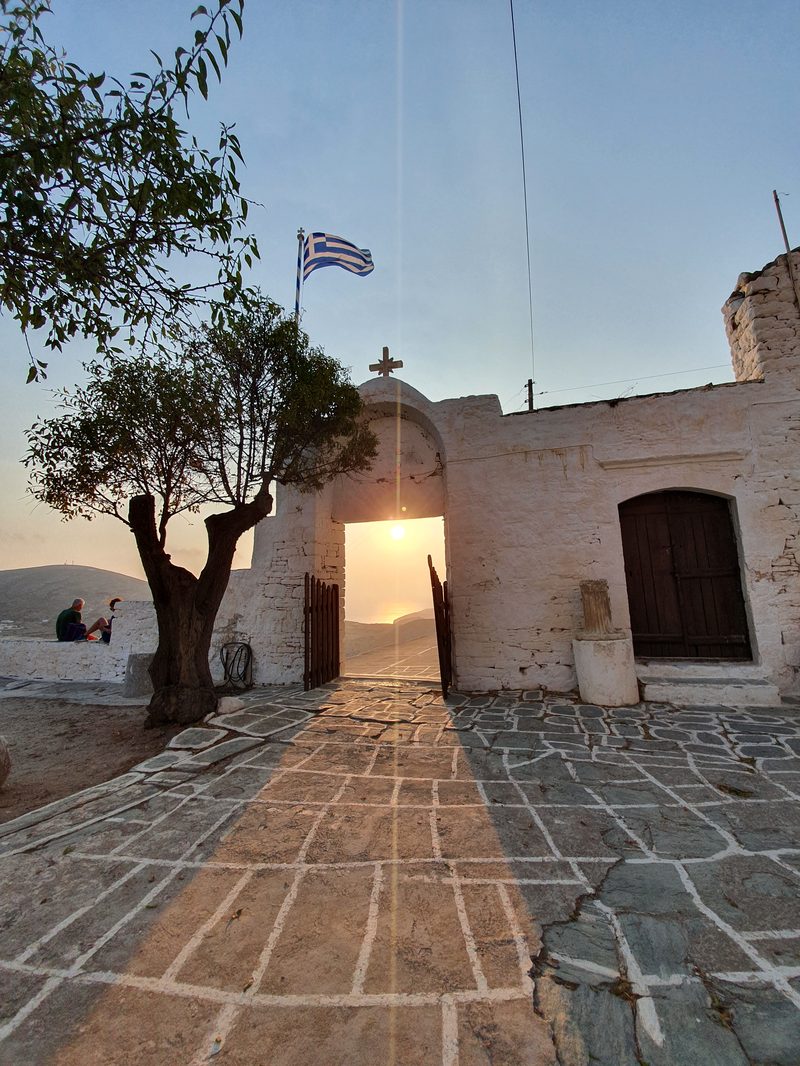
The island's centre of gravity is the Chora, sitting on the cliff above and reached by a road that climbs steeply out of the bay. Sort out the climb before you land. There is a dedicated scheduled bus that covers the short ride up, generally timed loosely around ferry arrivals, and many hotels will collect you if asked at booking. Taxis exist but the island's supply is famously thin, so pre-booking one rather than expecting to hail it at the quay is the safer plan. Arriving with luggage and no plan for that hill is the mistake people make on this route, and it is entirely avoidable with one email.
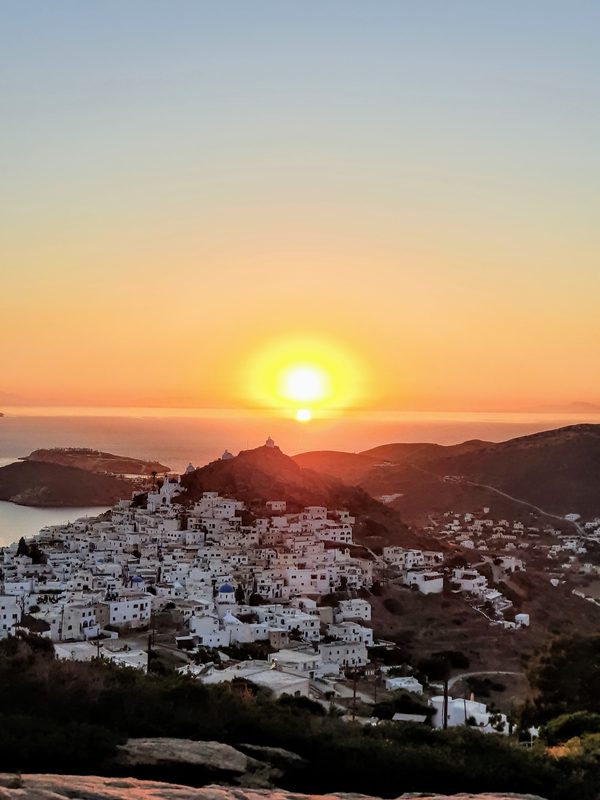
The Chora sits right on the lip of a sheer drop to the sea. It is the same clifftop drama Santorini sells, without the coaches. People who find Santorini exhausting come here instead, and keep coming back.
How Dependable Is the Link Outside High Summer?
Treat this as a seasonal connection with a solid summer core and thinner shoulders. Seajets runs the high-speed side, with Blue Star Ferries and Fast Ferries covering it on conventional ships; the conventional link holds up close to year-round as part of wider Cyclades circuits, while the fast catamaran is really a peak-season addition, busiest through the main summer months. In July and August there is a real choice of sailings. In May, June and September the frequency drops, and by late autumn and winter you are looking at a service built around the needs of islanders rather than visitors. That can mean a couple of sailings a week rather than a couple a day.
The practical consequence is that in shoulder season the boat, not your preference, decides how many nights you spend on Folegandros. Work out the sailings first and build the itinerary around them, rather than deciding on three nights and hoping the ferry agrees.
What Does the Meltemi Do to This Crossing?
The meltemi, the north wind at its strongest through the peak-summer weeks, is the variable that turns a short hop into a scrapped plan. The big conventional ferries plough on through most of it; the smaller high-speed craft are the ones that get cancelled or rerouted, and they are also the ones most likely to leave you regretting a large breakfast. If the forecast is windy and you have a choice of vessel, take the bigger, slower boat.
The bigger point is connection risk. If Folegandros is a single overnight wedged between two fixed bookings, a cancelled sailing is a real problem. Leave a buffer night somewhere, or accept that the western Cyclades will occasionally rearrange your week for you.
Where Does Folegandros Lead Next?
This is the part that makes the route worth building an itinerary around. From Folegandros you are within easy reach of Santorini, and arriving there from the west, after two quiet islands, is a very different experience from flying straight into the caldera hype. Plenty of people run Milos to Folegandros to Santorini as a single westward-to-eastward thread and fly home from Thira.
Going the other way, the same line takes you back up towards Sifnos and on to Piraeus. If you are still shaping the trip, the Milos island hopping guide sets out which combinations actually work with the timetables, and the Milos to Santorini ferry guide covers the direct alternative if you would rather skip the stopover altogether.
How Should You Book It?
Book July and August ahead. Folegandros has limited capacity on both the boats and the beds, and that combination is the one that sells out. Outside those two months you have more slack, though shoulder-season sailings are fewer, so booking early is still the calmer option. Treat delays of an hour or two as normal, and check your sailing the evening before if the wind is up. If you are still planning the front end of the trip, the how to get to Milos guide covers the approach from Athens and the airport option.
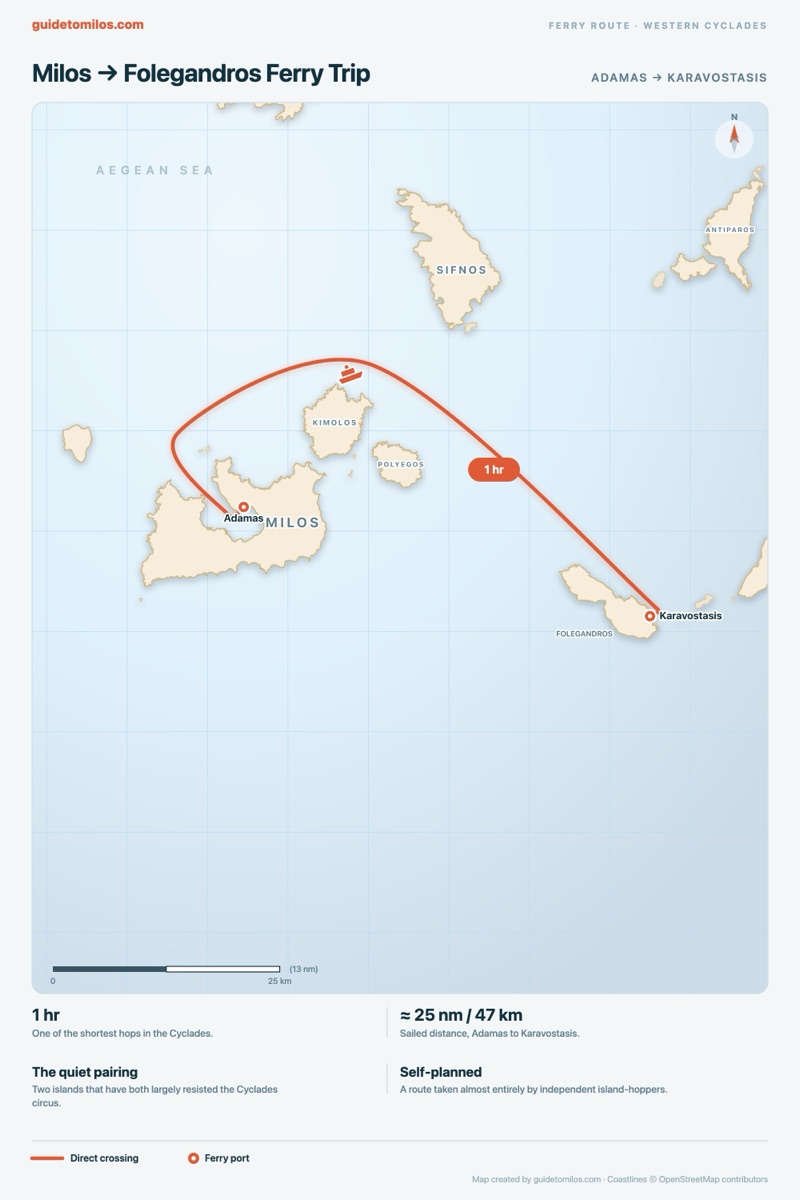
Milos to Folegandros is one of the shorter crossings in the western Cyclades, running from Adamas to the small port of Karavostasis, with the Chora on the cliff above. Frequency is strongly seasonal, the meltemi hits small high-speed boats hardest, and the route sets up a natural onward run to Santorini.
Planning the rest of your island time? Start with our complete Milos travel guide.
Heading to Santorini? See our guide to the best day trips from Santorini.
Heading to Athens? See our guide to the best day trips from Athens.
Last updated: 2 August 2026